The Department of Education is currently accepting public comments on a proposed rule change that would prevent thousands of public interest attorneys, among many other public servants, from receiving the public service loan forgiveness benefits to which they are entitled. Why? The Trump administration has decided that if one’s public interest work or the work of their colleagues conflicts with the Trump administration’s policy agenda, their education should be entirely on their own dime. (Well, millions of dimes.)

Congress created the Public Service Loan Forgiveness program in 2007 to spare public servants from lifelong federal student loan debt. Under existing law, people who work full-time at qualifying employers and make 120 qualifying monthly payments are eligible to have their remaining loan balances canceled. 

Because of confusing eligibility standards, complicated forms, and other hurdles, fo years, most people who tried to get PSLF did not succeed: At the time President Joe Biden took office, less than 7,000 borrowers, representing fewer than 3 percent of applicants, had been approved for PSLF. Thanks to reforms enacted by the Biden administration, though, over 1 million public service workers had their debt discharged by October 2024.

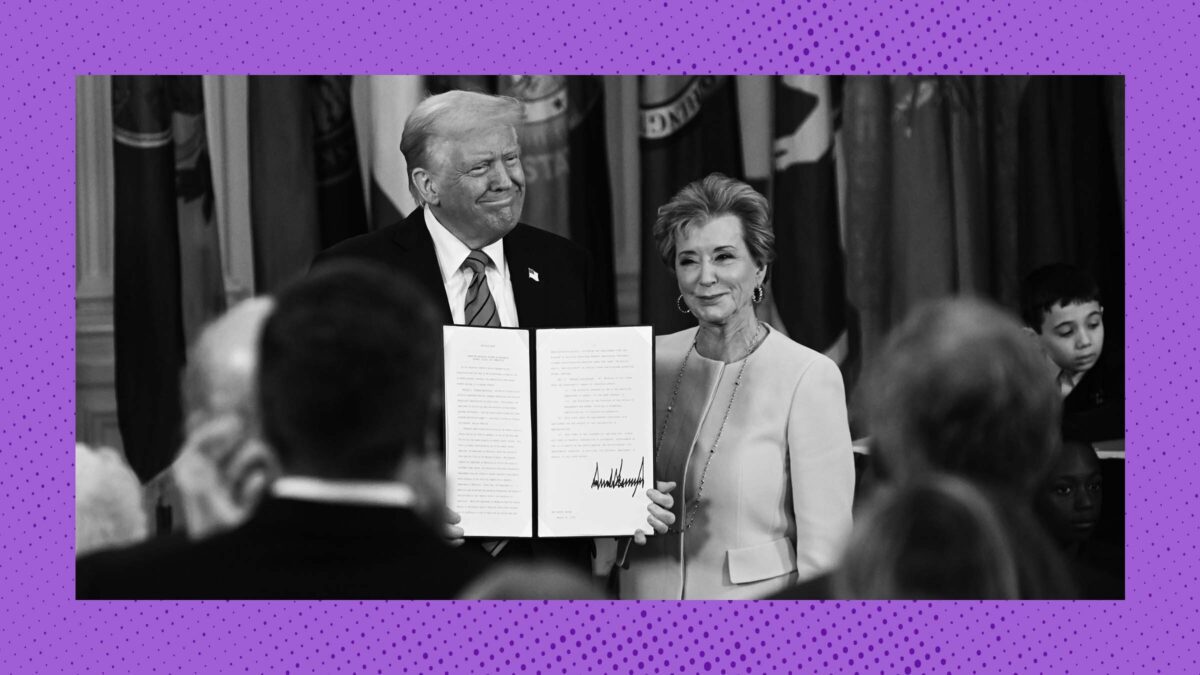
But in March 2025, the Trump White House issued an executive order declaring that the program has “misdirected tax dollars into activist organizations” that “harm our national security and American values, sometimes through criminal means.” Pursuant to this directive, the Department of Education proposed a rule last month that would exclude borrowers from loan forgiveness if the Secretary of Education determines “by a preponderance of the evidence” that their employers “engage in activities that have a substantial illegal purpose.” 

The Department’s proposal claims that this change will make sure the PSLF program only supports workers at “organizations that genuinely contribute to the public good,” and will help the government avoid “subsidizing activity that it aims to prevent.” And it is not subtle about the kind of activities the Trump administration wants to suppress: The proposed definition of “substantial illegal purpose,” for example, refers to things like “chemical and surgical castration or mutilation of children,” which is how right-wing freaks describe gender-affirming care, and “obstruction of highways,” which is how right-wing freaks describe street protests. 

Perhaps most worryingly for law students, lawyers, and their coworkers, the proposed definition would withhold loan forgiveness from public service workers if the Department decides that their employers are “aiding or abetting” violations of federal immigration law and antidiscrimination law—the sort of intentionally vague language that raises more questions than answers.

Maybe the Department thinks that attorneys representing clients alleged to have violated laws are aiding and abetting those violations, so no one working at a public defender’s office can have their loans forgiven. Maybe it thinks government lawyers in cities that don’t cooperate with federal immigration enforcement are aiding and abetting violations of immigration law, so all municipal employees are ineligible for loan forgiveness. Maybe it thinks attorneys who defend schools that Trump sues over their diversity initiatives are aiding and abetting the schools’ purported violations of discrimination law, so they and all their coworkers are cut off from PSLF, too. Who can say? By design, the administration’s malleable standard is ripe for manipulation.

The proposed rule would create grave risks for would-be public interest lawyers, and the people who would benefit from their work. The staggering costs of law school coupled with the low pay of public interest jobs make it functionally impossible for many people to take on careers at nonprofits, public defense and legal aid organizations, and the government. PSLF makes those careers more viable with the promise of financial security. Restricting its availability threatens to keep would-be students out of school, keep graduates away from essential public service jobs, and keep vulnerable communities from accessing critical services. 

People have until Wednesday, September 17, to submit comments opposing the proposed changes. Organizations like the American Bar Association and the National Council of Nonprofits have urged commenters to explain how changing PSLF would specifically impact their work and the communities they serve.

The proposed rule change is part of a larger strategy by the Trump administration to avoid accountability for its actions and prolong the suffering of its victims. Between February and April 2025, for instance, the administration issued a slew of executive orders punishing law firms for representing the targets of its myriad attacks, like voters of color and noncitizens. And in March, the administration called for any party who tries to get an injunction against it to first pony up enough money to cover the government’s costs and damages, if that party eventually loses the case. Overhauling PSLF is more of the same: seeking to neutralize legal opposition by making it too expensive to protect people’s rights.

Latest News