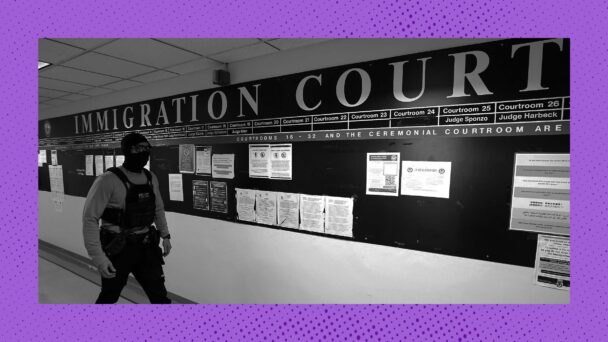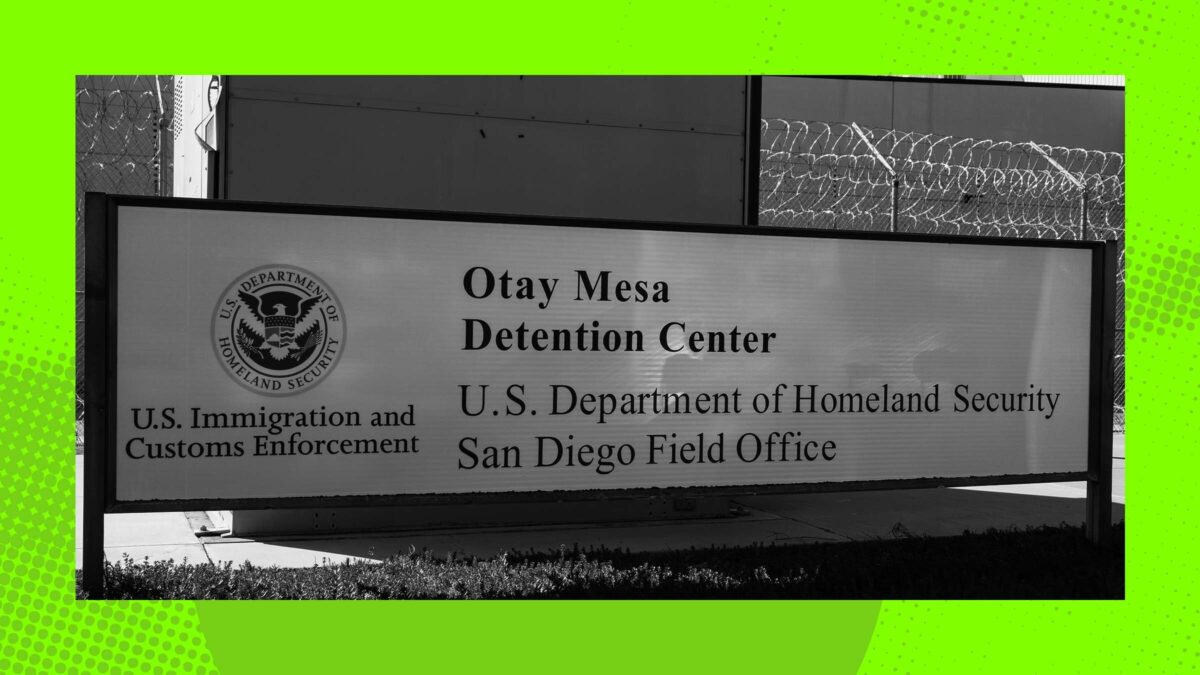
Across the country, ICE is conducting a campaign of raids designed to terrify and destabilize immigrant communities. But as you read headlines about ICE rounding people up from Home Depot parking lots, childcare centers, and green card interviews, it’s important to understand what happens to these people next, and the hurdles they face to regaining their freedom.
Although the whole U.S. immigration system is notoriously confusing, the greatest opacity surrounds the world of immigration detention: where ICE imprisons tens of thousands of people accused of being “removable,” or lacking valid status to be in the United States. If people in immigration detention successfully defend themselves, they can remain in the country. If they don’t, they face deportation.
Detained people can ask for a bond, which allows them to leave jail, return to their families and communities, and work on their cases outside the harsh conditions of detention. But under federal law, the vast majority are eligible to ask for a bond exactly once, and courts place a demanding burden of proof on the incarcerated immigrant, who must persuade an administrative judge that they are likely to show up for future hearings (not a “flight risk”) and will not commit any crimes once they are released (not a “danger to the community“).
In order to satisfy this standard, detained immigrants (or their lawyer, if they have one) must rush to collect documents proving their identity, family ties, and residence and employment, and provide evidence of community support—for example, letters from friends, neighbors, or religious leaders. For people who are already incarcerated, coordinating this effort can be functionally impossible. Judges typically don’t ask immigrants if they can read or write, let alone whether they understand the legal standard they are supposed to satisfy.
Logistics are only the beginning of the challenges people in immigration detention face. Although there is a statutory minimum bond amount of $1,500, there is no ceiling, which allows immigration judges to set bond amounts as high as their imaginations allow: The median bond amount over the past year was $6,000, but some judges have set it north of $70,000. And although immigration detention is ostensibly civil, it replicates the worst evils of the criminal legal system, including targeted anti-Black racism: Between June 2018 and June 2020, the immigration nonprofit RAICES paid an average bond of $16,700 for Haitian immigrants—more than 50 percent higher than the $10,500 average it paid for non-Black immigrants.
Immigration lawyers must put in far more hours and expend more resources to prepare for trial if their clients are in detention. Maintaining communication with incarcerated clients is challenging, and clients often have to share sensitive information over phones in non-private areas of the jail. ICE confiscates personal property, including cell phones containing the phone numbers, email addresses, and social media logins necessary to contact friends and loved ones who could offer support. In my experience, preparing a case for a person who is not in detention takes between 40 and 50 hours; a challenging asylum case for a person in detention can take 200 hours.
Perhaps most burdensome, ICE chooses to warehouse the majority of detained noncitizens in remote rural locations, especially the Deep South—a dynamic that requires attorneys to travel long hours for visits with clients. I have routinely worked 20-hour days to conduct client visits, including four-hour drives to and from detention centers. Additionally, ICE moves jailed immigrants with no notice to their attorneys or families, no matter how close they are to their trial dates.
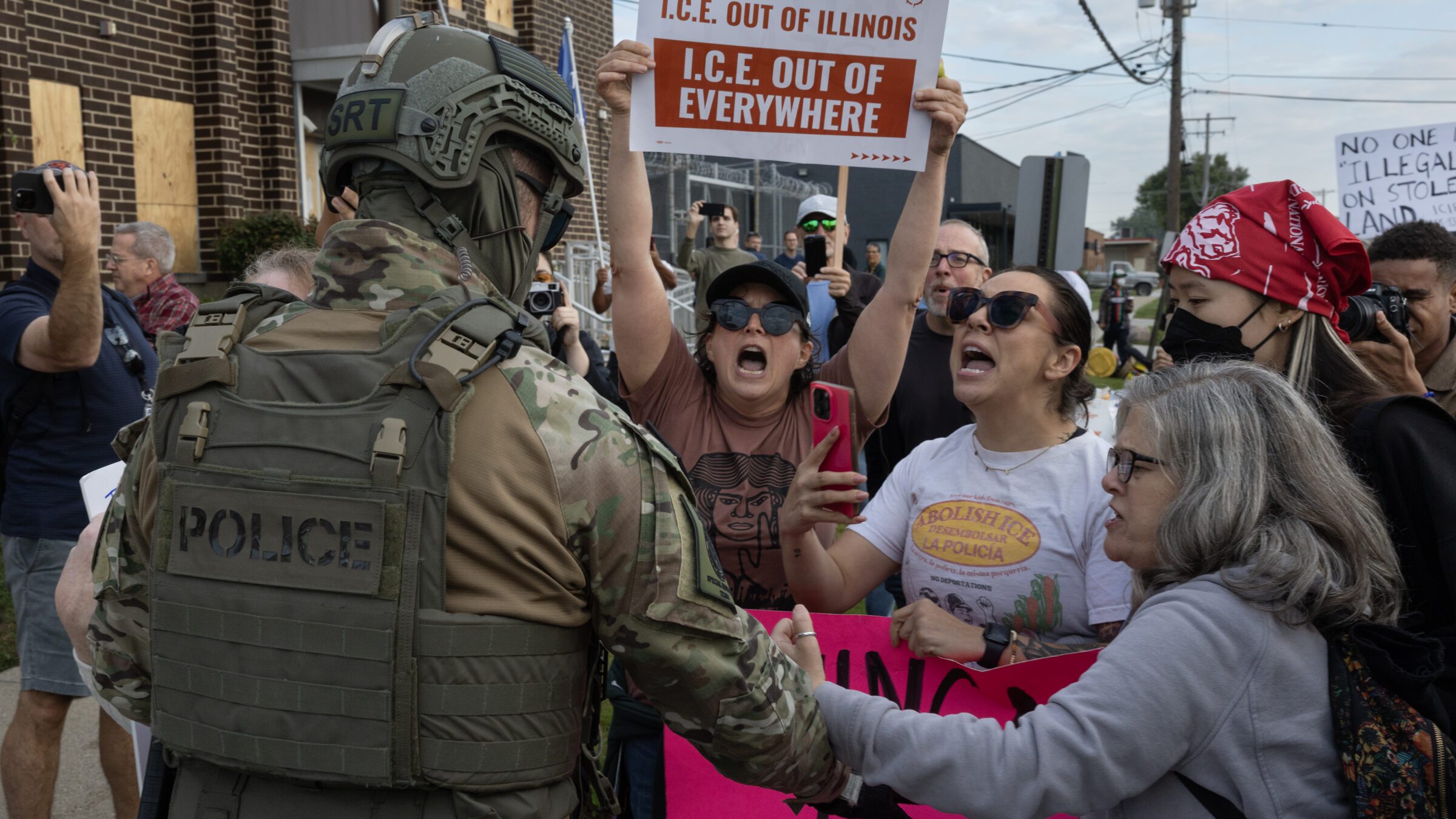
(Photo by Scott Olson/Getty Images)
Having a lawyer can be the difference between winning and losing an immigration case. A 2021 report found that in the Washington, D.C. region, only 11 percent of unrepresented immigrants in immigration court in Arlington, Virginia, won their cases, and only 7 percent in Baltimore. With a lawyer, immigrants are up to 10 times more likely to prevail. But there is no immigration public defender service, and these cases can be so difficult that some private immigration lawyers won’t take them on at all.
To persuade immigration judges that a detained immigrant is a “danger to the community” and should not be offered a bond of any amount, ICE typically relies on Form I-213: a few pages that include statements from an immigration officer about an immigrant’s personal information, and a primer on their immigration and/or criminal history. And among the most impactful bits of information on this form are alleged gang ties: Researchers from CLINIC Legal and the University of Maryland found that when ICE attorneys in Maryland immigration court submitted an I-213 alleging gang membership, 88 percent of immigrants were denied the chance to pay a bond, reunite with their loved ones, and work on their cases outside.
The gang databases used to populate these forms are deeply unreliable. The typical source for gang membership “verification” is an anonymous local cop whom the ICE attorney has never met and doesn’t name, and who can never be questioned by the judge or the immigrant in open court. Some of the flaws with these databases are beyond absurd: For example, a 2018 report found that Chicago’s gang database contained the names of over 33,000 people who were 17 years old or younger, and hundreds of people who were dead. In California, a 2017 audit showed that the state had labeled 42 infants less than one year old as “verified gang members,” with supposed confessions of gang membership to police from 28 of them.

What kind of horrific crimes could get an immigrant labeled as a gang member? It could be something as simple as wearing a particular brand of shoes, or T-shirts of a particular color, or fan apparel of particular sports teams. Relationships can also trigger allegations of gang membership, which is especially dangerous for young people, who might get labeled a “known associate” of a “verified gang member” simply by attending school with other teenagers in the neighborhood. If anything like this appears on your Form I-213, in immigration court, you are considered a dangerous gang member. It does not matter much if you protest that you have never been in a gang, and probably do not know anyone who is.
For ICE attorneys and immigration judges, the gold standard for gang membership is having a tattoo. Again, it does not matter that Tren de Aragua, which President Donald Trump repeatedly invokes to justify his anti-immigrant policies, does not use tattoos to identify members; in the world of immigration enforcement, the lines between Latino ethnicity, tattoo status, and gang membership labels have collapsed. When the Trump administration shipped hundreds of people to a Salvadoran megaprison earlier this year, it claimed 238 of them were involved with Tren de Aragua based primarily on tattoos of stars, roses, or the Michael Jordan Jumpman logo.
The majority of people in ICE detention have never had any kind of criminal conviction, even for minor violations like trespassing or smoking marijuana. The administration knows this, but it also knows that the mere fact of detention is an obstacle to winning even the strongest cases. By relying on inaccurate information tainted by racism to keep people locked up, the administration gets around this inconvenient reality, ruining lives and upending communities in the process.