In October 2022, Milder Escobar-Temal’s wife called police in Nashville, Tennessee and alleged that he was abusing his 14-year-old stepdaughter. When police responded to the call and searched the home, they found three handguns. Possessing firearms while unlawfully present in the United States is a federal crime, and prosecutors charged Escobar-Temal, a citizen of Guatemala who entered the U.S. without legal authorization in 2012, accordingly.
Escobar-Temal pled guilty last year, but also argued that the law criminalizing gun possession for undocumented immigrants is unconstitutional. The Second Amendment protects “the right of the people to keep and bear arms,” and in 2022, the Supreme Court held that laws regulating that right are “presumptively” unconstitutional, unless there is a sufficiently similar “historical analogue” from the founding era.
That case, New York State Rifle & Pistol Association v. Bruen, created a high hurdle for gun control legislation, and Escobar-Temal argued the statute didn’t clear it. But on Monday, the Sixth Circuit Court of Appeals disagreed, finding a “substantial history” of founding-era laws disarming groups of people that were “seen as lacking a regulable relationship to the government”—for example, Quakers who refused to take loyalty oaths, and people who wouldn’t renounce their allegiance to the British Crown.
Joined by Judge Stephanie Davis, Judge Kathy Stranch acknowledged that many early American gun restrictions “reflected a worldview suspicious and disdainful of anyone who was not white, male, and landowning.” But the Supreme Court stuck judges with a historical standard, so she tried to make it work. “It is our job to separate the important underlying principles of the relationship between governmental interests and individuals’ right to bear arms from the troublesome applications of those principles employed by the Founders,” she said.
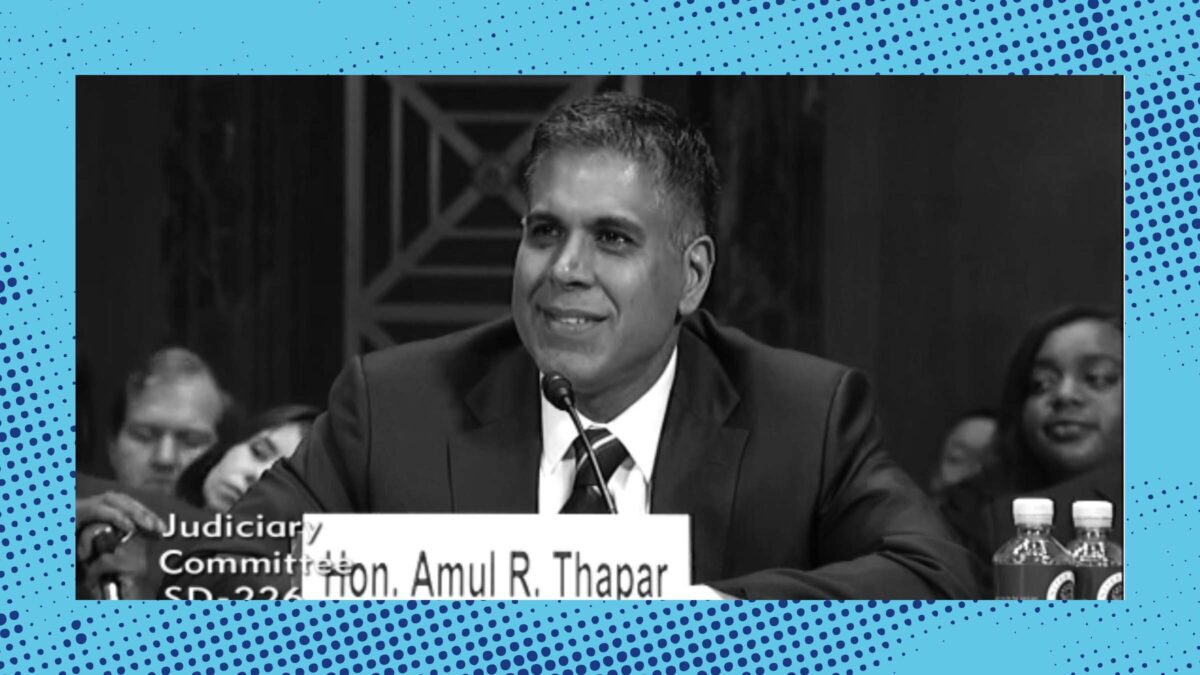
Judge Amul Thapar apparently disagrees. Thapar, who appeared on President Donald Trump’s Supreme Court shortlist in 2018, authored a solo concurrence arguing that Escobar-Temal has no rights under the Second Amendment, or the First Amendment, or the Fourth Amendment. All of those amendments refer to rights of “the people”—to keep and bear arms, to peaceably assemble, and to be free from unreasonable searches and seizures, among other things. And as a noncitizen, Thapar argued, Escobar-Temal is not among “the people.”
“Plain and simple, ‘the people’ refers to the American citizens who consented to the government of the United States,” said Thapar. “And our historical traditions, constitutional text, and Supreme Court precedent confirm this.”
The Supreme Court has never limited “the people” to citizens. The Court has, however, repeatedly recognized that noncitizen residents enjoy many of the same rights that citizens do. In its 1990 decision United States v. Verdugo-Urquidez, the Court suggested that “the people” protected by the First, Second, and Fourth Amendments “refers to a class of persons who are part of a national community or who have otherwise developed sufficient connection with this country to be considered part of that community.” Chief Justice William Rehnquist further stated that “aliens receive constitutional protections when they have come within the territory of the United States and developed substantial connections with this country.” Put simply, people are not necessarily excluded from “the people” simply because they are undocumented.
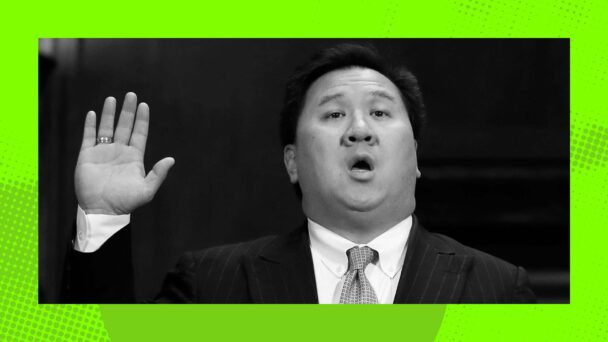
Thapar’s concurrence pushes a new and ambitious argument: that the Founders used the phrase “the people” to mean “American citizens who established the United States government,” and excluded “illegal aliens” who “did not ratify the Constitution.” Like his claims about precedent, these conclusions do not hold up to historical scrutiny. As Davis and Stranch pointed out, immigration laws as they exist today did not exist at the founding. The Chinese Exclusion Act, the first major federal law restricting immigration, was enacted in 1882, and there was no broad visa requirement for entering the country until 1917. Thus, Stranch said, “the early post-founding laws did not define the necessary relationship” between the government and disarmable groups “based on lawful versus unlawful immigration status.”
Thapar’s opinion attempts to limit the rights of “the people” to people who he thinks had political rights in the 18th century. This is a dangerous game for anyone outside of the landed gentry of yore to play. But he may believe the possible reward of a Supreme Court seat is worth the risks. Thapar, whom Trump elevated to the Sixth Circuit in 2017, is endorsing a view of the law that would strip the Constitution’s protections away from tens of millions of noncitizens at the precise moment those communities are under attack by the Trump administration. And a surefire way to get this White House to notice you is to manufacture ahistorical justifications for harming already-vulnerable people.