A divided panel of three federal judges issued a preliminary order on Tuesday blocking Texas’s electoral map, which Texas Republican lawmakers adopted in August at the behest of the Trump administration, as an illegal racial gerrymander. In an opinion joined by Judge David Guaderrama, Judge Jeffrey Brown concluded that Texas had redrawn the boundaries of four districts “for one reason and one reason alone: the racial demographics of the voters who live there.”
Somewhat unusually, the court published the 160-page majority opinion without the dissent. Brown, a district court judge appointed by President Donald Trump in 2019, said in a footnote on the first page that a dissent by Fifth Circuit Court of Appeals Judge Jerry E. Smith would follow. (Under federal law, challenges to the constitutionality of congressional districts are heard by three-judge panels that include at least one appeals court judge.)
On Wednesday, follow it did: Smith unleashed an 104-page tirade filled with antisemitic dog whistles, personal and professional attacks against Brown, and indignation at the idea that Texas lawmakers could be racist. In his opening line, Smith, an appointee of President Ronald Reagan, gives readers a thoughtful warning. “Fasten your seatbelts,” he said. “It’s going to be a bumpy night!”
Before moving into the legal substance, Smith includes a “preliminary statement” to explain why the majority opinion was published without his dissent—or, in his words, “to highlight the pernicious judicial misbehavior of U.S. District Judge Jeffrey Vincent Brown.” According to Smith, the panel voted in October, but he heard nothing from the two judges in the majority for weeks, until they gave him an outline of their opinion on November 5. Then, on November 12, Brown informed Smith that they planned to publish the opinion in three days. “Sadly, we do not believe we can wait for a dissenting opinion before we rule,” Brown said.
Brown’s stated reason for the time crunch was Purcell v. Gonzalez, a 2006 Supreme Court shadow docket opinion that says that judges should not make decisions that alter rules governing an imminent election. “We are not trying to cut you out, we just don’t have the time,” said Brown, in his message to Smith. “Ideally, of course, we’d have liked to have seen your dissent before we issue our opinion, but that will also be impossible.”
In his statement, Smith characterized this as “unthinkable.” A key function of multi-judge courts, he reasoned, is to produce a fuller deliberative process. Yet, he said, the majority effectively told him, “We don’t need to wait for your dissent and wouldn’t read it if we did.” Smith called this “the most outrageous conduct by a judge” that he ever encountered in his 37 years on the federal bench.
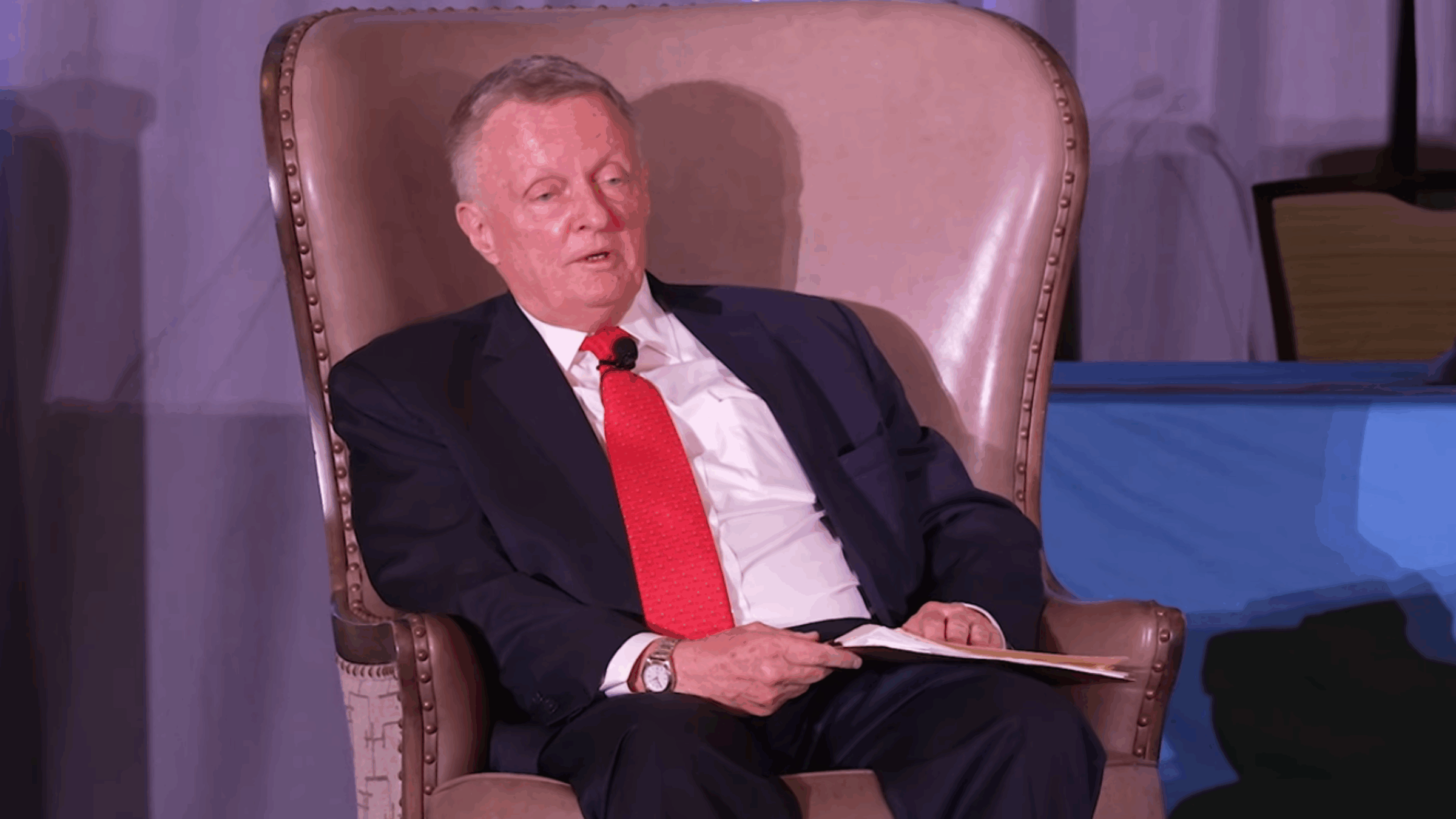
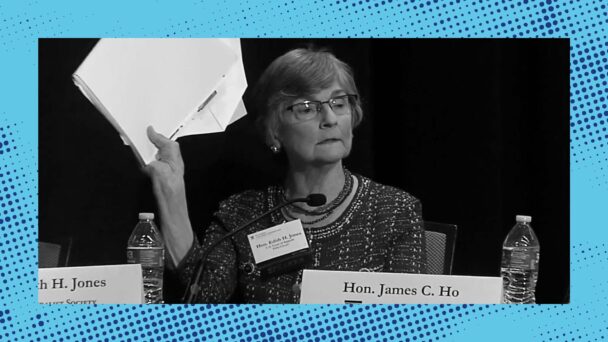
Screencap via YouTube
Again, that vitriol comes before Smith even reaches the substantive portion of his dissent, in which he characterizes Brown as an “unskilled magician” who prefers “living in a fantasyland.” According to Smith, the relevant question for the court was whether the state legislature drew the new lines on account of race. Throughout his dissent, Smith argued that “the obvious reason” for Texas’s redistricting scheme was not race discrimination, but “partisan gain”—which, under the Supreme Court’s 2019 decision in Rucho v. Common Cause, is A-OK.
Racial gerrymandering, however, is currently illegal. But it’s not hard to recast discrimination on racial lines as discrimination on partisan lines, and last year, in Alexander v. South Carolina NAACP, the Supreme Court said that judges evaluating these cases must presume that lawmakers are acting with “good faith.” This, Smith said, is where Brown went wrong: Rather than making the legally required assumption that lawmakers aren’t being racist, he accepted the map challengers’ portrayal of Texas lawmakers as “a bunch of backwoods hayseed bigots who bemoan the abolition of the poll tax and pine for the days of literacy tests and lynchings.”
Smith blamed partisan politics for the redistricting litigation, too. But this time, by partisanship, he meant “Jews.” Smith said that George Soros, the Holocaust survivor and liberal billionaire whose giving is at the center of many far-right conspiracy theories, funds the Texas plaintiffs’ expert witness and legal team, and that Brown handed Soros a victory “on a silver platter.”
In a footnote, Smith argued that his invocations of the specter of Soros were warranted because “the public is entitled to know who’s really driving this bus.” But the idea of rich Jews secretly pulling the strings—and Soros in particular as a stand-in for Jewish wealth and control—is a well-worn antisemitic trope. And its prevalence throughout the opinion is alarming: “Soros” appears 17 times; “I dissent,” for comparison, appears 16 times.
Smith’s anger is misplaced. The Supreme Court—not Democrats, not liberals, and certainly not George Soros—is responsible for the redistricting mayhem across the country. It’s the Supreme Court that decided there’s no problem with partisan gerrymandering. It’s the Supreme Court that decided that courts eyeing looming elections have to rush to strike down illegal maps. And it’s the Supreme Court that decided to throw away countless protections for voters of color, and might get rid of some more soon.