By a 6-3 vote on Friday, the Supreme Court struck down President Donald Trump’s regime of “emergency” tariffs, on the grounds that (I am summarizing at a very high level here) federal law does not allow a doddering near-octogenarian to wreak havoc on the global economy by mashing out Truth Social posts from the comfort of a White House toilet seat.
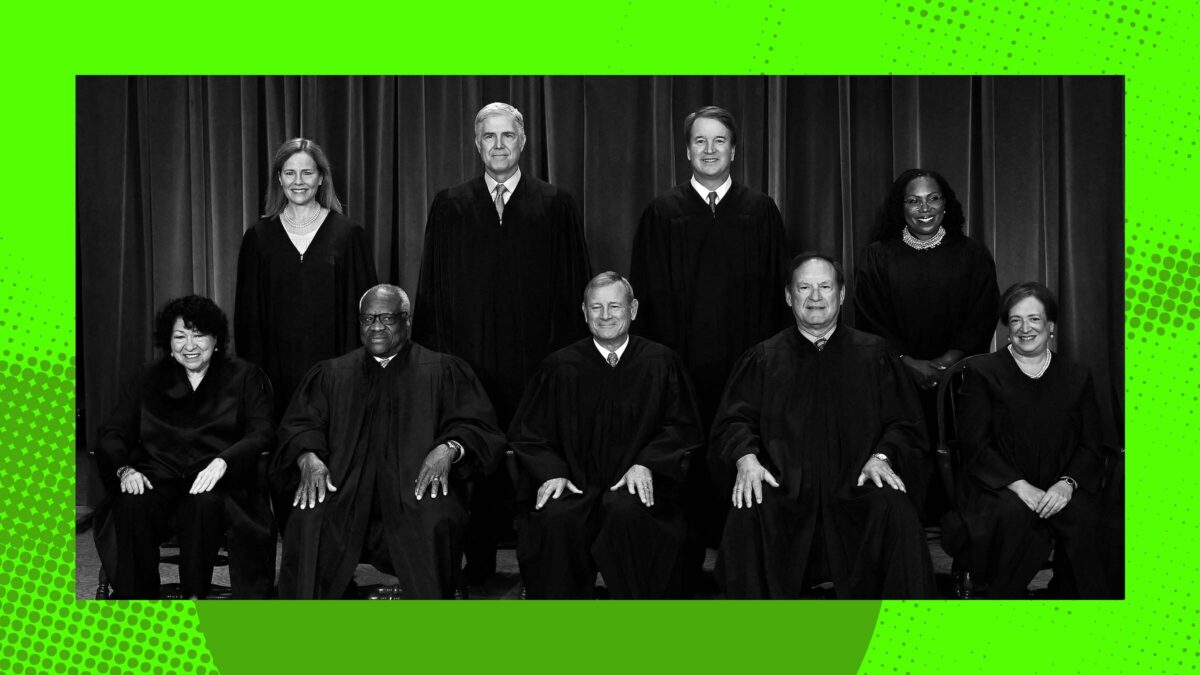
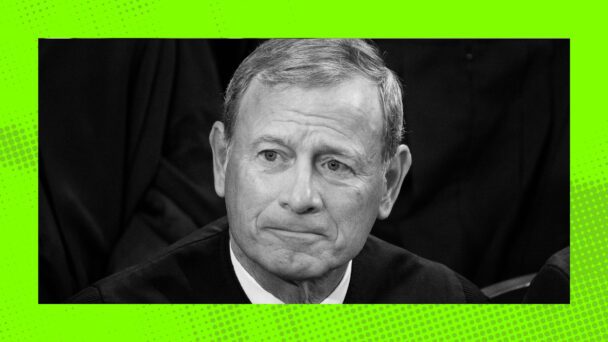
The outcome in the case, Learning Resources v. Trump, is a real mess of unlikely alliances, partial concurrences, and embarrassing dissents. Chief Justice John Roberts wrote the main opinion, which was joined in full by Justices Neil Gorsuch and Amy Coney Barrett, and in part—more on this later—by Justices Sonia Sotomayor, Elena Kagan, and Ketanji Brown Jackson.
The thrust of Roberts’s opinion is that IEEPA, a 1977 federal statute that empowers presidents to “regulate…importation” during national “emergencies,” is not broad enough to encompass the “extraordinary” tariff powers that Trump is asserting in 2026. As he did at oral argument, Roberts leaned heavily on the simple fact that the text of IEEPA does not mention tariffs at all—an omission which suggests that the enacting Congress did not intend IEEPA to allow presidents to impose tariffs willy-nilly. The vague “regulate…importation” language on which Trump relies, Roberts concluded, is just not enough to “fill that void.”
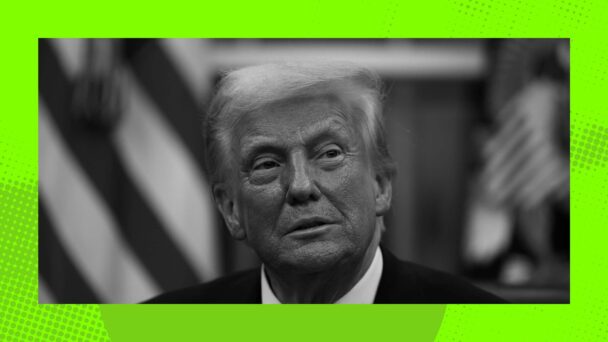
At a press conference a few hours later, Trump lashed out at Roberts, Gorsuch, and Barrett for “not having the courage to do what’s right,” and he thanked the three dissenters—Justices Clarence Thomas, Samuel Alito, and Brett Kavanaugh—for their “strength, wisdom, and love of our country.” Trump went on to praise Kavanaugh, who wrote the principal dissent in Learning Resources, for his “genius” and “great ability,” which is instantly, effortlessly ruder to Kavanaugh than anything I have ever said about him.
Clip via YouTube
Since the Court heard oral argument in Learning Resources back in November, the smart money has always been on some coalition of justices finding some reason to rule this way. As generous as the conservative justices have been to Trump since he took office last year, they are even more beholden to the Wall Street wing of the Republican Party, which does not want this White House’s cabal of dunces kicking off a self-inflicted recession.
The outcome in Learning Resources modifies the Court’s pro-Trump jurisprudence only slightly: John Roberts is just fine with allowing his favorite president to run roughshod over brown people, small children, trans people, Democratic voters, representative democracy, and the concept of a functioning federal government. The investment accounts of Baby Boomers planning their retirement parties, however, are firmly off-limits.
Beneath the bottom-line result that prompted Trump to melt down on Friday, though, is a preview of high-stakes policy fights that are still to come—when elected Democrats return to power, perhaps, and when the Court’s six-justice conservative supermajority will serve not as a rubber-stamp for Republican presidents, but as a thorn in the side of Democratic presidents. In Learning Resources, the liberal justices did what they could to ensure that a (future, very much hypothetical) unified Democratic government will be able to do the work of governing. The conservatives went out of their way to ensure that it will not.
At oral argument in Learning Resources, the justices spent lots of time pondering the applicability of the “major questions doctrine,” which the conservative justices repeatedly invoked during the Biden administration to strike down his COVID-19 eviction moratorium, his student loan forgiveness plan, and other initiatives they did not like. The idea behind the doctrine is that Congress, in its infinite wisdom, would never use ambiguous statutory language to delegate “highly consequential” legislative powers to the executive branch. Thus, if a president tries to unilaterally do something at least five justices think is too big a deal to be legal, they can invoke the major questions doctrine to stop it.
The Trump tariffs—which, again, rest on a president’s “emergency” authority to “regulate…importation”—might seem ripe for an open-and-shut application of the major questions doctrine. But again, of the six justices who voted together in this case, only the three conservatives—Roberts, Gorsuch, and Barrett—actually asserted that the tariffs ran afoul of the doctrine. In a separate opinion joined by Sotomayor and Jackson, Kagan agreed with the conservative trio’s conclusion that the text of IEEPA does not allow Trump’s tariffs. But this is not the same as saying that the major questions doctrine does not allow Trump’s tariffs—a conclusion that Kagan and her liberal colleagues explicitly disclaimed.
“Straight-up statutory construction resolves this case for me,” Kagan wrote. “I need no major-questions thumb on the interpretive scales.”
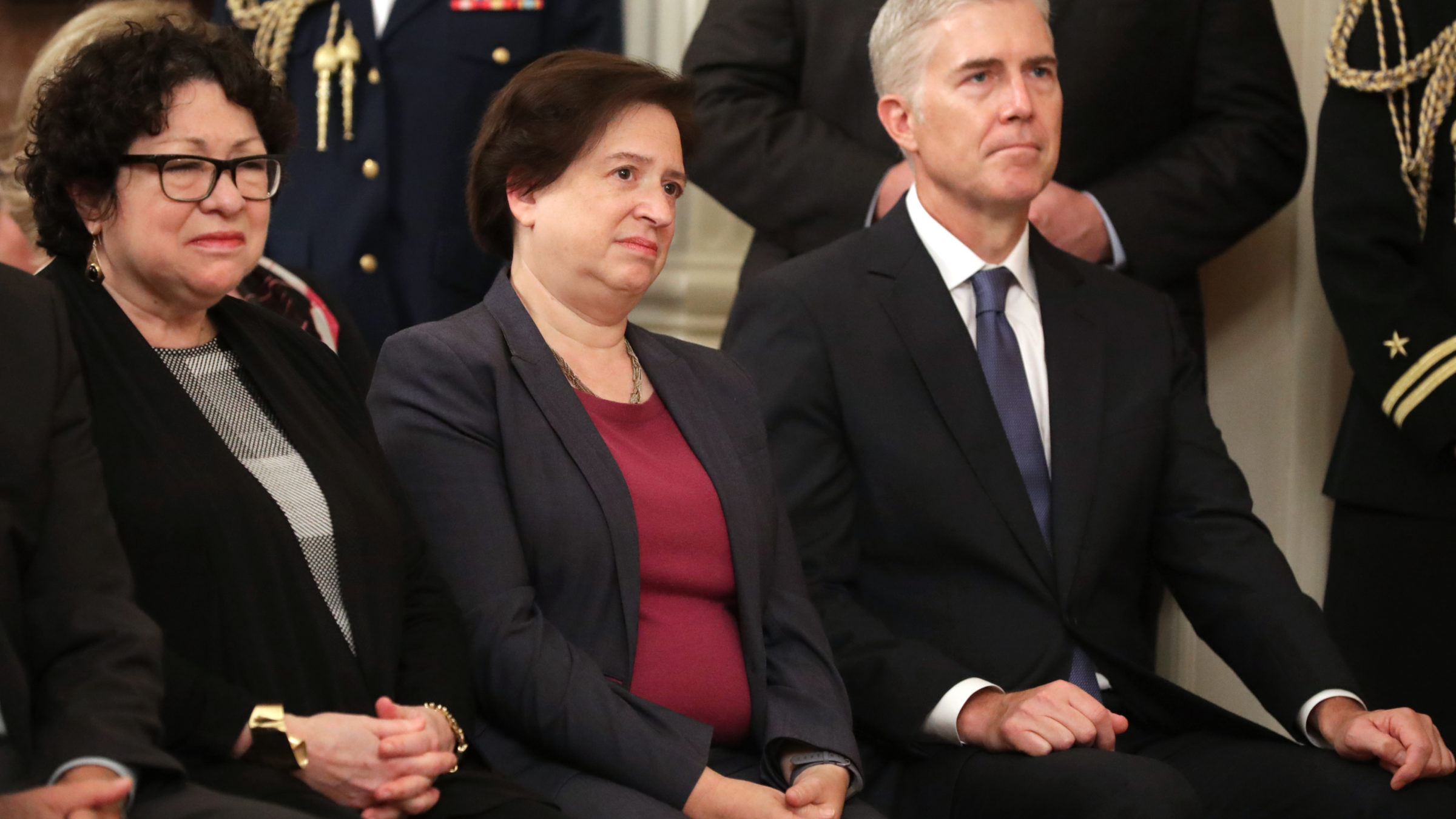
(Photo by Chip Somodevilla/Getty Images)
This has the look and feel of the sort of exhausting, technical debate that only life-tenured judges and terminally online law professors would find interesting. But Learning Resources shows that the justices, who just spent the entire Biden administration battling each other over the major questions doctrine, are already looking beyond the economic agenda of this lame-duck president.
By using the doctrine to strike down the tariffs, Roberts is trying to frame the Court as a nonpartisan, non-ideological, even-handed administrator of justice—a balls-and-strikes Court that is just as willing to strike down Trump’s signature policy initiatives as it was Biden’s four years ago. The liberals, meanwhile, understand that if they were to endorse the major questions doctrine in this case, they would be lending it a veneer of legitimacy in future cases, too, when the six conservatives are once again united and ready to cut an ambitious Democratic president down to size. Hence, the jumble of opinions in Learning Resources: The liberals absolutely wanted to agree with the result, but also wanted to make clear their view that the Court was wrong to use the major questions doctrine to thwart Biden’s agenda, and will be wrong when it uses it to thwart the next Democratic president, too.
Roberts’s opinion is short (20* pages) and pretty straightforward, as far as high-profile Supreme Court opinions usually go. The justices chose to spend 150 additional pages sparring over the limits of presidential power and judicial review, though, because of everything happening across the street from their offices: As the 2026 midterms approach, the Republican majorities on Capitol Hill are looking tenuous at best, and Trump’s approval rating is so low that the pollsters at Gallup decided to stop measuring it altogether. The justices now understand that the Court might be operating in a drastically different political context in the very near future. The conservatives wanted to make sure that when that moment comes, they will have the tools and the numbers to do what they want.
Correction: An earlier version of this post stated that Roberts’s opinion is 17 pages long. It is 20 pages long. This is what I get for trying to do math.