The Supreme Court heard oral argument today in Watson v. Republican National Committee, a case about the Republican Party’s latest attempt to disenfranchise American voters. “Election Day” is established by various federal statutes dating back to 1875 as the Tuesday after the first Monday in November. And the RNC argues that Mississippi violates those laws by accepting and counting mail ballots that are postmarked by Election Day, but arrive up to five business days afterwards.
State legislatures have long authorized mail-voting—and short grace periods for receiving ballots—to respond to the varying needs of the electorate, like counting the ballots of soldiers fighting in the Civil War. Today, tens of millions of people across the country vote by mail in federal elections. Most states—29, to be exact, and Washington D.C.—count at least some timely cast ballots if the state receives them within a brief window after Election Day. And several federal laws show that Congress is both aware of and comfortable with post-Election Day deadlines; the Uniformed and Overseas Citizens Absentee Voting Act, for example, has sometimes even required states to count ballots that arrive after Election Day.
But in this case, the RNC argues that in order for a ballot to count, it must not only be cast by the specific day we call Election Day, but also received by the specific day we call Election Day. In other words, the RNC’s argument is that roughly half the country has been running elections wrong for roughly 150 years.
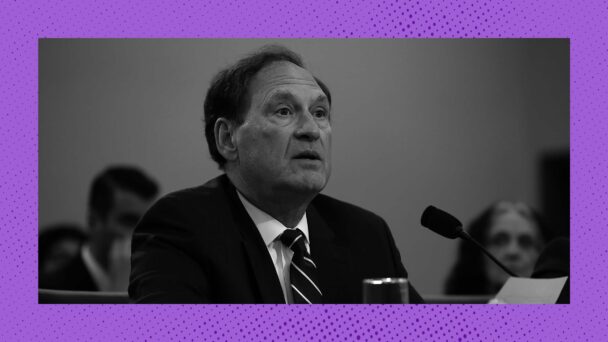
In October 2024, a panel of three Trump-appointed judges on the Fifth Circuit Court of Appeals agreed with the RNC. Election Day, wrote Judge Andrew Oldham, joined by Judges Kyle Duncan and James Ho, is “the day by which ballots must be both cast by voters and received by state officials”; thus, they concluded, Mississippi’s statutory grace period is preempted by federal law. Mississippi Secretary of State Michael Watson appealed to the Supreme Court.
The Elections Clause of the Constitution gives states the power to set the “time, places, and manner” of elections unless Congress says otherwise. So, the actual question the Supreme Court is supposed to answer in Watson v. RNC is whether Congress intended its creation of Election Day to prohibit state governments from setting their own deadlines to receive the ballots cast by that day.
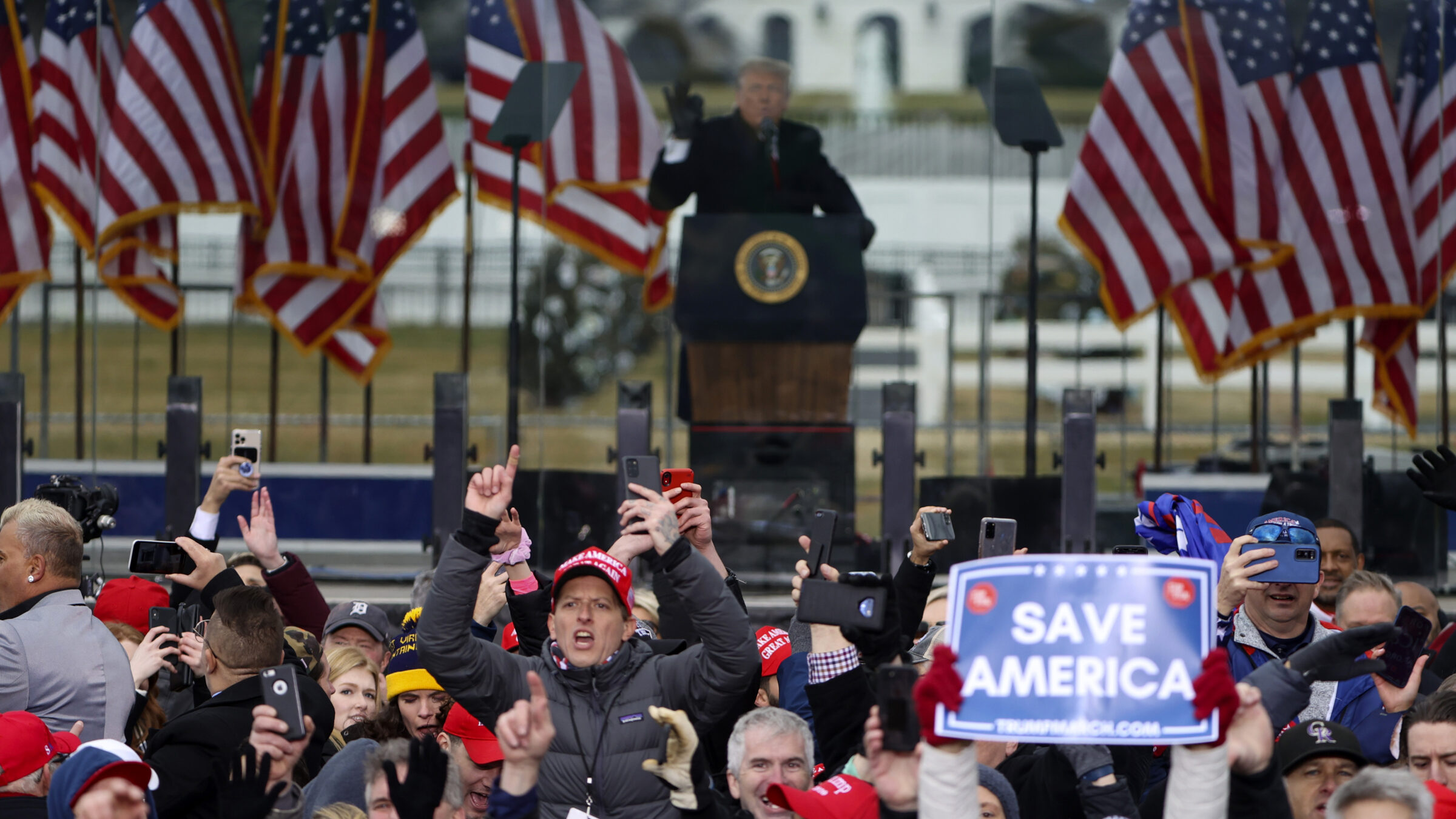
Yet at Monday’s oral argument, multiple conservative justices showed a profound disinterest in determining whether Congress permitted the policy at issue. Instead, they fixated on whether they personally approved of mail-in voting, asking a series of questions about out-there doomsday election scenarios entirely unrelated to the legality of Mississippi’s deadline. Since his election loss in 2020, their party’s leader has pushed the lie that mail-in ballots are riddled with fraud (while continuing to vote by mail himself, of course). Like every other Republican who is still relevant in Republican politics, the conservative justices have adjusted their rhetoric accordingly.
(Photo by Tasos Katopodis/Getty Images)
Justice Neil Gorsuch pressed Mississippi Solicitor General Scott Stewart about what other means of ballot submission states could create if federal law allows a grace period. “Why can’t a state say: How about a time-stamped video showing that I voted on Election Day?” he asked. Gorsuch presented a hypothetical in which a state allowed a voter to take a video of themselves filling out a ballot, and then allowed a random person—“my brother or maybe some aggregator of ballots”—to return it three weeks later. “That’s got to be okay, too, doesn’t it?” asked Gorsuch.
After some back-and-forth, Justice Sonia Sotomayor jumped in to lend Stewart a hand, and to pull her colleague back on track. “You’re only defending this law,” she said, which she reminded the courtroom is “very consistent with what has happened for over a hundred years.” Returning to the preemption question, Sotomayor pointed out that “nothing in federal law” explicitly prohibits Mississippi’s grace period.
Gorsuch then posed another hypothetical in which news breaks after Election Day that “one of the lead candidates engaged in an inappropriate sexual escapade, or perhaps is colluding with a foreign power.” He then imagined that the rival candidate mobilized voters to recall their ballots en masse, and asked if, in this scenario, the “election” still happened on Election Day. His hypothetical inspired further questions from Justice Amy Coney Barrett, who asked if “a portion” of Mississippi’s statute might be unlawful, insofar as a recall “allowed ballot receipt after Election Day,” and if it would be legal for someone to recall a ballot before Election Day.
It was Justice Ketanji Brown Jackson’s turn, then, to try to get back to the legal matter at hand. “Let me just clarify: This case is not about a Mississippi practice or policy related to recalling ballots, is that right?” she asked. Stewart confirmed that was correct. Sotomayor also asked if there was any history of voter recall of mail ballots in Mississippi. “None that I’ve ever heard of,” he replied, “and nobody cited a single example in history of it.”

The liberal justices’ questions, and Stewart’s answers, indicated that some of the Republican justices were getting caught up in a nonexistent problem. But Justices Sam Alito and Brett Kavanaugh suggested that facts may not matter as much as feelings, asking about whether mail-in ballots create “the appearance of fraud,” and to what extent the Court should consider voters’ “confidence in the election process.” Alito, who is perhaps the Court’s leading voter fraud conspiracy theorist, complained that a “big stash” of post-Election Day ballots that “radically flip” an “apparent outcome” could “seriously undermine” voter trust, and emphasized that there are a “variety of line-drawing problems.”
Jackson countered that the issues Alito identified are “only problems to the extent that Congress thought they were problems.” The relevant question is not whether line-drawing problems exist, but whether Congress meant to prevent states from drawing their own lines. “We have no federal statutes that preclude this,” said Jackson. Jackson also pointed out that Congress is currently considering legislation, at President Donald Trump’s instruction, that would specifically preempt states’ post-Election Day ballot deadlines, which further suggests that “Congress doesn’t believe that its current legislation has done this work.”
By advancing this novel preemption argument, the Republican Party is essentially making an end-run around Congress, asking the Supreme Court to unilaterally destabilize election administration nationwide. Chronic underfunding has already forced the Postal Service to lower its standards and delay mail delivery. If the Court accepts the GOP’s invitation to impose a new standard, it could cut hundreds of thousands of Americans out of the political process.
For Trump’s Republican Party, it doesn’t matter if you’re a legally qualified voter. It doesn’t matter if you mailed your ballot on or before Election Day. And it doesn’t matter if your ballot arrives just a tiny bit late through no fault of your own. What matters is indulging Trump’s lies about the 2020 election, keeping undesirables out of the political process, and manipulating the law in service of those goals.