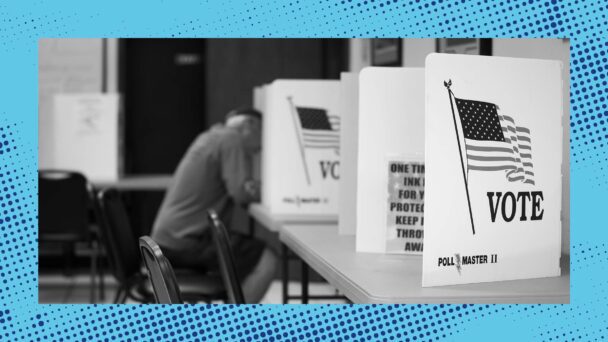
Last week, Florida Governor Ron DeSantis signed into law a sweeping voter suppression bill designed to implement the measures proposed in the federal SAVE Act at the state level. Similar to the federal bill, the state bill’s provisions require Floridians to present election officials with specific forms of documentary proof of citizenship in order to register to vote and remain on the voter rolls—documents that many eligible voters do not have. Civil rights groups warn that the statute would disenfranchise millions of Floridians when it becomes effective in January 2027, and have already filed lawsuits challenging its constitutionality.
Republican efforts to pass the federal SAVE Act have stalled in the Senate for weeks. But Florida is the fourth state this year to adopt its own version of the law, joining Utah, South Dakota, and Mississippi. Including these four, 11 states in total have enacted proof of voter citizenship laws since 2022. This rash of legislation is just one of the ways Republican elected officials have attacked the ability of marginalized people to participate in the political process, empowered by a Supreme Court which has spent over a decade relentlessly undermining the Voting Rights Act.
The VRA is a landmark law Congress enacted in 1965 in order to finally implement the Constitution’s prohibition on racial discrimination in voting. Enforcement of the VRA dramatically expanded ballot access and representation in government for minority groups, which gave the Act its reputation as the most effective civil rights law of all time—and turned it into a target of the conservative legal movement.
In its 2013 decision in Shelby County v. Holder, the Republican-led Court gutted the VRA’s most innovative provision, which required jurisdictions with a history of discrimination to “preclear” changes to their voting policies with the Department of Justice. Shelby County made it easier for known bad actors to implement bad laws, and emboldened a nationwide movement hostile to multiracial democracy.
Since the Court’s ruling, dozens of states have passed over 100 laws restricting the right to vote. They purged people from the voter rolls. They ended same-day voter registration. They reduced early voting. They limited mail voting. They closed polling places. They imposed strict voter ID requirements. They abused the redistricting process. And more.
The cumulative effect of all this restrictive legislation is mass disenfranchisement. And to make matters worse, in 2021, the Court invented a punishing new legal standard for VRA cases, making it harder for voters to prove that a law illegally discriminates on the basis of race. Worse still, the Court is expected to announce later this year that, even if voters do prove a law is discriminatory, they can’t legally do anything about it. In Louisiana v. Callais, the Court is entertaining an argument that district maps drawn to fix illegal racial gerrymanders are necessarily also racial gerrymanders, and therefore just as illegal.
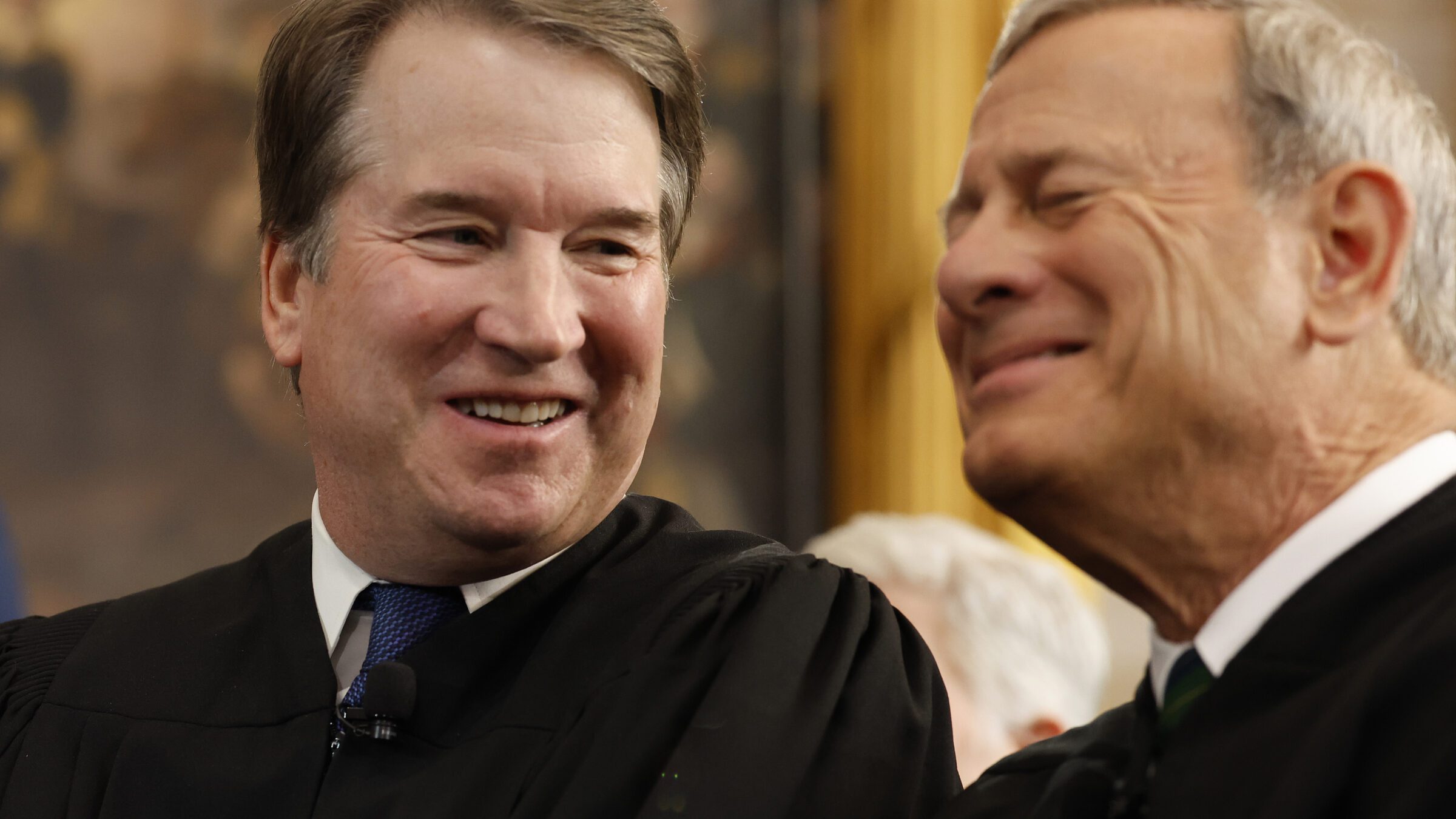
(Photo by Chip Somodevilla/Getty Images)
The Supreme Court’s open antagonism against voter protections, as demonstrated in these cases and others, cleared a path for the ongoing surge of voter suppression laws in the states, and limited people’s ability to protect their rights in court. At the same time, a rival state legislative movement is attempting to fill the void that the Court created by enacting their own state voting rights acts. Nine states have passed state VRAs since 2001, including six since 2018. While the laws vary a bit from state to state, all state VRAs guard against race-based denial or dilution of the right to vote, and some reestablish preclearance requirements within individual states.
These laws are a necessary countermeasure to attacks on the right to vote. But there is new reason to believe that, like the Voting Rights Act, these state laws are vulnerable at the Supreme Court, too. In a shadow docket order last month, the Court blocked a redistricting decision from a New York state trial court, which had determined that a district map violated the New York constitution by denying Black and Latino voters an equal opportunity to participate in the political process.
The state trial court had directed the state’s Independent Redistricting Commission to draw a new, fair map. But in Malliotakis v. Williams, the Supreme Court overruled that directive—interjecting before the state’s high court could weigh in and before the Redistricting Commission even drew a new district, flouting federal laws that limit the Court’s authority to intrude on state affairs.
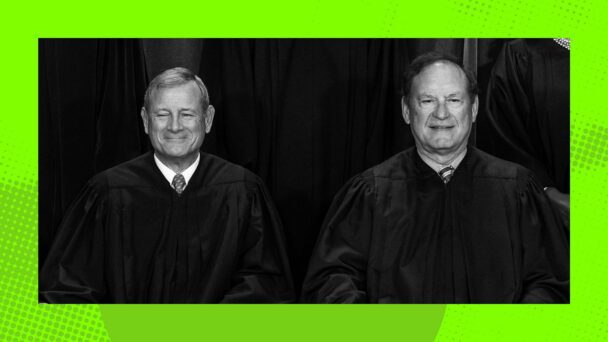
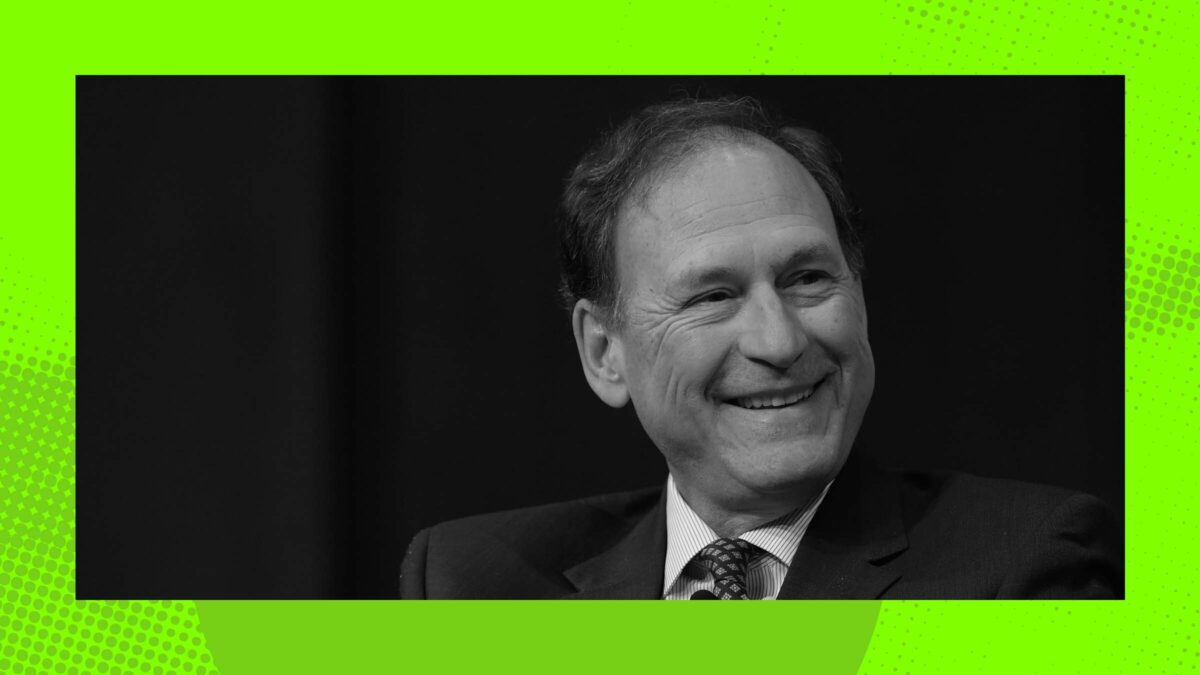
The three liberal justices dissented, and there is no majority opinion. The only semblance of a rationale for the Court’s actions comes from Justice Sam Alito, who wrote in a concurrence that drawing a new district for “the express purpose of ensuring that minority voters are able to elect the candidate of their choice,” as the New York court did, constitutes “unadorned racial discrimination.” Alito further described such redistricting as “an inherently odious activity” that violates the federal Constitution in all but the “most extraordinary” circumstances. Lest there be any doubt, he also stated that remedying a violation of state law is not such a circumstance, because “a state law cannot authorize the violation of federal rights.”
In other words, Alito thinks state measures designed to protect voters of color from racist and illegal attacks on their rights are themselves racist and illegal. And the Court’s conservative majority is happy to meddle in states whose laws they disagree with, even when they have no legal authority to do so. Justice Sonia Sotomayor warned in dissent that “every decision from any court is now fair game,” since any aggrieved conservative “searching for a sympathetic ear” need only file an emergency petition directly to the Supreme Court.
Courts used to recognize that states have the power to safeguard multiracial democracy, and treated “reverse racism” arguments like Alito’s as unserious. Those same arguments now have a foothold in the highest court in the country, and pose a serious threat to one of few remaining bulwarks for free and fair elections. Since Shelby County, the Supreme Court has allowed states to suppress the vote at will. Malliotakis suggests the Court will not afford states trying to protect the vote that same freedom. Essentially, the Supreme Court is building a one-way antidemocratic ratchet: expanding states’ authority to hurt voters, and constricting states’ authority to help.