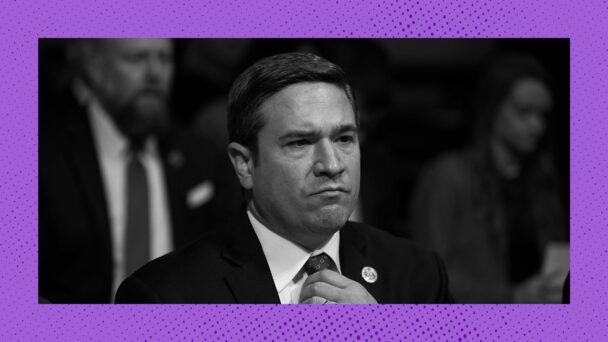
For nearly three decades, the Texas Attorney General’s office served as one of the conservative legal movement’s most powerful institutions. It challenged Democratic presidents in court, developed legal theories that reshaped national debates, and cultivated a generation of conservative lawyers who would go on to occupy influential positions in the federal judiciary and Congress.
Now, for the first time since 1998, a Democrat is preparing to take office. The incoming administration of Nathan Johnson, a former state lawmaker, will have the opportunity to put these resources to a different use: defending workers, students, and reproductive freedom rather than challenging the protections they rely on, and using the state’s legal power to protect Texans from abuses by government and private interests alike.
A little over a quarter-century ago, the Texas Attorney General’s office was a relatively quiet state agency. Its work largely consisted of collecting child support and defending the state in court. That began to change under John Cornyn, who in 1998 became the first Republican elected attorney general in Texas since Reconstruction. During his tenure, Cornyn established the office of the Texas Solicitor General, a specialized team of appellate lawyers responsible for representing Texas in state and federal courts, including before the U.S. Supreme Court.
Cornyn was elected to the U.S. Senate in 2002, but his decisions created the infrastructure that Greg Abbott would use to transform the office into a vehicle to advance conservative causes. Abbott, who served for 12 years before being elected governor in 2014, gave the Texas Solicitor General, now-Senator Ted Cruz, a straightforward mission: “Look across the country. If there are conservative principles we can fight and defend, if we can make a difference defending the Constitution and the Bill of Rights, go do it,” Cruz recalled in 2019.
When President Barack Obama entered the White House in 2009, Texas became a central antagonist in efforts to block his administration’s agenda. Under Abbott, the state filed more than 30 lawsuits against the Obama administration in six years, challenging the Affordable Care Act, federal environmental regulations, and immigration protections for undocumented young people.

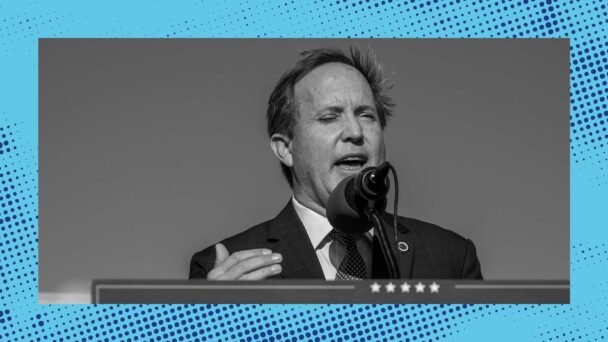
Abbott’s successor, Ken Paxton, took this strategy even further. In 2020, Paxton asked the U.S. Supreme Court to overturn election results in four states that Donald Trump had lost. The Court rejected that request, but in the years that followed, Paxton’s office filed dozens of challenges to President Joe Biden’s policies on immigration, the environment, and healthcare. Paxton also continued to fight to invalidate the Affordable Care Act and to restrict protections for LGBTQ people.
Under the leadership of Cornyn, Abbott, and Paxton, the Texas Attorney General’s office became especially adept at manipulating the federal court system to ensure that its lawsuits landed before sympathetic judges. For example, the Northern District of Texas does not randomize case assignments, and instead uses smaller divisions run by a single judge. Therefore, litigants can file in these single-judge divisions and be almost guaranteed they will get a conservative judge of their choice.
Then, after some Northern District judge inevitably rules in its favor, the Texas Attorney General’s office gets to defend those decisions at the Fifth Circuit Court of Appeals, the most conservative federal appeals court in the country. From there, appeals go before the conservative supermajority on the Supreme Court. This pipeline has helped fast-track some of the most consequential challenges to federal law and policy, turning cases that begin in Texas into national precedent.

Johnson on the campaign trail in 2026 (Katina Zentz/San Antonio Express-News via Getty Images)
But the office’s influence extends beyond the lawsuits it brings. It has also served as a pipeline for conservative lawyers looking to join the ranks of the federal judiciary. According to a Texas Tribune investigation, nine federal judges appointed by Trump between 2018 and 2020 had previously worked in the Texas Attorney General’s office, including Fifth Circuit Judges James Ho, Andrew Oldham, and Kyle Duncan.
The election of Johnson as the state’s next attorney general is going to change all of this in a hurry. As a native Texan, I believe the new attorney general should use the office’s authority to change how the state exercises power and whom it protects. That means looking beyond the cases the office can bring or defend, and recognizing its influence over the conduct of state agencies and the relationship between government and the people it serves. This is a substantially different conception of the attorney general’s role: using the office’s considerable resources to hold government officials accountable, confront abuses of corporate power, and defend the rights of Texans.
That responsibility begins with the office’s own use of state power. First, Johnson should abandon Paxton’s efforts to pursue out-of-state physicians who provide abortion medication to Texans. He should also withdraw the office from its agreement with Immigration and Customs Enforcement that authorizes state employees to perform certain federal immigration-enforcement actions—like assisting in investigations, apprehension, and detention—under ICE supervision. And where Paxton challenged federal protections for LGBTQ students, Johnson should take advantage of the state’s legal resources to defend students against discrimination, not to perpetuate it.
Furthermore, Johnson should take a different approach to economic and environmental protections. Under Paxton, the office sued to block expanded federal protections that would have made more than four million additional workers eligible for overtime pay. Paxton also challenged federal methane regulations requiring oil and gas companies to monitor leaks and reduce emissions—rules the EPA estimated would prevent approximately 58 million tons of methane emissions from entering the atmosphere between 2024 and 2038.
Johnson should stop using the office’s resources to undermine worker protections and reasonable environmental standards. Instead, the office should focus on ensuring labor compliance in emerging industries, protecting immigrant workers, and fighting misclassification of workers as independent contractors—deceptive practices that affect Texans in blue-collar or service-sector jobs. And in a state where oil and gas production touches nearly every corner of the economy, the office should take seriously its responsibility to protect communities from unlawful pollution, contamination, and other practices that put their health and property at risk.
During the administrations of Cornyn, Abbott, and Paxton, Texas saw what an ambitious attorney general can accomplish. But the measure of this new administration should not be how many of Paxton’s cases it abandons or how dramatically it departs from his politics. It should be whether Texans can feel the difference in how their government treats them. Whether workers can count on the state to pursue employers who steal their wages. Whether communities can hold polluters accountable. Whether civil rights mean something when government agencies violate them. And whether the state’s lawyers work for those who have too often been left to fend for themselves.
Texas does not need a less ambitious attorney general. It needs one willing to be ambitious about the right things—and most importantly, for the people.