Across the country, roughly 2.6 million LGBTQ adults are parents to minor children. Childcare is notoriously expensive, and gay and transgender parents are more likely to live in poverty than both straight parents and LGBTQ nonparents. Since August 2023, however, Colorado state law has empowered LGBTQ families to send their children to high-quality preschools, with the knowledge that they won’t be turned away because of cost or because of who they are: Any four-year-old in the state can receive free early education, and any preschool provider is welcome to receive state funds, so long as they welcome all students, too.
Now, the Supreme Court may change that. On Tuesday, the court heard oral argument in St. Mary Catholic Parish v. Roy, a case that could ultimately compel states to use public dollars to subsidize private discrimination.
Under Colorado law, schools that choose to participate in the universal preschool program must provide children with an “equal opportunity” to enroll and receive services, regardless of characteristics like race, religious affiliation, sexual orientation, or gender identity. Thousands of Colorado preschools, including dozens of religious schools, signed the state’s nondiscrimination agreement. Two Catholic parish preschools, however, did not.
St. Mary and St. Bernadette parishes claimed that enrolling transgender children and the children of same-sex couples in their preschools would “directly conflict” with their faith. And in September 2023, they sued Colorado in federal court, arguing that the state violated their First Amendment rights by making access to otherwise-available public funds dependent on “compromising” their “sincerely held religious beliefs.”
To be clear, plenty of Catholics reject the idea that their identity as Catholics depends on denying education to children with disfavored parents. Furthermore, plenty of laws have benefits and burdens that fall unevenly across different groups. But ostensibly, we live in a society. As such, we typically have to follow the laws with uneven burdens, so long as the law is “neutral,” “generally applicable,” and rationally related to a legitimate government interest.
Here, there’s no evidence that Colorado’s policy was designed to keep Catholics out of the universal preschool program. All participating preschool providers are required to sign the nondiscrimination agreement. And the policy is connected to the important state interests of protecting children from discriminatory barriers to publicly funded preschool education. So, in the initial phase of the litigation, the preschools lost. If they had won, the lower court would effectively have created a right to publicly financed discrimination against four-year-olds.
The preschools then appealed up to the Supreme Court. At Tuesday’s oral argument, the liberal justices were very concerned about the consequences of creating a special rule that allows religious groups to be broadly exempt from antidiscrimination laws. In contrast, many of the conservative justices could not have cared less.
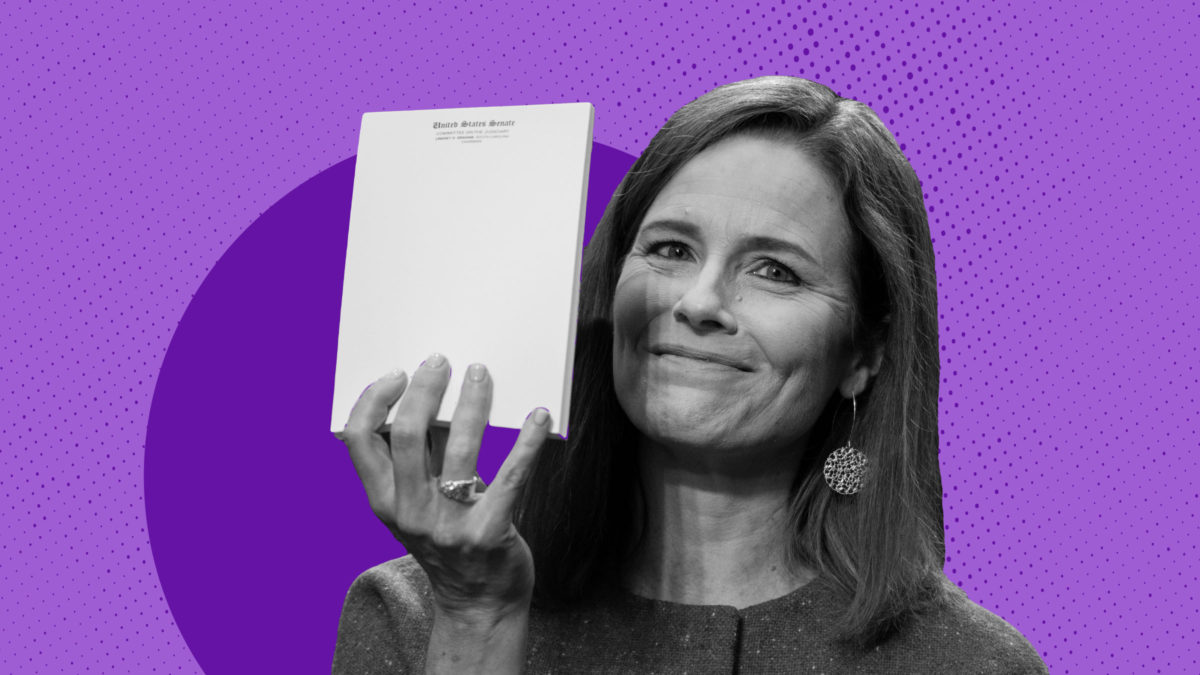
Justice Amy Coney Barrett, for example, lobbed a softball to Justice Department attorney Sarah Harris, who appeared as amicus supporting the parishes, asking if Harris thought a favorable ruling would cause the law to “devolve” so that any person could invoke religious freedom and become “a law unto himself.” Harris, unsurprisingly, did not predict such a problem would occur. Justice Neil Gorsuch similarly said that he was “struggling” to see how imposing strict scrutiny, rather than applying the less burdensome rational basis standard, would “be the end of the world.”
Barrett and Justice Sam Alito pressed Colorado’s counsel, Helen Norton, on how often parish preschools refuse to enroll children with same-sex parents. “We have little evidence of a practical problem” by which LGBTQ couples “cannot find other preschools to send their children to,” said Alito. Echoing this, Justice Brett Kavanaugh argued that there are thousands of other preschools, and “plenty of opportunities” for LGBT parents to send their children elsewhere. “Why not seek the win/win?” he asked.
The Democratic appointees did not share Kavanaugh’s sunny view of telling children they can just drink from another water fountain. Bigots have long proffered religious justifications for overt discrimination. Justice Ketanji Brown Jackson stressed that there is “no principled basis” to distinguish a religious entity which claims “my religious faith says my children can’t go to school with the children of gay people” from a religious entity which claims “my religion says my children can’t go to school with the children of Black people.” And she questioned how a “special rule” permitting religious entities to flout antidiscrimination laws could be compatible with “a society where all people live and work together.”
Justices Elena Kagan and Sonia Sotomayor also pushed back against the idea that enforcing antidiscrimination laws against recipients of state funds is itself discrimination. In other recent freedom of religion cases, Kagan explained, the issue was whether religious people were being “treated the same way” as non-religious people. Here, she said, religious groups are being treated the same way, and the issue is, “do you have to treat them better?” At bottom, Sotomayor explained, the parishes want to “reject a child because their parents are homosexual,” and they want “an official statement by the state” committing to “subsidize” that rejection “with public money.”
Religious exemptions from anti-discrimination laws, and state funding for that discrimination, inflict real harm on targeted communities’ ability to participate in public life as equals, and on the country’s ability to function as a pluralistic society. To the Democratic justices, that harm was obvious. But the Republican justices refuse to acknowledge the reality of any harm inflicted on people who aren’t like them.