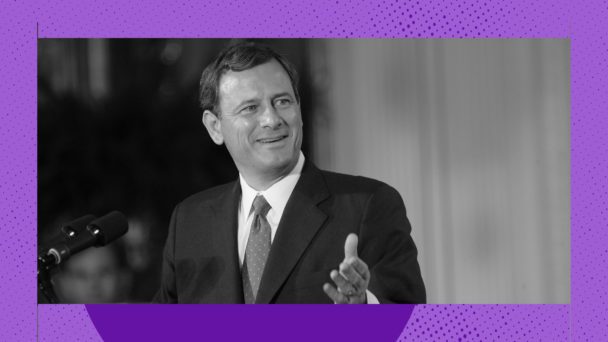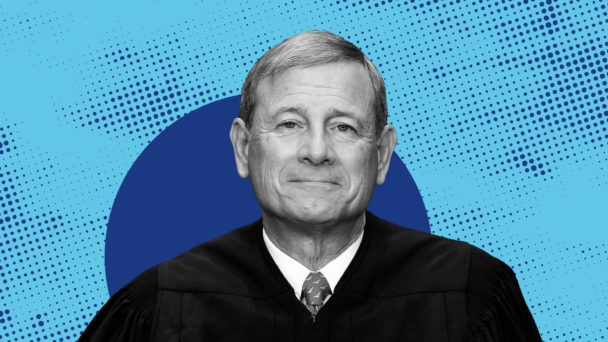
Shortly after the reelection of President Donald Trump in November 2024, Chief Justice John Roberts asked Supreme Court employees to sign a nondisclosure agreement requiring them to keep quiet about the Court’s inner workings, according to The New York Times.
Justices have historically argued that opening up their deliberations to public scrutiny would compromise the integrity of their decisionmaking, and the Court has therefore long maintained an informal code of silence. Sometimes, the justices have enforced that silence with confidentiality pledges, like the one it introduced after a former clerk published a tell-all book in 1998. And sometimes they have done so with professional threats, as when Justice Antonin Scalia warned clerks that he would “destroy” their careers if they ever leaked information about what happened at the Court.
This time, sources tell The Times, Roberts is taking a “more forceful” strategy, in the form of a “formal contract” that threatens clerks and support staff with legal action if they reveal confidential information.
In his 20 years as chief justice, Roberts has cultivated a reputation as an institutionalist deeply concerned with shoring up the public perception of the Court, even as he and his conservative colleagues moved the law to the right. These days, he has his work cut out for him: Gallup opinion polling data shows that the Supreme Court’s public approval rate has hovered around 40 percent since September 2020. According to a June 2024 Associated Press poll, 70 percent of Americans now believe that the justices are more influenced by ideology than by impartiality. The Times’s reporting indicates that Roberts instituted the new agreements after trust in the Court hit a historic low in the wake of the leaked draft of its 2022 decision rescinding the constitutional right to abortion, as well as a barrage of news reports about the justices’ unethical behavior.
Nondisclosure agreements are best known for preserving corporate trade secrets and suppressing evidence of misconduct. And Roberts’s request that Court staff sign such an agreement naturally invites speculation as to what he is so interested in hiding, and why it warrants this additional step. That the chief justice would still choose this path, despite the obvious questions it raises, suggests he believes public speculation is preferable to public knowledge.
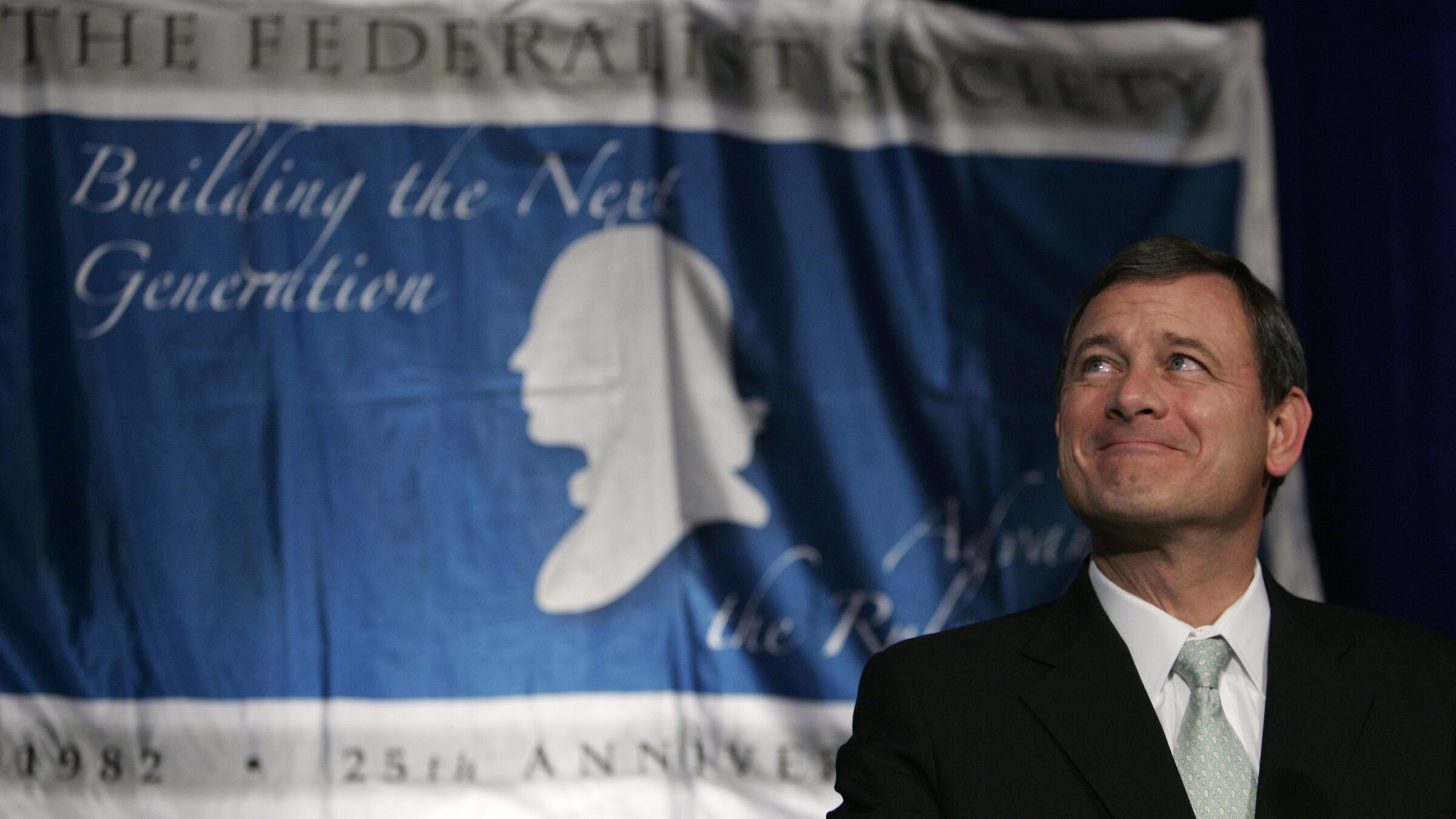
(AP Photo/Evan Vucci)
The Supreme Court regularly makes decisions that affect the rights and freedoms of the public. And if the public is to understand and develop informed opinions about those decisions, the Court must provide its rationale in its rulings. The Court gets to skip all that, though, when it deals with emergency petitions on what is known as the “shadow docket”—cases in which the Court doesn’t hear oral argument, doesn’t receive full briefing, and doesn’t necessarily explain its reasoning in a formal opinion. Trump and his allies on the Court have made unprecedented use of the shadow docket over the past year, with the administration calling basically any adverse ruling an “emergency,” and the Court swooping in to lift the lower court’s order with no questions asked, and no answers given.
The Court did not give a reason in May 2025, for example, when it allowed Trump to ban transgender people from serving in the military. It didn’t give a reason later that month, either, when it let Trump strip hundreds of thousands of noncitizen residents of their lawful immigration status. Nor did it give a reason in June 2025, when it permitted Trump to ship noncitizens off to random countries where their lives could be in danger. Or in July 2025, when it allowed Trump to fire over half of the workforce at the Department of Education.
Or in—well, you get the idea. Since Trump reentered office, the Court has handed the president a series of wins that are literally unjustified, in the sense that the Court did not bother to explain its decisionmaking process.
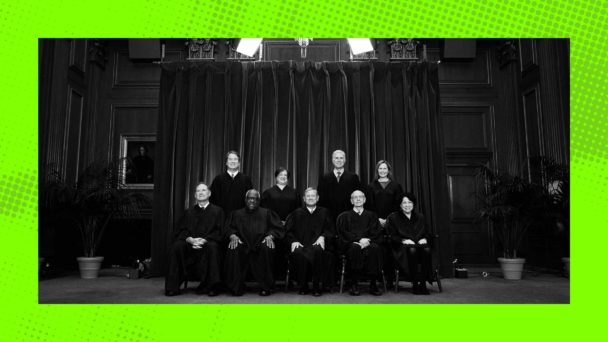
At the same time as the Court became less transparent with the public, Roberts became more aggressive in his campaign to keep Court matters private. The Times reports that Roberts used to begin each term by giving clerks a lecture on the importance of confidentiality and handing out a code of conduct, which noted that breaches may lead to “appropriate sanctions.” Roberts “abruptly introduced the nondisclosure agreements” after the 2024-25 term began, however, a few weeks after the Times published an article that quoted some of his confidential memos in cases that delivered victories to Trump.
This is not to suggest that the purpose of Roberts’s nondisclosure agreements is purely ideological. The nature of such agreements is that they could be concealing all sorts of embarrassing truths about the Court’s decisionmaking processes. The Times report included an interview with the law professor Niko Bowie, a former Supreme Court clerk, who noted that the public would be “shocked” if it knew “how much of the deliberations affecting millions of people are made by 27-year-olds after happy hour.”
Regardless of what the chief justice is trying to hide, one thing is clear. Roberts thinks the best hope for fixing the Supreme Court’s image is to keep employees’ mouths shut, and to keep the public in the dark.