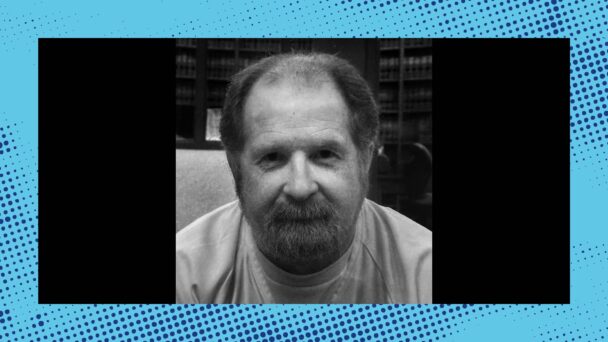
In August 1991, Charles “Sonny” Burton was one of six men involved in the deadly robbery of an AutoZone in Talladega, Alabama. But he did not kill, encourage the killing, or even witness the killing of anyone. After Burton had already emptied the store’s safe and left the building, Derrick DeBruce, one of the other participants in the robbery, fatally shot a customer, Doug Battle. Yet at trial, Burton and DeBruce were both convicted of murder and sentenced to death.
A federal court later vacated DeBruce’s death sentence because of constitutional issues with his trial. That meant Burton alone would pay with his life for the death of a man whom he did not kill. After Burton had spent decades on death row, Alabama scheduled his execution for Thursday. But on Tuesday, Alabama Governor Kay Ivey commuted his sentence to life in prison without possibility of parole.
Ivey is an unabashed supporter of the death penalty, having presided over 25 executions since her election as governor in 2017. In that time, she has only used her clemency power on one other occasion. And even Ivey concluded that she could not let Burton’s execution proceed “in good conscience,” reasoning that it would be “unjust” for one participant in the robbery to be killed even though “the participant who pulled the trigger was not.”
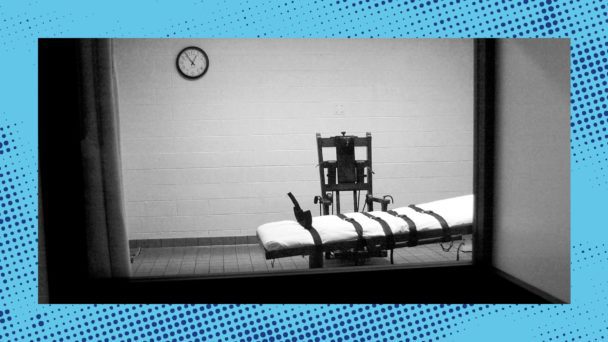
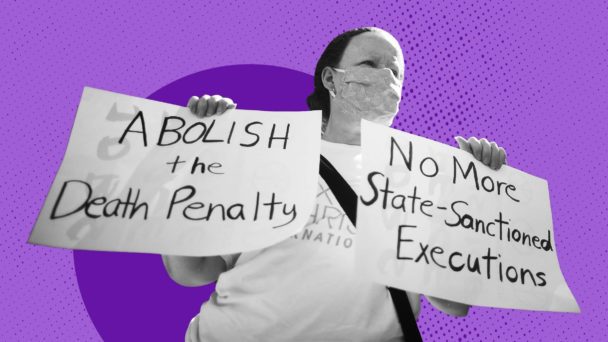
Prior to Ivey’s announcement, broad swaths of the public condemned Alabama’s plan to execute Burton, 75, who uses a wheelchair and wears a padded helmet to protect his head during his frequent falls. Faith leaders, civil rights organizations, and other activists led a nationwide campaign against the state-sanctioned killing. On Monday, protesters marched to the governor’s mansion and delivered a petition with 67,000 signatures asking her to halt the execution.
A consistent concern in their pleas was that it was unjust for the state to kill someone who did not kill anyone. “It’s absolutely not fair. You don’t execute someone who did not pull the trigger,” said Priscilla Townsend, a juror in Burton’s case, in an interview last month with the Associated Press. Townsend is one of six living jurors who submitted declarations to the governor supporting Burton’s application for clemency, even though they voted for his death decades ago.
“Since Mr. Burton was not the man who pulled the trigger, it just seems wrong that he should be put to death when the shooter was resentenced to life,” said juror James Cottongim. “It makes no sense that Mr. Burton stays on death row for his involvement in the robbery, when the man that did the killing got to live out the rest of his natural life in prison,” said another juror, Bobbye Jackson.
After Alabama scheduled Burton’s execution, the victim’s daughter, Tori Battle, similarly urged the governor to call it off. “No one from the State has ever sat with me to explain why Alabama believes it must execute a man who did not kill my father,” she said.

(Photo by Chip Somodevilla/Getty Images)
Elizabeth Vartkessian, who works to reduce death sentences to prison sentences, recently wrote in The New York Times that it is “exceptionally rare” for someone to be executed “when all sides agree that he did not kill the victim.” According to the Death Penalty Information Center, states and the federal government have executed 1,659 people since the 1970s. Of those, DPIC identified 22 instances, or around 1 percent, where people participated in a crime in which someone died but did not kill or direct the killing of anyone, and were nonetheless executed under the “felony murder” rule, which allows prosecutors to charge co-defendants with murder for deaths that occur during certain types of “inherently dangerous” felonies.
Governors are generally stingy with their clemency power, but they have repeatedly used it to spare the lives of people sentenced to death for felony murder. Most recently, Oklahoma Governor Kevin Stitt granted clemency to Tremane Wood, whom the state planned to execute in November 2025 for a fatal stabbing committed by his brother. In February 2018, Texas Governor Greg Abbott commuted the death sentence of Thomas Whitaker, noting that Whitaker “did not fire the gun.” In 2017, Virginia Governor Terry McAuliffe and Arkansas Governor Asa Hutchinson both commuted the death sentences of people they concluded were being punished more harshly than more culpable participants in the crime.
The comparatively infrequent rate at which states execute people vicariously held responsible for murder, coupled with the backlash and eventual grants of clemency when states plan to execute someone who did not kill anyone, suggests a public recognition that, at least in these circumstances, the death penalty is fundamentally unfair. This ethical rebuke has legal significance: The Eighth Amendment of the Constitution prohibits “cruel and unusual” punishments, and the Supreme Court has long held that cruelty is measured against “evolving standards of decency.” In other words, when enough people recognize certain penalties as barbarous, so too must the Constitution.
Public opinion data shows that people are starting to recognize that it is wrong to execute people who didn’t kill anyone for felony murder. A YouGov poll conducted in April 2023 showed that a minority of Americans, 43 percent, thought the death penalty was appropriate in felony murder cases, compared to 56 percent in first-degree murder cases. In 2025, the American Criminal Law Review published an empirical study that involved asking Colorado and Maryland residents about their knowledge and moral attitudes regarding felony murder punishments for people who didn’t kill anyone. More than 90 percent of participants believed that death sentences in these cases were morally excessive.
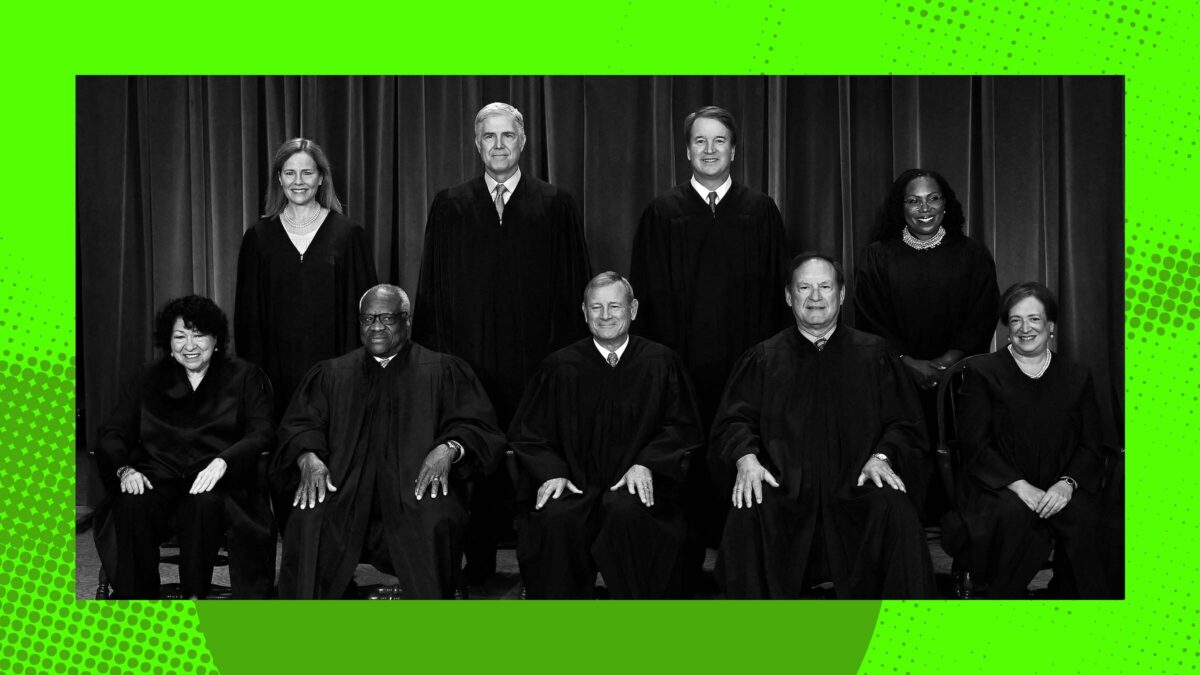
The Supreme Court also recognized, once, that felony murder executions can pose serious constitutional problems. In 1982, the Court held in Enmund v. Florida that the Eighth Amendment forbids the execution of a person who participates in a felony during which a murder is committed by someone else if the person does not “kill, attempt to kill, or intend that a killing take place or that lethal force will be employed.” Enmund explained that courts must consider whether a given death sentence “offends contemporary standards,” and also whether it is “disproportionate to the harm” the defendant personally caused.
Five years later, however, the Court narrowed that rule in Tison v. Arizona, holding that the Eighth Amendment does permit states to execute such people if they were a “major participant” in the felony and showed “reckless indifference to human life.” To shore up its analysis, the Court pointed to an “apparent consensus” among the states that such punishments were justified. The Tison majority only pointed to five cases, though, and neglected to mention that the “consensus” was at odds with the laws of most other states: Justice William Brennan pointed out in dissent that “about three-fifths of the States and the District of Columbia have rejected the position the Court adopts today.”
To the extent that an “apparent consensus” ever existed, the rarity of felony murder executions for people who did not kill, along with the success of recent demands for clemency in these cases, suggest that no such consensus exists anymore. The commutation of Sonny Burton’s death sentence underscores the public’s position that death sentences like his are inherently indecent. Constitutional interpretation should reflect that view.