Last month, the Supreme Court agreed to hear oral argument in Trump v. Barbara, a case that challenges the constitutionality of President Donald Trump’s executive order purporting to redefine birthright citizenship. The Court will hear oral argument in the case on April 1, and will in all likelihood issue its opinion before the justices adjourn for the summer.
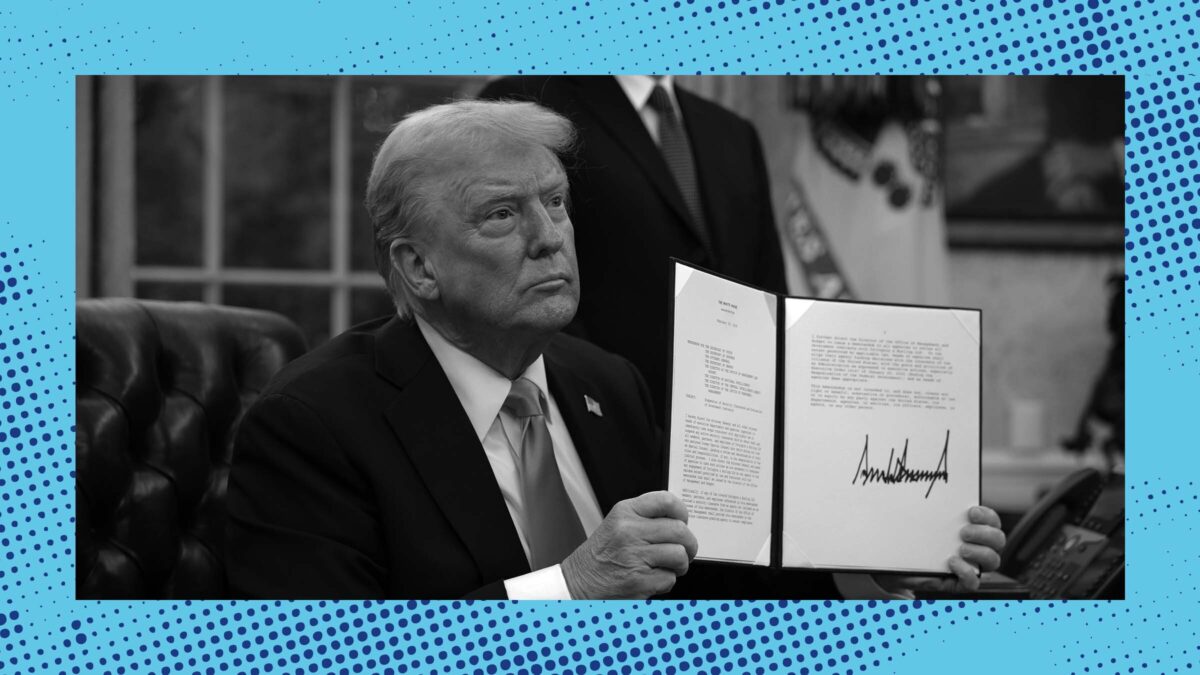
The Fourteenth Amendment, which Congress adopted in the years following the Civil War, extended citizenship to “all persons born or naturalized in the United States, and subject to the jurisdiction thereof.” Yet Trump declared last January that going forward, persons born in the United States would not be citizens unless at least one parent is a citizen or a lawful permanent resident. If the Court allows the executive order to take effect, it would deny citizenship to hundreds of thousands of newborn babies every year, and recreate an antebellum caste system in which social disadvantage is passed down by law from parent to child.
So far, every federal court to assess the order’s legality has recognized it as flagrantly unconstitutional. A federal district court in Maryland, for instance, concluded that the order “flouts the plain language” of the Fourteenth Amendment and “runs counter to our nation’s 250-year history of citizenship by birth.” A federal district court in New Hampshire found that the order “contradicts the text of the Fourteenth Amendment and the century-old untouched precedent that interprets it.” A federal district court in Washington called the Trump administration’s view of the Fourteenth Amendment “untenable,” and criticized the government for rehashing “losing arguments from over a century ago.”
The judiciary’s agreement reflects an enduring scholarly consensus about what Congress meant in the Citizenship Clause, and how courts have interpreted its text ever since. Evan Bernick, a law professor who coauthored the 2024 book The Original Meaning of the Fourteenth Amendment, warned last year that Trump’s order is “so transparently lawless” that even analyzing its constitutionality may “risk conveying the impression of a serious legal debate.” In case there was any doubt, he said, “there is none.”
Nevertheless, several Trump allies recently filed amicus briefs in Trump v. Barbara arguing that the order actually restores the original understanding of the Fourteenth Amendment. Former Attorney General Edwin Meese III, for example, characterizes over 150 years of settled constitutional understanding as “longstanding and mistaken assumptions.” The conservative law professor Ilan Wurman contends that the historical rule of birthright citizenship “almost certainly excluded the children born to unlawfully present aliens,” and is “at best unsettled” with respect to the children of “temporary visitors.”
The Claremont Institute, a conservative think tank, submitted an amicus brief that positions its work at “the forefront of the scholarly research” which demonstrates that birthright citizenship was not originally understood to include children whose parents “owed allegiance to a foreign power,” and were in the United States “only temporarily or illegally.” Claremont’s brief is authored by John Eastman, who is most famous for orchestrating Trump’s plot to overturn the 2020 election. The State Bar of California recommended that Eastman be disbarred and banned him from practicing law in the state, but apparently he’s still welcome to file briefs at the Supreme Court.
What these authors have in common is their professed adherence to some form of originalism, the idea that the Constitution’s meaning was set in stone when its provisions were enacted. Meese, for example, made it the policy of President Ronald Reagan’s Justice Department to “resurrect the original meaning of constitutional provisions and statutes as the only reliable guide for judgment.” In a speech before the American Bar Association in 1985, Meese gave away the game a little, presenting originalism as a principled way to ensure that the Court did not “drift back toward the radical egalitarianism and expansive civil libertarianism” of the Civil Rights Movement.

Eastman in 2021 (Photo by Andy Cross/MediaNews Group/The Denver Post via Getty Images)
More recently, Wurman wrote a book arguing that today’s Americans benefit from and owe a debt to the Constitution, and that originalism is “the only method of constitutional interpretation” that “faithfully discharges” that debt. In a 2020 essay, Wurman contended that originalism “conserves the fundamental principles of the founding, and not necessarily the agenda of any single political party.” Strangely, these professed commitments to history and nonpartisanship have not stopped originalists from championing Trump’s assault on birthright citizenship, the historical foundation of multiracial democracy in the United States.
The originalists’ basic claim here—that the Reconstruction Congress didn’t think birthright citizenship applied to the children of undocumented immigrants—is only true insofar as “illegal” immigration did not yet exist. The Fourteenth Amendment was ratified in 1868, and the first major federal law restricting immigration, the Chinese Exclusion Act, was enacted in 1882. And even so, in 1898, the Supreme Court held that a person of Chinese ancestry born in the United States was in fact a U.S. citizen, despite the fact that their parents were “subjects of the Emperor of China” and could not legally immigrate to the United States.
After canvassing “the principles and history” known to the Framers, the majority in United States v. Wong Kim Ark concluded that the Fourteenth Amendment was “understood and intended by the Congress which proposed the Amendment, and by the legislatures which adopted it” to affirm “the ancient and fundamental rule of citizenship by birth within the territory.”
If originalists truly believed that modern courts must honor the Constitution’s original meaning, they would reiterate the analysis in Wong Kim Ark and be horrified by Trump’s attempt to reject it. Instead, the originalist amicus briefs in Trump v. Barbara betray their stated principles. They faithfully adhere, however, to originalism’s real purpose: using historical fiction and sanitized legalese to achieve bigoted Republican policy goals.