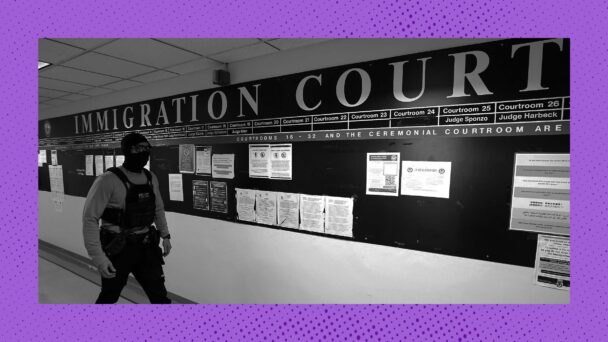
For people facing the threat of deportation, immigration courts have long offered only an imitation of the due process protections that the Constitution usually demands. Migrants are allowed—but not entitled—to have a lawyer defending them, for instance. The prosecutor and the “judge” both work for the Justice Department.
Now, with the aid of a new hearing format, the Trump administration is pushing any semblance of due process further out of reach. Normally, immigration court cases begin with a “master calendar hearing” at which two dozen migrants may be scheduled to appear at once. Judges then call an individual migrant’s case, determine whether they’re eligible for some kind of relief (like asylum or a green card), and schedule future hearings.
Since May 2026, however, immigrants rights groups have observed a surge in “mega master” hearings: The Department of Justice is rescheduling master calendar hearings with little notice, and consolidating them into massive hearings with 100 cases or more.
For people in immigration court, this can be disastrous. It is easy for people to miss notice of a new hearing date, especially if one doesn’t have a lawyer. Even if people do receive notice, it can be challenging to get time off from work, find childcare, and make travel arrangements. And people who miss their hearings are very likely to get hit with “in absentia” removal orders, which make them immediately vulnerable to deportation.
Earlier this month, for example, an immigration judge in Seattle held a mega master hearing with the cases of 106 immigrant children on the docket. Several dozen children didn’t show up, and were ordered deported.

The mega master hearings started in May, in Chicago and the greater Boston area, before spreading to Texas, New York, Minnesota, and more. With two months and several cities’ worth of data, trends have started to emerge.
First, mega master hearings are becoming dramatically more common. Syracuse professor Austin Kocher, who studies immigration enforcement, recently analyzed 2026 hearings in which at least 100 people were scheduled to appear in the morning, in person, before a single judge. Between January and April, Kocher identified a combined total of 16 of these hearings. In May, there were 25. In June, there were 153.
Second, researchers at bklg, a nonprofit organization that analyzes immigration court data, have documented a steep drop-off in the amount of notice that DOJ provides to noncitizens of their new mega master hearing dates. Back in April, the median number of days that immigrants had between the DOJ scheduling their master calendar hearing and the hearing itself was 158 days. In May, hearing lead time dropped to 98 days. In June, it was down to 42. In some cases, immigrants whose hearings were initially scheduled for months in the future have had new mega master hearings scheduled for the very next week.
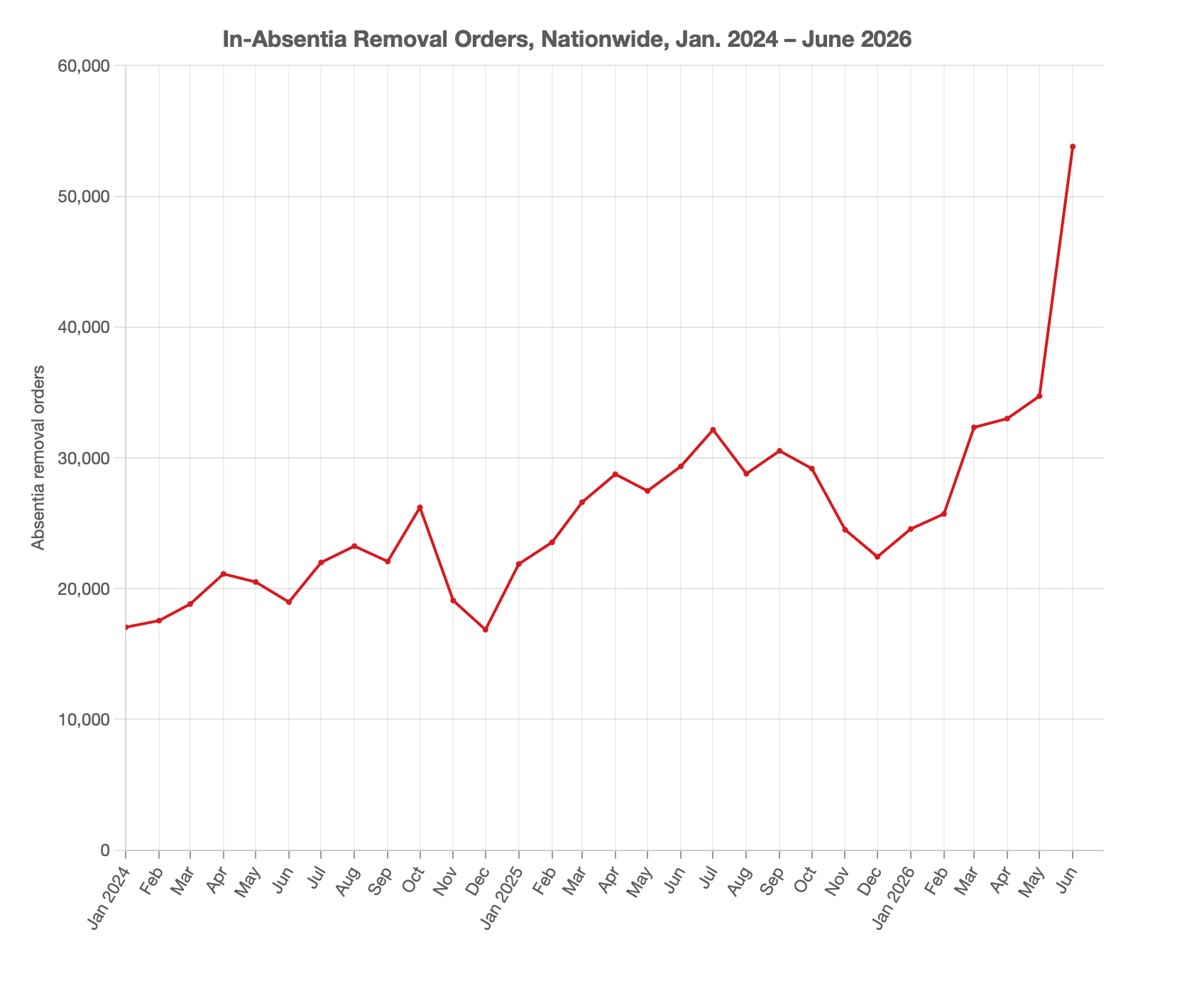
Third, as short-notice mega masters hearings have dramatically increased, so too have in absentia removal orders. The researchers at bklg determined that June hearings with at least 70 people and at most 45 days’ heads-up led to 20,763 in absentia removal orders. These orders have collateral consequences, too: People who are arrested by immigration officials after they have been ordered removed for missing a hearing have to pay a fee of at least $5,000. Although a person can try to reopen their case, there may be procedural and financial hurdles to doing so.
Immigration lawyers are trying to keep people from missing these mega master hearings by recommending that noncitizens check their case status online every day, and urging state and local governments to fund legal representation for immigrants. Even if people do manage to attend these hearings, however, they’re forced to do so with less time to prepare, and in a chaotic setting ripe for more errors and less protection. The sheer volume of cases means that a careful, individualized assessment is virtually impossible. In some cases, observers have found that they literally can’t fit in the courtroom.
In short, mega master hearings are working as the Trump administration intends. Migrants are entitled to fair, case-by-case adjudication. What they’re getting is Kafka-esque mass manipulation, and deportation orders without a real opportunity to be heard.