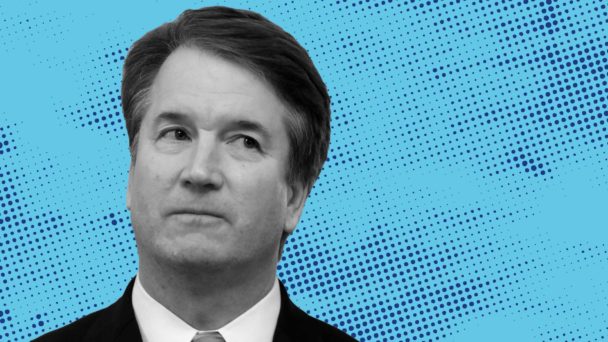
Justice Brett Kavanaugh would like people to think he’s a reasonable guy—a conservative, sure, but capable of compromise. For example, in Dobbs v. Jackson Women’s Health Organization, the 2022 case in which the Supreme Court declared that there is no constitutional right to end a pregnancy, Kavanaugh wrote a concurring opinion emphasizing that the decision “does not outlaw abortion throughout the United States.” The Republican justices merely permitted states to ban abortion, he said, but did not require that states do so.
Kavanaugh peppered similarly tepid reassurances throughout his recent majority opinion in West Virginia v. BPJ. That decision from this past June held that laws prohibiting transgender women and girls from playing school sports on teams that match their gender identity do not violate the Constitution, despite its provision affording all persons “equal protection of the laws,” and do not violate Title IX of the Education Amendments of 1972, despite its provision banning school programs from discriminating “on the basis of sex.”
In his opinion, though, Kavanaugh downplayed the Court’s holding by highlighting that “nothing” in the decision addressed whether “schools may allow” trans girls to play school sports with other girls. In other words, the Republican justices merely permitted states to single out trans people for adverse treatment, but did not require that states do so.
Recent court filings suggest that Trump’s Department of Justice understands the decision differently. In an ongoing case in California, the DOJ argued that schools are, actually, required to discriminate against trans girls, and it invoked the Supreme Court’s ruling in West Virginia as support. The DOJ’s argument offers more evidence of the conservative legal movement’s aggressiveness, as well as its expectations of its justices. Republicans believe Kavanaugh’s purported compromises are just public posturing, and trust him and his colleagues to advance their policy agenda.

Back in July 2025, the DOJ sued the California Department of Education and the California Interscholastic Federation, a statewide nonprofit that governs high school sports, alleging that the state was violating Title IX by allowing trans girls to play on girls’ sports teams. On July 1, 2026—the day after the Court ruled in West Virginia—Trump’s DOJ filed a notice of “supplemental authority” to the federal district court hearing its case against California, arguing that under West Virginia, trans girls do not have a constitutional right to “participate in women’s interscholastic sports,” and are not entitled to Title IX’s protection against discrimination based on “biological sex.” The implication of the DOJ’s notice is that the Court’s ruling not only gave states legal permission to discriminate against trans girls, but also gave the Trump administration legal permission to compel states to discriminate against trans girls.
Thankfully, this logical leap failed to impress Judge Cynthia Valenzuela, who issued an order last week that dismissed the DOJ’s complaint. Valenzuela’s order noted that Kavanaugh “repeatedly” framed West Virginia’s holding in “permissive terms,” and “expressly stated” that “nothing” in the opinion was intended to answer the “distinct question” of whether Title IX requires the exclusion of trans girls from girls’ teams, as the Trump administration had argued. And since neither the text of Title IX nor the regulations and judicial decisions that implement it clearly adopt such a categorical exclusion rule, she concluded, California couldn’t possibly have violated Title IX by allowing inclusion instead.
Under West Virginia, Valenzuela wrote, Title IX “plainly permits a school to limit a girls’ team to biological females,” but “does not require every recipient to adopt that approach.”
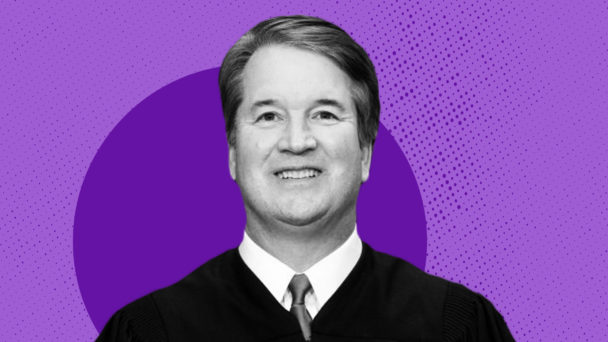
Logically speaking, the DOJ had little reason to think this argument would work. Giving states permission to do something is very different from giving the federal government permission to stop states from doing anything else. If you told a child they could have ice cream, you did not empower a third party to prevent all children from having cake.
Practically speaking, though, it was worth a shot, because the six-justice conservative supermajority has been eager to contort law and logic to push their policy goals forward. The Court was happy, in 2022, to transform an already dubious individual right to own a handgun into a blanket prohibition on most gun control laws. The Court was also delighted, in 2023, to twist a ban on laws mandating racially segregated schools into a ban on voluntary policies to desegregate schools. And the Court was thrilled, in 2026, to warp federal protections against racial gerrymandering to allow states to discriminate against voters of color.
Right-wing activists always want more, and the last few years have yielded plenty of evidence that they can get it by going to the Supreme Court. As long as they have friends in high places, they only need to ask.