In the days leading up to President Donald Trump’s State of the Union address this week, there was a sort of morbid curiosity about which Supreme Court justices, if any, would attend in person. Four days earlier, when the Court held that Trump’s tariffs exceeded his power under federal law, his response did not exactly make the justices feel like they would be welcome guests: The conservatives in the majority, he said, were “very unpatriotic,” “disloyal to our Constitution,” and “fools and lapdogs for the RINOs and the radical left Democrats.”
Later in his press conference, Trump declined to answer a question about whether he “regretted” nominating Justices Neil Gorsuch and Amy Coney Barrett, both of whom joined the majority in Learning Resources v. Trump. But he did say that the decision was “an embarrassment to their families,” and that they were “barely invited” to the State of the Union as a result.
Meanwhile, Trump congratulated the three dissenting conservatives—Justices Clarence Thomas, Samuel Alito, and Brett Kavanaugh—for their “strength,” “wisdom,” and “love of our country.” Trump singled out Kavanaugh, who authored the principal dissent in Learning Resources, for even more lavish praise, commending him for his “genius” and “great ability.” All three, he said, were “happily invited” to his speech on Tuesday.
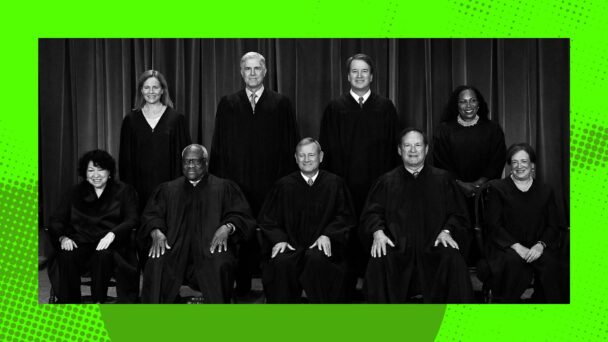
The president’s extended tantrum introduced a new, inane wrinkle to the justices’ annual State of the Union attendance decisions. The three conservatives and three liberals in the majority, for example, had to decide whether to endure more insults in person, or to stay home in protest, knowing that he would be just as happy to denigrate them in their absence. Thomas, Alito, and Kavanaugh, meanwhile, had to decide whether it was better to risk incurring Trump’s wrath by skipping in solidarity with any boycotting colleagues, or to show up to take a potential victory lap, knowing that doing so would only bolster the (correct) public perception that the three of them are snuggled tightly together in Trump’s breast pocket.
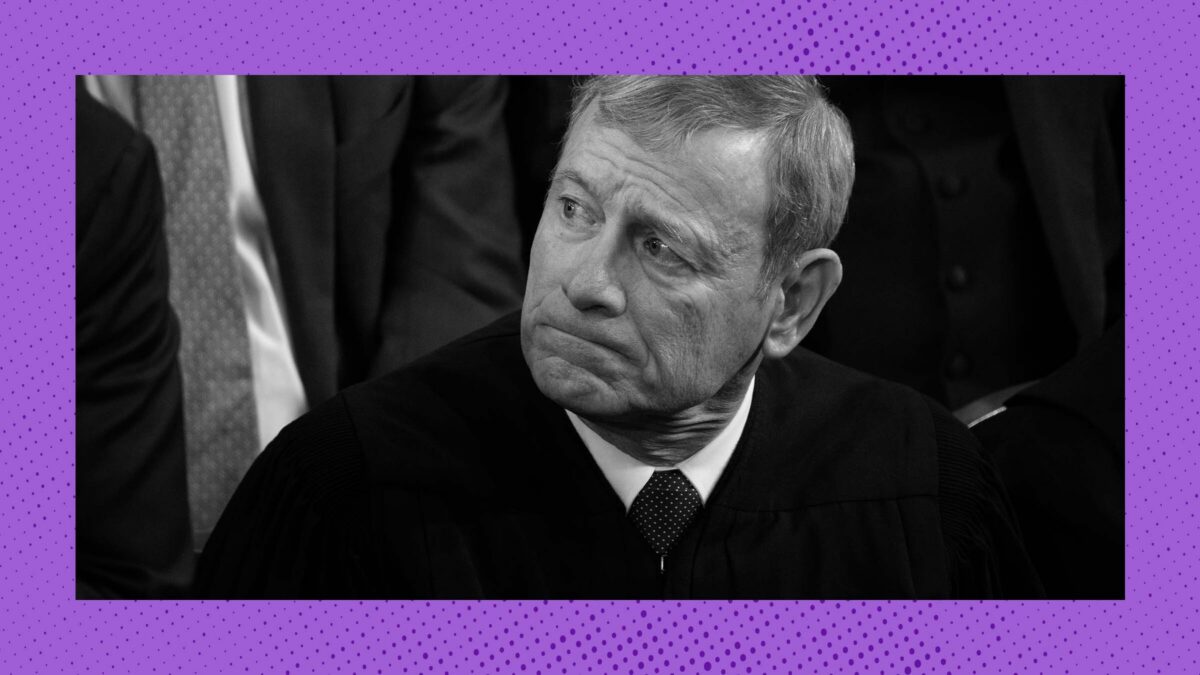
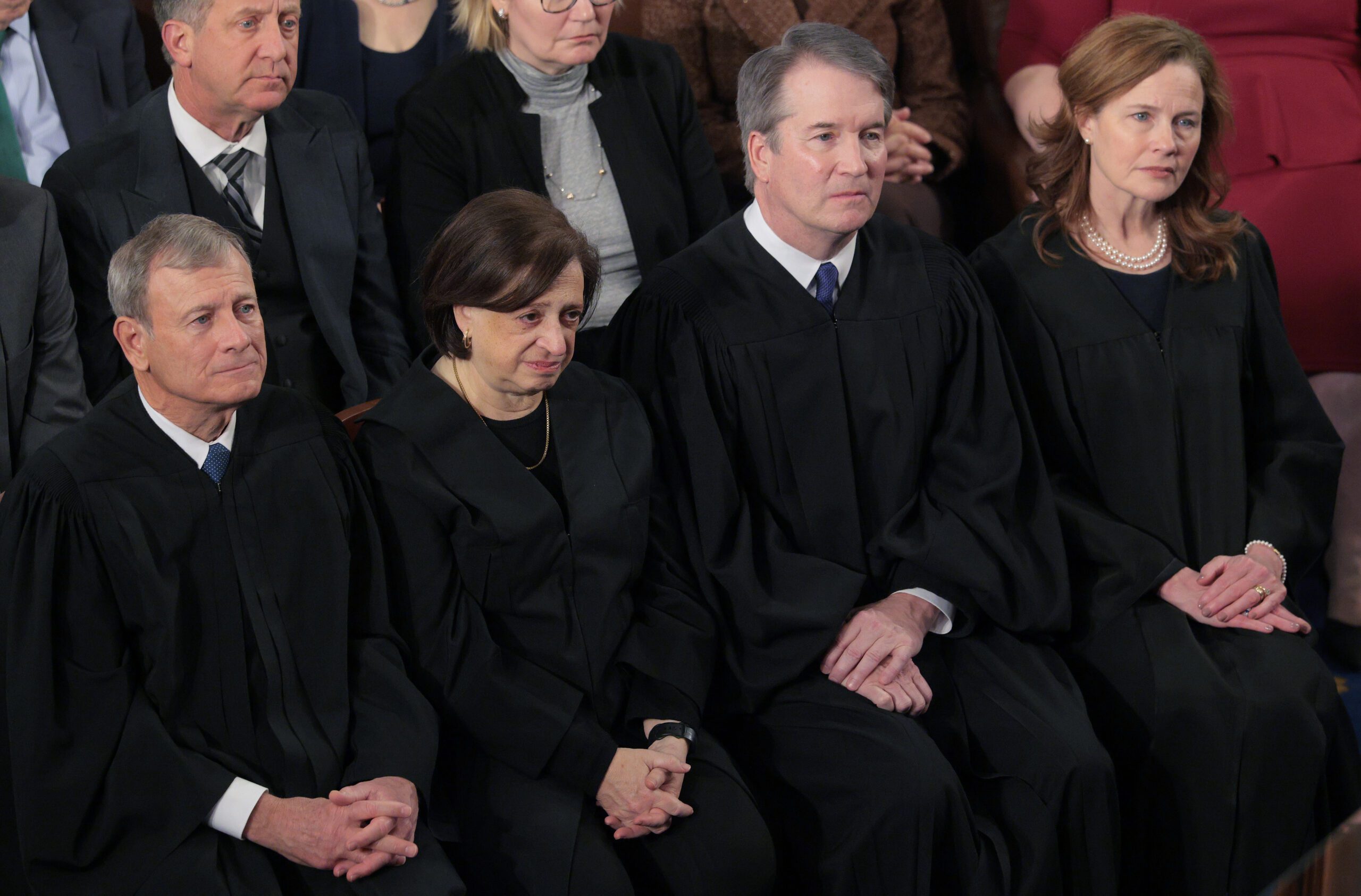
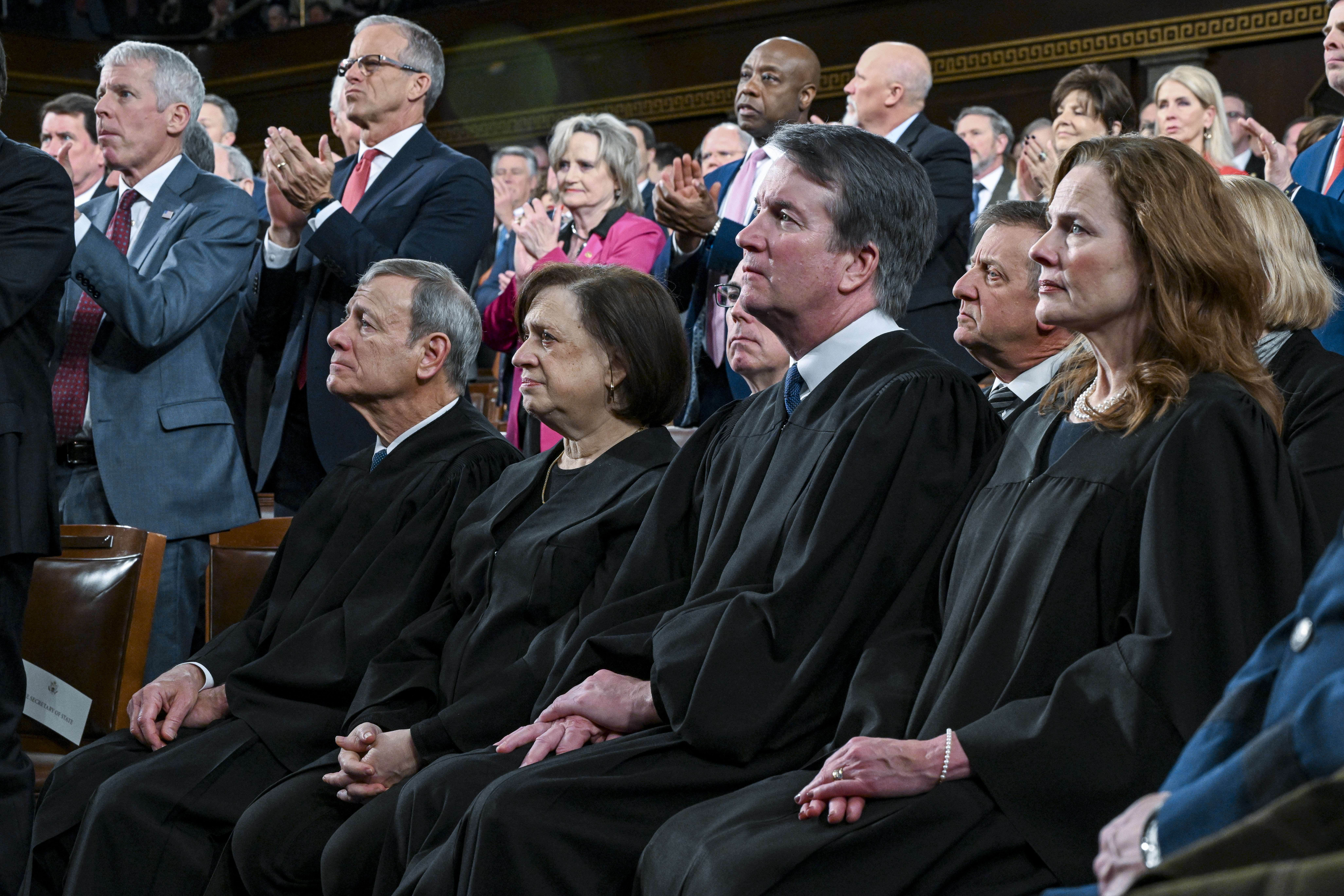
In the end, a contingent of four justices made the trip to Capitol Hill: Chief Justice John Roberts, who wrote the majority opinion in Learning Resources; Barrett and Justice Elena Kagan, who joined it full and in relevant part, respectively; and Kavanaugh, Trump’s obedient errand boy, who represented the three dissenters by himself. These are the same four active justices who attended last year, and they are regulars: With the exception of 2021, when only Roberts attended during the COVID-19 pandemic, Roberts, Kagan, and Kavanaugh have been at every State of the Union since their confirmations.
Here they are, seated together as usual, thinking about all the places in the world they would rather be than those four chairs at that particular moment.
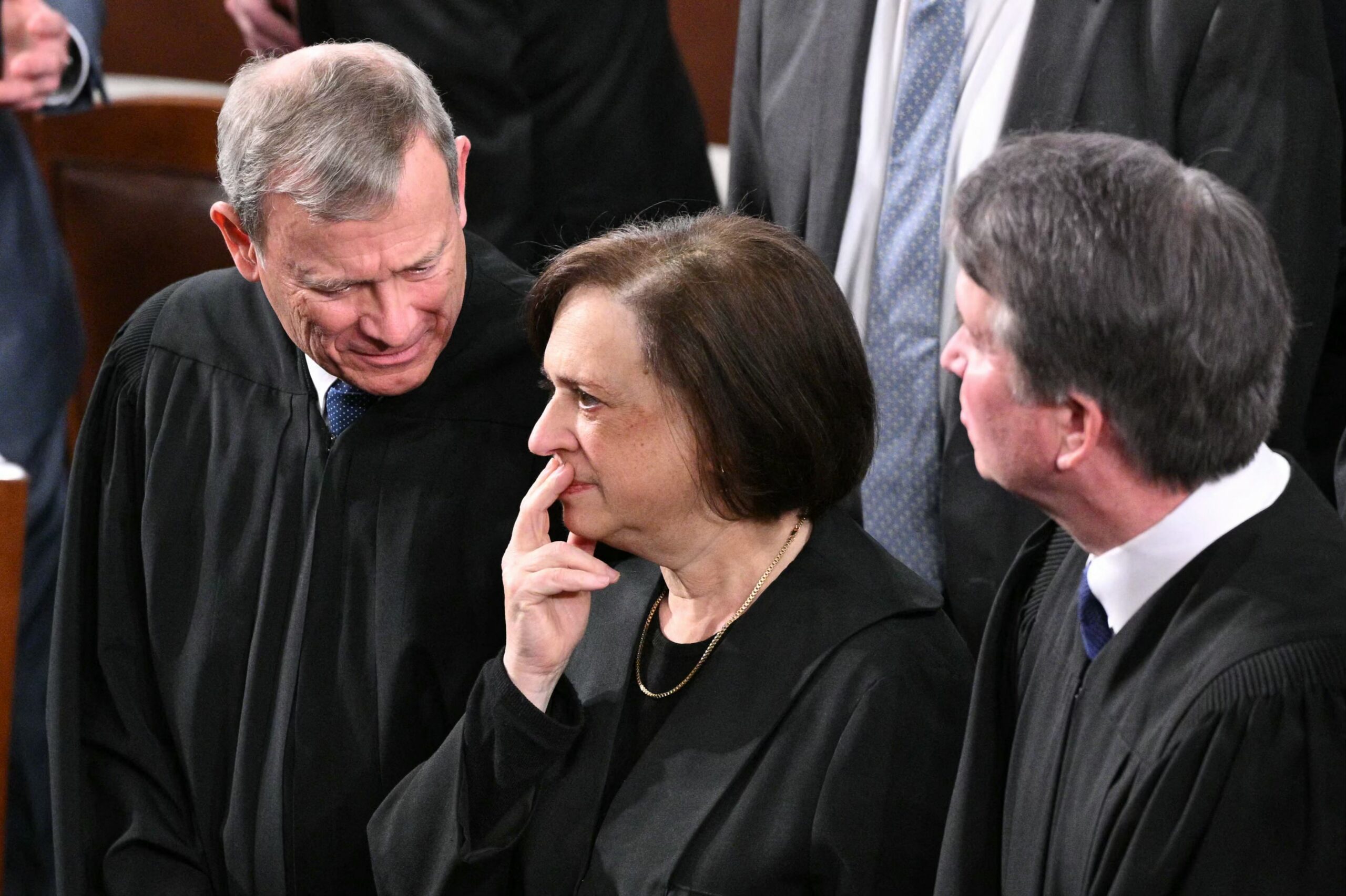
In what came as a mild surprise to anyone familiar with Trump’s entire political career, though, during his speech, the president mostly left his newly minted enemies on the Court alone. His receiving-line handshakes with the justices were cordial and uneventful, and although he called the tariffs ruling “unfortunate” and “disappointing,” he did not go so far as to question the honor of the justices’ families in front of a national TV audience.
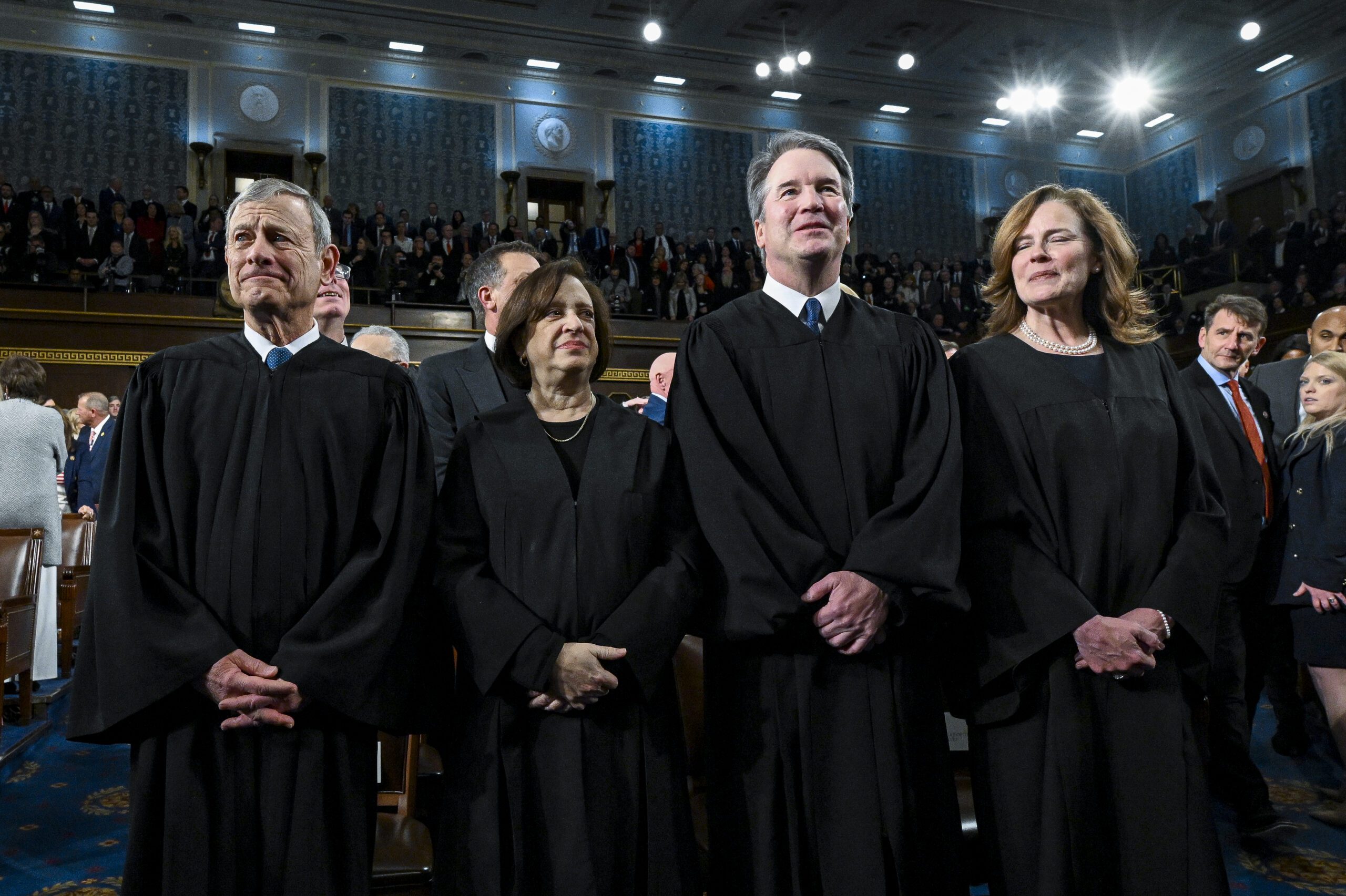
As they are expected to do, the justices maintained grim poker faces throughout the evening. Like many people watching at home, they mostly just looked like they were silently willing him to stop talking so that they would not be up too late on a school night.
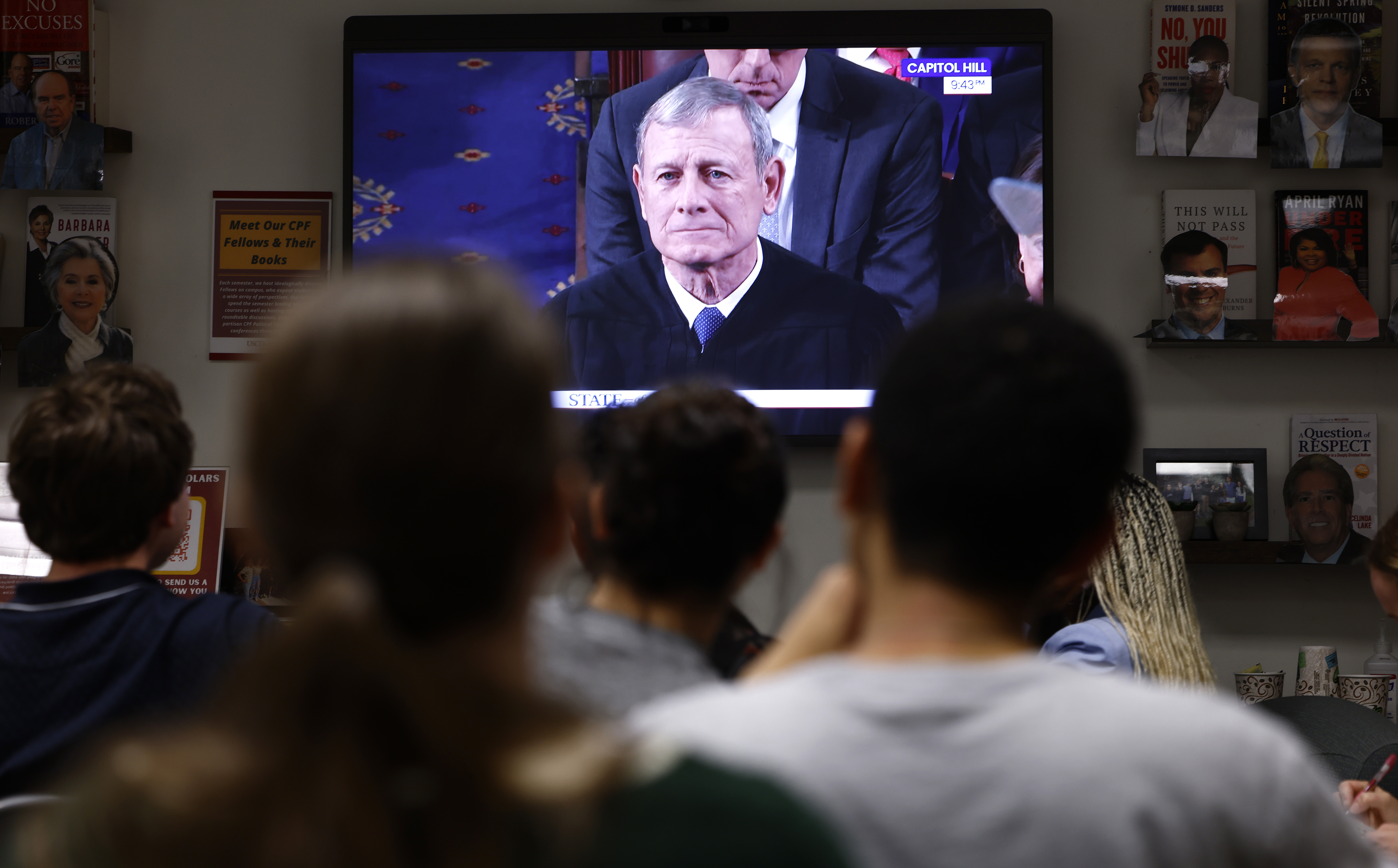
Trump’s outburst after Learning Resources also does not seem to have affected the absences. Alito wasn’t there, but he hasn’t attended a State of the Union since 2010, when C-SPAN cameras captured him scoffing at President Barack Obama’s characterization of the Court’s opinion in Citizens United. Justice Sonia Sotomayor has been to one State of the Union since 2017. Thomas attended Obama’s first address in 2009, and has not been back since.
I do not especially care whether (or which) justices attend the State of the Union, in no small part because I, too, have no interest in being surrounded by seal-clapping Republican lawmakers who boi-oi-oing to their feet every time an addled 79-year-old man starts yelping about “open borders.” But in the aftermath of Learning Resources, this annual ritual feels especially pointless. What, exactly, does the continued presence of a few borderline-immobile Supreme Court justices accomplish? Do voters have more faith in the majesty of our tripartite system of government because they watched four adults wearing robes sit quietly for two agonizing hours like checked-out parents chaperoning a racist high school pep rally? If the justices really aren’t going to say or do anything, ever—even here, after the president called them a gaggle of spineless frauds whose children should shun them forevermore—why are they there at all?
If Supreme Court justices participated in the festivities like members of Congress, cheering wildly or booing lustily as the case may be, their attendance would matter: The millions of people whose legal rights they control could see, for example, just how enthusiastically Sam Alito would respond to Trump’s proclamation that “cheating is rampant” in American elections, and that Democrats are to blame for it. But the Court has never been honest about the political entity it is, or the political power its members exercise. As a result, we are stuck with a tradition in which every year, a handful of expressionless justices decide to white-knuckle their way through this spectacle and then immediately scurry to the doors to try and get a jump on traffic. I am not sure anyone would care if they skipped it instead. I am not sure anyone would even notice.