
Although President Donald Trump has had to wait for new judicial vacancies to come in lately, he and Senate Republicans (and even some Senate Democrats) have been busy moving Trump’s nominees for existing vacancies smoothly through the Senate. Trump has already announced 11 nominees in 2026—including another one of his personal lawyers for the U.S. Court of Appeals for the Eighth Circuit—and seen seven more confirmed, several with bipartisan support.
In January, Trump nominated Chris Wolfe and Andrew Davis to the Western District of Texas, John Shepherd to the Western District of Arkansas, and Anna St. John to the Eastern District of Louisiana. Wolfe, 53, has spent the bulk of his career as a prosecutor before becoming a state court judge. Davis, 40, worked as an assistant state solicitor general in Texas before serving as Senator Ted Cruz’s chief counsel.
Shepherd, 39, was in private practice in Arkansas before becoming a state court judge. Shepherd’s father is Judge Bobby Shepherd, who currently sits on the U.S. Court of Appeals for the Eighth Circuit. This is the second time in as many nomination announcements that Trump has tapped the child of a sitting circuit judge: Back in November, Trump nominated Megan Benton, the daughter of retiring Eighth Circuit Judge Duane Benton, to a district court seat in Missouri.
Concerns about hereditary judgeships aside, St. John, 46, has the most overtly troubling record of the four. She has spent most of her career working to undermine LGBTQ+ rights, authoring briefs arguing that businesses should be allowed to discriminate against LGBTQ+ people on religious grounds, and opposing the inclusion of transgender women in women’s sports and beauty pageants. St. John was also a visiting fellow at the Independent Women’s Forum, a right-wing think tank that has hailed Trump’s efforts to “end woke discrimination against white men.”
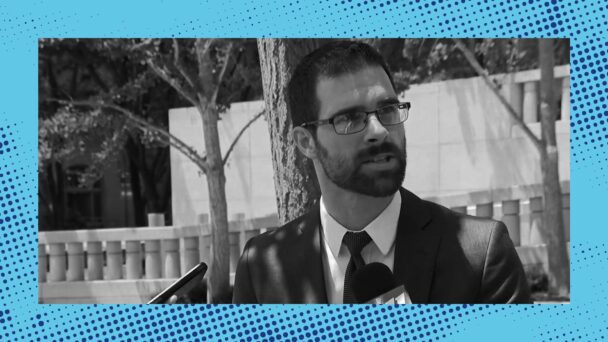
These nominees appeared before the Senate Judiciary Committee on February 4. As is now the norm, Democratic senators asked them who won the popular vote and the electoral college in the 2020 presidential election, and about whether the Capitol was attacked on January 6, 2021. And as is now also the norm, the nominees refused to answer, parroting the same rehearsed lines about how Congress “certified” President Joe Biden as the winner and that it would not be appropriate for judicial nominees to “wade into political waters” by characterizing January 6 in any way.
Connecticut Democrat Richard Blumenthal, who took the lead asking these questions, was dumbfounded. “Don’t you feel kind of like monkeys or puppets here?” he asked, criticizing their use of stock non-answers provided by their White House “minders” rather than “speaking the truth.” It’s not clear whether the nominees believe the stolen election conspiracy theories or are just willing to debase themselves under oath so as to not upset Dear Leader’s fragile ego. But either circumstance is disqualifying.
In February, Trump announced two more slates of nominees: Katie Lane to the District of Montana, Sheria Clarke to the District of South Carolina, and Kara Westercamp to the Court of International Trade in the first, and then Justin Smith to the U.S. Court of Appeals for the Eighth Circuit, and Tony Powell, Tony Mattivi, and Jeffrey Kuhlman, all to the District of Kansas, in the second.
Smith, 40, is the latest of Trump’s personal attorneys to be rewarded with a prestigious post for his loyalty. He’s the co-owner of the James Otis Law Group, which represented Trump in writer E. Jean Carroll’s defamation lawsuit in which a jury found Trump liable for committing sexual abuse. Trump has petitioned the Supreme Court to take the case, and Smith is listed as the counsel of record on the petition. Smith is the fifth of six Missouri-based judicial nominees to have worked for Missouri Republican Senator and former state attorney general Eric Schmitt in some capacity. (Some conservative activists wanted Erin Hawley, the Alliance Defending Freedom lawyer married to Missouri’s senior Republican Senator and purported manhood expert Josh Hawley, for the seat. How embarrassing for both Hawleys that Josh lacks the juice of his junior Senate colleague.)
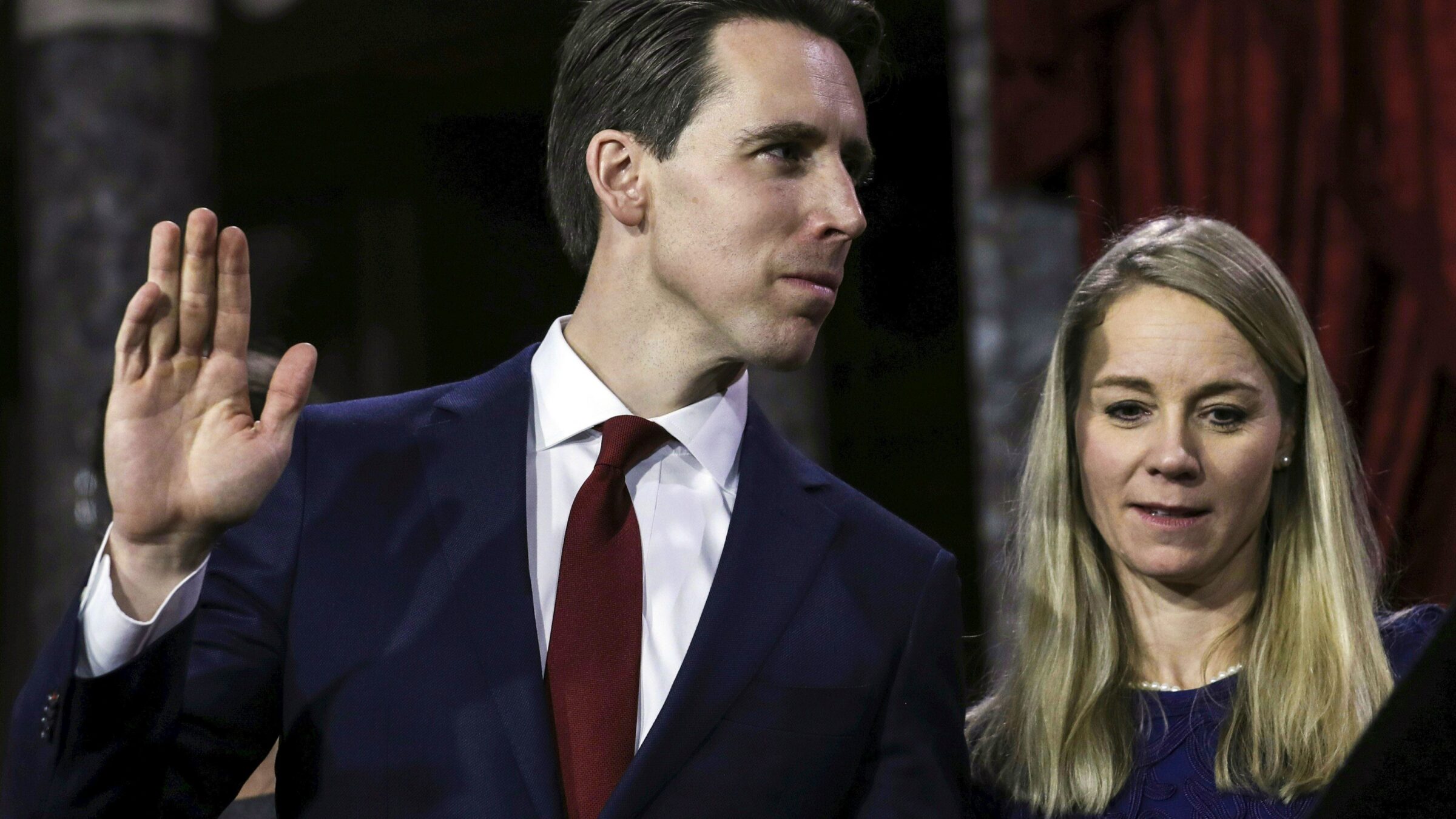
(Photo credit should read ALEX EDELMAN/AFP via Getty Images)
Lane, 32, has been out of law school for less than a decade—she graduated from Scalia Law in 2017—but has made up for that lack of experience with an abundance of connections to the MAGA legal movement. After two federal clerkships, she joined Trump’s favorite BigLaw firm, Jones Day, before cutting her culture war teeth in the Montana solicitor general’s office. Lane went on to work at Consovoy McCarthy, a prominent conservative boutique, and the Republican National Committee as senior legal counsel.
Clarke, a 44-year-old law firm partner, is a former assistant U.S. attorney and staffer to Republican Congressman Trey Gowdy. Clarke, who attended undergrad at the Christian fundamentalist Liberty University, is the first Black woman nominated by Trump in his second term (and third overall). Westercamp, 42, is another Jones Day alum currently serving as an associate White House counsel. She has been nominated to the Court of International Trade, which hears disputes about, among other things, tariffs.
In that second slate, Powell, 64, has been Kansas’s solicitor general since January 2023. He was previously a Republican state legislator and a state court judge for the better part of three decades. Mattivi, 56, is the Director of the Kansas Bureau of Investigation; he sought the Republican nomination for Kansas Attorney General in 2022, but lost in the primary to voter fraud conspiracy theorist Kris Kobach. Kuhlman, 35, is an attorney in private practice in Kansas. He’s a 2015 graduate of Scalia Law.
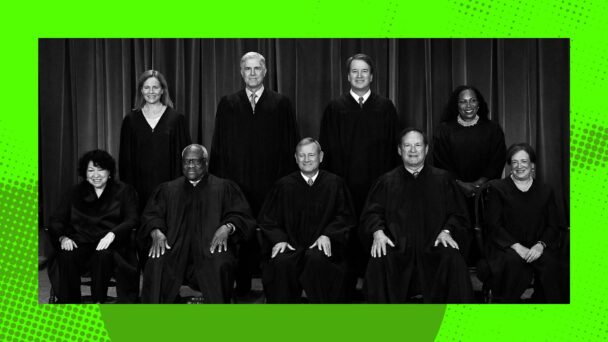
In total, the Senate has confirmed 33 of Trump’s second-term nominees, and spent the first few weeks of 2026 confirming candidates who were nominated in 2025: Alexander Van Hook to the Western District of Louisiana, David Fowlkes to the Western District of Arkansas, Nicholas Ganjei to the Southern District of Texas, Aaron Peterson to the District of Alaska, Megan Benton to the Western District of Missouri, and Brian Lea to the Western District of Tennessee. Even Justin Olson—the guy who said women should be subservient to their husbands and that marriage might not be for disabled people—won confirmation to the Southern District of Indiana.
Despite the fact that each nominee refused to condemn the January 6 insurrection or say that Biden won the 2020 election, no fewer than five Senate Democrats voted to confirm each of Van Hook, Fowlkes, and Peterson. The most frequent offender? Judiciary Committee Ranking Member Dick Durbin.
The Judiciary Committee will vote Davis, Wolfe, Shepherd, and St. John out of committee and to the Senate floor in a few weeks. The rest of the nominees will appear before the Committee sometime in March.