President Donald Trump is not having a good time at work right now. His approval rating is way down, gas prices are way up, and his name keeps appearing in headlines next to that of the world’s most famous pedophile. Also, all the available evidence suggests that he started a harebrained war in Iran without considering the possibility that Iran might retaliate by shutting down the Strait of Hormuz, through which a fifth of the world’s oil and liquefied natural gas passes each year.
As of Monday, this logistical oversight had reduced Trump to publicly begging this country’s ostensible allies to send naval support to the region as soon as possible. As it turns out, the foreign heads of state whose countries he has spent the last year alternately insulting and tariffing into oblivion do not seem interested in helping him clean up his mess.
Thus, over the weekend, Trump did what he always does whenever he feels the walls closing in: take out his phone and post. Among his many, many targets this time around was the Supreme Court, whose February decision striking down his tariffs regime evidently remains a sore subject.
“This completely inept and embarrassing Court was not what the Supreme Court of the United States was set up by our wonderful Founders to be,” Trump wrote. “All I can do, as President, is call them out for their bad behavior!” In recent weeks, he has also asked for a “Rehearing or Readjudication” of the Court’s decision in Learning Resources v. Trump, which suggests that after five years and counting of being President of the United States, no one in his orbit has been able to explain to him what the Supreme Court is, or the basics of how it works.
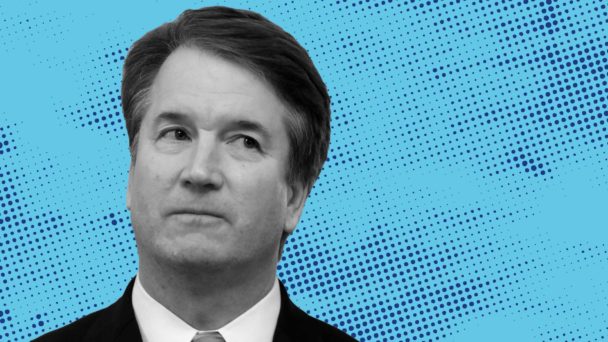
The substance of Trump’s complaints, in other words, is not new or especially interesting. But nestled within this particular rant are a few distressingly casual statements about the commitments Trump expects from anyone he deigns to nominate. His audience here is not really the sitting justices; it is all the other ambitious conservative lawyers who hope Trump will someday tap them for a vacancy on the federal bench—or, if Alito indeed steps down later this year to allow his fellow Republicans to replace him, maybe a seat on the Supreme Court.
First, the aspect of the justices’ tariffs decision that Trump still cannot seem to fathom is the betrayal inherent in it. “The Court knew where I stood, how badly I wanted this Victory for our Country,” he wrote. Instead, Trump continued, the justices “decided to, potentially, give away Trillions of Dollars to Countries and Companies that have been taking advantage of the United States for decades.”
Set aside, for a moment, the assertion that the existence of trade deficits, which this country has been running for decades, is some sort of grave national injustice. It is striking how wholly Trump has abandoned the typical grounds on which politicians object to court decisions with which they disagree. He is not even trying to argue that the Court’s decision in Learning Resources is wrong on the merits. He is saying that because he really, really wanted to impose tariffs, the Court should have upheld them—that the tariffs’ importance to his agenda should have been enough for the conservative justices to take his side, and to include in their opinion a section thanking him for his boundless wisdom and fearless leadership.
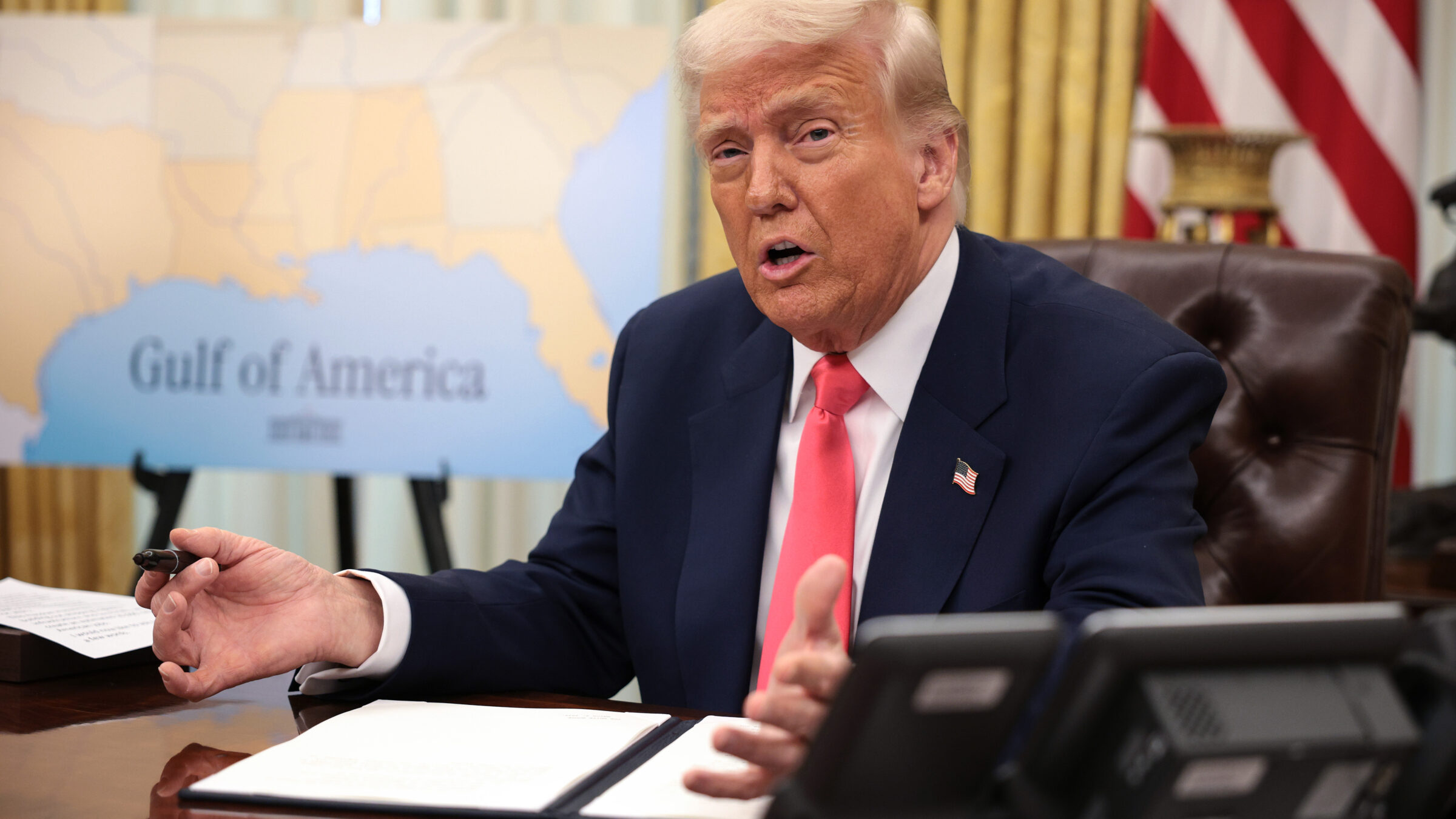
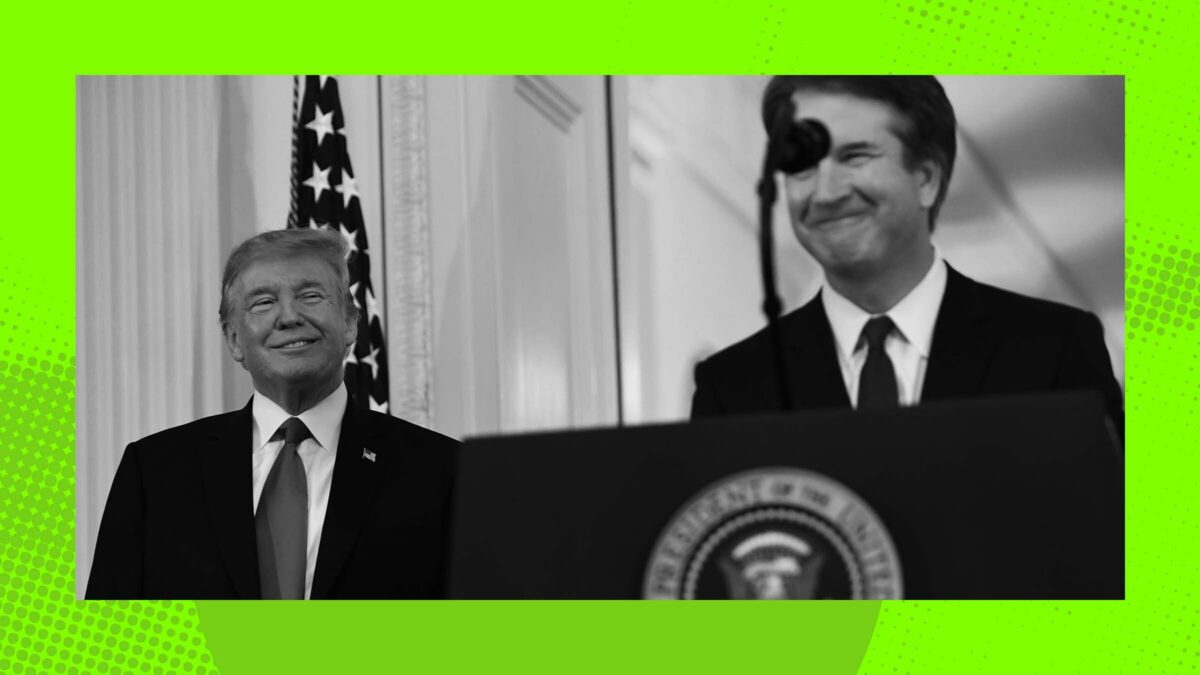
(Photo by Alex Wong/Getty Images)
In the same post, Trump heaped additional praise upon Justice Brett Kavanaugh, whom Trump appointed during his first term, and Justices Clarence Thomas and Samuel Alito, who joined Kavanaugh’s principal dissent in Learning Resources. But he bemoaned the refusal of the other three conservatives—Chief Justice John Roberts, and Justices Neil Gorsuch and Amy Coney Barrett, his other two first-term appointees—to do the same.
“The Democrats on the Court always ‘stick together,’” Trump wrote. “But the Republicans do not do this. They openly disrespect the Presidents who nominate them to the highest position in the Land, a Justice of the United States Supreme Court.” To provide further support for his argument, Trump revived his complaints about his Supreme Court nominees’ failure to overturn the results of the “Rigged Presidential Election of 2020,” which, he said, has since been “conclusively proven to be stolen.”
Throughout his presidencies, Trump has made clear that he prioritizes fealty to him and his movement above all else, and that he is happy to dole out positions of power to reward his most devoted supplicants. Rarely, however, has Trump made his views about his relationship to the Court and the federal judiciary so explicit: In his mind, Gorsuch, Kavanaugh, and Barrett still owe him for what he did for them, and will continue to owe him for the rest of their lives. The nuances of any given case are irrelevant to him, because he expects his judges and justices to treat his interests as dispositive, and to cast their votes accordingly. Those who comply are repaying their debts to him; those who do not are traitorous ingrates.
Returning to Sunday, Trump at least seems to get that his randomly capitalized posts are unlikely to change the hearts and minds of Roberts or Barrett or Gorsuch. (Publicly criticizing the Court, he predicted, will cause him “nothing but problems in the future.”) But he is sending a clear message to the peloton of aspiring nominees who are perpetually in search of ways to earn Trump’s attention. If you want to sit on the federal bench, the game is pretty simple right now: The more persuasively you can show the White House that you will be an obedient little boy who will do what Trump demands when the stakes are highest, the more likely you are to get the job you want.
Before Trump’s re-election, I wrote that shifts in the conservative legal movement’s power structure after the 2020 election meant that second-term Trump judges would be different and worse—that the Federalist Society types who characterized his first-term nominations agenda would give way to younger, thirstier culture warriors eager to distinguish themselves from the spineless RINOs in the conservative establishment. Trump might view his first three Supreme Court appointments as mistakes, but he is also learning from those mistakes. At this point, anyone he deems worthy of a federal judgeship should be understood as a loyalist, because if he had had any doubts about their bona fides, he would have picked someone else.