The Supreme Court heard oral argument today in Trump v. Slaughter, a case about President Donald Trump’s authority to fire members of the Federal Trade Commission. The FTC is the federal agency charged with protecting the public from unfair business practices. In order to defend the agency’s ability to do so without interference from the president, Congress passed a law in 1914 that explicitly says FTC Commissioners can only be fired for “inefficiency, neglect of duty, or malfeasance in office.”
Yet in March, Trump fired Commissioners Alvaro Bedoya and Rebecca Slaughter anyway, declaring that their continued service would be “inconsistent” with his administration’s policies. In a statement, Bedoya took a guess as to what those policies entail: “The president wants the FTC to be a lapdog for his golfing buddies.”
Nearly a century ago, in Humphrey’s Executor v. United States, the Supreme Court unanimously upheld statutory removal protections of independent agency officials as constitutional. Slaughter sued, and quickly won a federal court order blocking her firing. Nevertheless, Trump argued that for-cause removal restrictions are unconstitutional. And in September, his allies on the Supreme Court temporarily lifted the lower court’s order and let him fire Slaughter, federal law be damned.
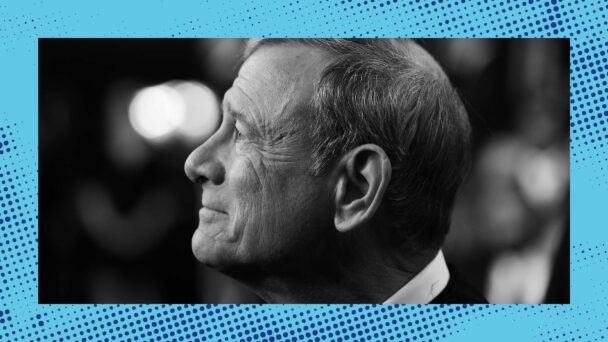
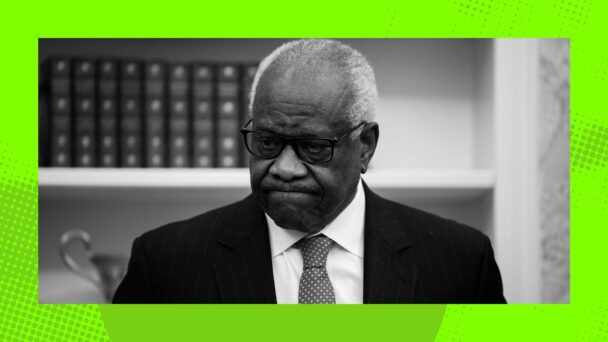
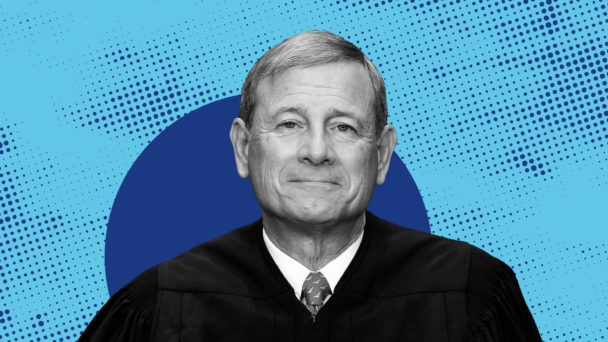
During oral argument in Slaughter on Monday, the Republican justices left no doubt of their intentions to finish what they started. Justice Amy Coney Barrett, for instance, said “there’s been an eroding of Humphrey’s Executor over the years,” while Justice Neil Gorsuch contended that Humphrey’s was “poorly reasoned” from the start. “Humphrey’s Executor is just a dried husk of whatever people used to think it was,” said Chief Justice John Roberts.
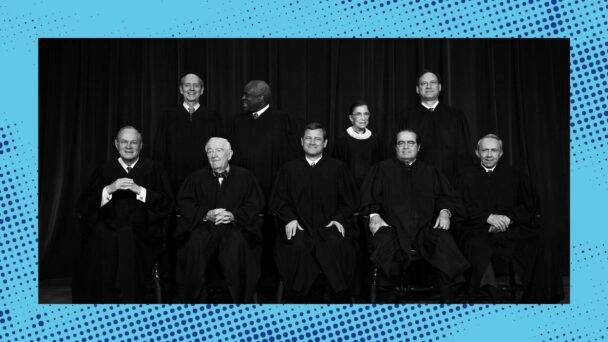
The question is not whether the 90-year-old precedent in Humphrey’s Executor is going down, but how much of the administrative state’s ability to make decisions based on the public’s best interests rather than President Trump’s interests will go down with it. When the Republican justices invited the Trump administration to explain the purported dangers of independent agencies, Solicitor General D. John Sauer emphasized that “the president is answerable to the voters” but agencies “have no boss.” According to Sauer, the president “must have the power to control” administrative agencies, and “the one who has the power to remove is the person that they have to fear and obey.” The Republican justices accepted this explanation without pushback.
Throughout oral argument, the Trump administration and the Court’s conservatives treated administrative agencies as some kind of headless, out-of-control fourth branch of government, accountable to no one. The problem with this idea of wholly unconstrained agencies is that agencies are in fact subject to constraints—principally, from the lawmakers that created the agencies to begin with. “I really don’t understand why the agencies aren’t answering to Congress,” said Justice Ketanji Brown Jackson. “Congress established them and can eliminate them. Congress funds them and can stop.” The real problem is not about a lack of reins, but about who is holding the reins. The Republican justices are eager to make it the president—unless and until the president is a Democrat, of course.
Although Justice Brett Kavanaugh agreed with the Trump administration that “unaccountable independent agencies raise enormous constitutional and real-world problems for individual liberty,” he claimed that the Court has “taken great steps” to limit Congress making “broad delegations,” specifically through its invention of the “major questions doctrine.” Much like how the federal government came to the rescue of banks during the 2008 financial crisis by declaring them “too big to fail,” the Supreme Court has taken to effectively declaring some (generally liberal) executive actions too big to be legal. As Kavanaugh put it today, the major questions doctrine prevents the Court from “being casual about assuming that Congress has delegated major questions of political or economic significance.”
Kavanaugh’s invocation of the major questions doctrine reveals just how little the Court respects Congress and the presidency as co-equal branches of government. The Court’s Republicans are happy to completely disregard the express, codified will of Congress, allowing their preferred president to neutralize agencies’ regulatory functions by firing people willy-nilly. But when a different president appoints different people to those agencies—people who may actually be interested in using the state’s capacity to protect the public—then the Supreme Court retains the power to swoop back in, and use the major questions doctrine to strike their actions down. For all their feigned concerns about democratic accountability, the only actor with governing authority is the Court.