On Monday, the Supreme Court ruled that a Vermont police officer who used a “pain compliance technique” on a peaceful protester, causing permanent damage to her wrist and shoulder, is entitled to qualified immunity. Zorn v. Linton, an unsigned order from which the three liberal justices dissented, shields the officer from his victim’s excessive force lawsuit and reversed a federal appeals court’s determination that her claims could proceed. In doing so, the Supreme Court’s conservative justices are further empowering cops to abuse the public without fear of consequence, and nullifying the constitutional right to be free from such abuse.
Shela Linton was one of roughly 200 people to participate in a sit-in at the Vermont statehouse on January 8, 2015, the date of the governor’s inauguration, protesting the governor’s failure to act on universal healthcare legislation. When the capitol closed for the day, Linton and 28 others remained seated, and police officers told them they would be arrested for trespassing. Cops lifted arrestees to their feet if they did not stand voluntarily—and for the white protesters, the police managed to do so without injuring them. Linton, a Black woman, says that police officers scooped white protesters up gently, “like you would do for somebody who’s elderly trying to get them into the bed.”
State Police Sergeant Jacob Zorn treated Linton differently. He forced Linton’s left hand down and twisted her arm behind her back—a maneuver known as a “rear wristlock”—and ordered her to stand. Linton screamed, but Zorn kept twisting and demanding that she get up. Linton says she was in too much pain to stand; in her court filings, she likened the pain to giving birth. Eventually, Zorn lifted her to her feet. At one point, he whispered in her ear that she should have just called her legislator.

The Fourth Amendment of the Constitution prohibits “unreasonable searches and seizures,” including the use of excessive force during arrests. And the Ku Klux Klan Act of 1871 authorizes people to sue for money damages when government officials violate their constitutional rights. So, Linton sued Zorn under the law, more commonly known as Section 1983, and tried to hold him personally liable for causing her physical and psychological harm. Because of Zorn’s violent arrest, Linton was forced to use a cast and a sling for months, and continues to experience pain and stiffness, and has been diagnosed with acute post-traumatic stress disorder.
The plain text, purpose, and early history of the federal law all suggest that Linton should be able to sue Zorn for her injuries. Roughly a decade after Congress passed the Klan Act, the Supreme Court explained why it’s important to hold bad actors accountable, even when those bad actors work for the government. “No officer of the law may set that law at defiance with impunity,” wrote Justice Samuel Miller for the majority in United States v. Lee. “All the officers of the government, from the highest to the lowest, are creatures of the law and are bound to obey it,” he said.
The Supreme Court has since reconsidered. In 1967, after police in Mississippi arrested a mixed-race group of clergy members for “breaching the peace” when they tried to use segregated facilities at a bus stop, the Supreme Court held that officers could not be held financially liable under Section 1983 if they acted in “good faith” and had “probable cause” to believe they were enforcing a valid law. In 1982, the Supreme Court ditched the good faith requirement and expanded government workers’ immunity not just from paying money damages, but from even going through trial at all, unless a plaintiff could show that their conduct violated “clearly established” law.
Since then, federal courts have kept making qualified immunity bigger. Judges have held that it wasn’t “clearly established” that officers couldn’t rob people when they execute search warrants, or that they couldn’t sexually assault people in their custody, or that they couldn’t set someone on fire. As Mississippi federal district judge Carlton Reeves put it in a 2024 order, the doctrine essentially means that “government agents are at liberty to violate your constitutional rights as long as they do so in a novel way.”
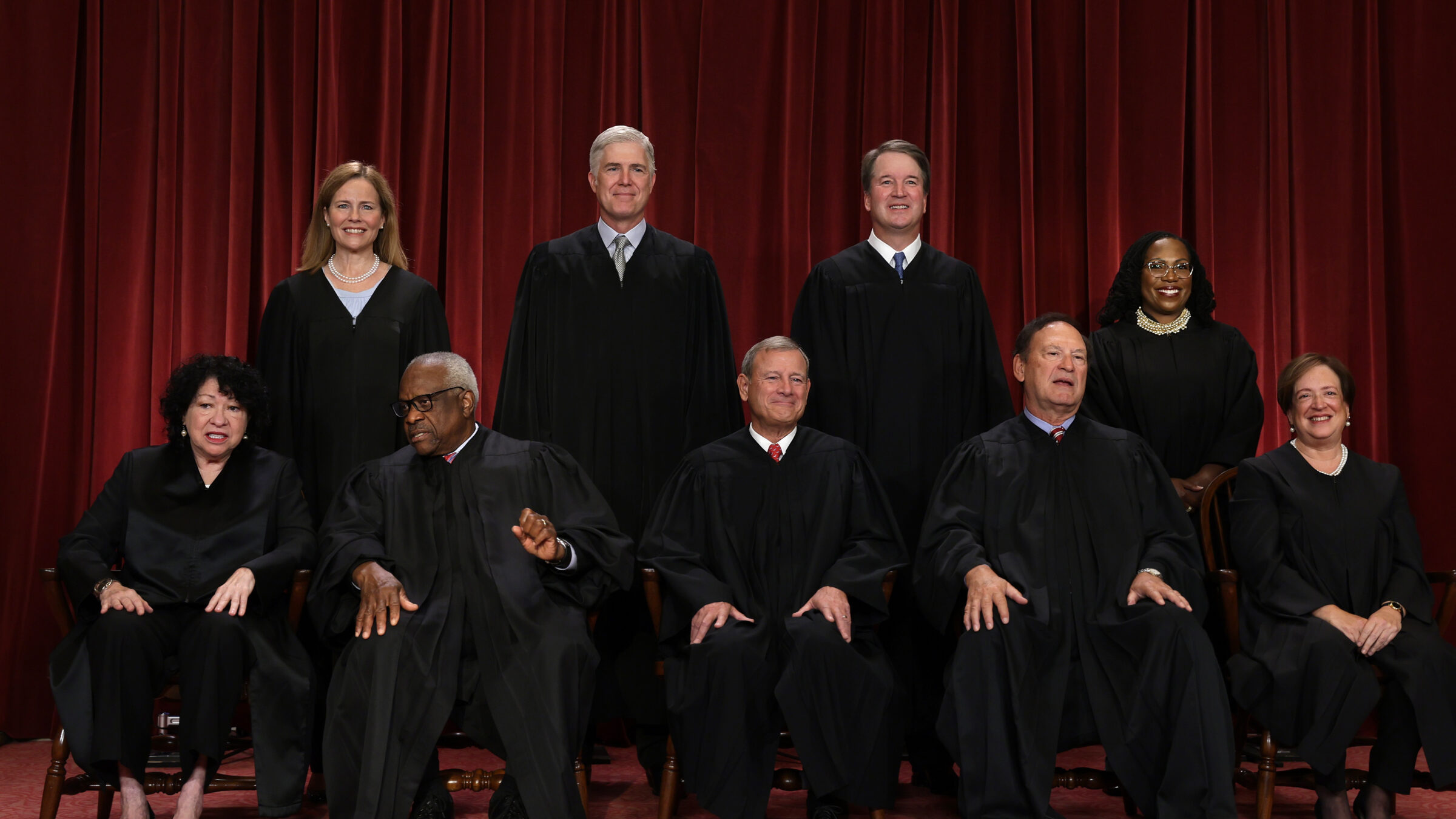
(Photo by Alex Wong/Getty Images)
Last year, though, the Second Circuit Court of Appeals determined that Zorn wasn’t entitled to qualified immunity, and should have known he was violating Linton’s constitutional rights. To support this claim, the court pointed to Amnesty America, a 2004 Second Circuit case that vacated a district court’s grant of qualified immunity to police officers who used force against passively resisting protesters, including “pressing their wrists back against their forearms in a way that caused lasting damage.” Then-Judge Sonia Sotomayor explained for the Second Circuit that a “reasonable jury” could find that “the officers gratuitously inflicted pain in a manner that was not a reasonable response to the circumstances.”
In Linton’s case, the district court similarly granted Zorn summary judgment on qualified immunity grounds, so the Second Circuit similarly vacated the ruling, reasoning that Amnesty America “put officers on notice” that using “such techniques under such conditions would violate an arrestee’s Fourth Amendment rights.”
In Zorn v. Linton, the Supreme Court disagreed. The unsigned majority opinion contested the idea that Amnesty America established the unlawfulness of using rear wristlocks on passively resisting protesters, and further held that, even if it did, that didn’t count. According to the Court, such a principle “lacks the high degree of specificity needed to make it clear to officers which actions violate the law,” because it doesn’t “specify which circumstances make the use of force gratuitous.” Apparently, cops have no way of knowing what’s illegal unless an earlier case spells it out in exacting detail. And people have no way of holding cops accountable unless the officer’s conduct matches that earlier case exactly.

Justice Sonia Sotomayor dissented on behalf of the liberal justices, noting “the troubling asymmetry in this Court’s unflinching willingness to summarily reverse courts for wrongly denying officers the protection of qualified immunity but rarely intervening where courts wrongly afford officers the benefit of qualified immunity.” Under the leadership of Chief Justice John Roberts, the Supreme Court has issued over a dozen unsigned summary reversals in qualified immunity cases. A 2023 empirical study further shows that the Supreme Court is about six times more likely to take up a case when a defendant challenges a denial of qualified immunity than when a plaintiff challenges a grant of qualified immunity. (The litigants with the highest success rate at getting the Roberts Court to hear their qualified immunity appeals? Government defendants who lost in front of judges appointed by Democrats.) And when the Court does take up qualified immunity appeals, the defendants win nearly 80 percent of the cases.
Qualified immunity is a wholly judge-made doctrine that legislators can undo at any time. The Vermont legislature introduced a bill in January 2022 that would have restored the 1967 version of qualified immunity, allowing people to hold cops personally liable for violating their constitutional rights unless the cop acted in good faith and had a reasonable belief that the action was lawful. After strong police opposition, though, the legislature amended the bill beyond recognition: The version that the governor signed into law merely required the state Office of Legislative Counsel to prepare a report on the origins and impacts of qualified immunity in the state. The law also specified that the report must be “confined to legal analysis” and “not make any policy recommendations.”
Without any check from elected leaders, courts are continuing to turn qualified immunity into “an absolute shield for law enforcement,” as Sotomayor put it in Linton. The Constitution is supposed to protect people’s right to be free from police abuse. The conservative justices are ensuring that it doesn’t.