In March 2023, federal Drug Enforcement Administration agent Samuel Landis was surveilling a suspected drug courier in Salem, Oregon, when he blew through a stop sign and struck and killed a cyclist, 53-year-old Marganne Allen. A Salem Reporter investigation found that Landis had been speeding through a residential neighborhood when he tapped his brakes before going through the stop sign at 18 miles per hour, causing Allen to slam into his truck. Allen was critically injured in the collision, and died at the hospital shortly after.
A state grand jury indicted Landis for criminally negligent homicide, but the court granted the agent’s motion to remove the case from state court to federal court—where, in January 2025, Judge Michael McShane dismissed the charge on Supremacy Clause immunity grounds. The Ninth Circuit Court of Appeals later affirmed McShane’s decision.
Under normal circumstances, Oregon might appeal this case to the U.S. Supreme Court. But here, Marion County District Attorney Paige Clarkson and the Oregon Department of Justice declined to seek Supreme Court review, warning that inviting the current Court to weigh in could yield a ruling that makes it even harder for prosecutors nationwide to bring charges against federal agents in the future.
In a statement, the Marion County DA’s office said that it “concluded that pursuing this case to the Supreme Court carried a real risk of producing a ruling that would make it harder—not easier—to hold people accountable in future cases,” and that the department “did not want this tragedy to become the vehicle for that outcome.” Marion County District Attorney Paige Clarkson added that it is “disappointing that…there will be no justice for the family.”
That choice captures a broader and increasingly consequential dynamic: Even when state prosecutors are willing to bring criminal charges against federal officers, a combination of judge-made doctrines governing removal of state cases to federal court and immunity of federal agents means those cases may never reach a jury. When the Supreme Court is controlled by a six-justice conservative supermajority, bringing immunity appeals to it can risk further entrenching the doctrines that block these prosecutions in the first place. The result: Federal agents continue to harm people, and the system does not hold them accountable.

The modern framework for immunity of federal officers from state criminal prosecution traces back to an 1890 Supreme Court case, In re Neagle. At issue was California’s prosecution of a deputy U.S. Marshal who killed a man attempting to murder Supreme Court Justice Stephen Johnson Field. [Editor’s Note: Yes. It’s a story for another day.] The Court held that under the Constitution’s Supremacy Clause, an officer could not be charged by a state if he was simply doing his “duty.” As long as “he did no more than what was necessary and proper for him to do,” wrote Justice Samuel Miller, “he cannot be guilty of a crime under the law of the state.”
The Court has also handed down a series of decisions that make it more difficult for prosecutors to try federal agents in state courts. In 1989, the Court clarified in Mesa v. California that when a federal agent raises any “colorable federal immunity or other federal defense,” the case must be removed to federal court, whether that defense is ultimately successful or not. This means that any federal defendant raising Supremacy Clause immunity can argue that their state prosecution is preempted by federal law, and the state must remove the case to federal court.
In federal court, states can overcome a federal immunity defense if they can prove that the conduct at issue went beyond what was “necessary and proper” for an agent to conduct their official duties. For example, in 1906, the Court in Drury v. Lewis allowed a state to prosecute two soldiers who killed a 19-year-old civilian who had allegedly stolen copper piping from a federal armory after he had already been detained.
However, lower courts have interpreted “necessary and proper” capaciously, often treating even negligent or reckless conduct as protected so long as it occurred during the performance of an agent’s official duties, and the agent “honestly and reasonably believed” their actions were necessary and proper. This subjective standard can make it nearly impossible to prosecute plainly poor decisions that caused serious harm. For example, in Clifton v. Cox, a federal agent tripped as he approached a cabin during a raid, and a fellow agent, thinking his colleague had been shot, burst into the cabin unannounced and shot and killed the occupant. The Ninth Circuit affirmed the dismissal of the agent’s prosecution on Supremacy Clause immunity grounds.
In the Oregon case, “driving through a stop sign without checking for cross traffic and then killing a bystander” was not required to conduct the DEA agent’s duties. But because it happened in the course of his duties, now that the Ninth Circuit has dismissed the case, prosecutors are unwilling to pursue it any further.
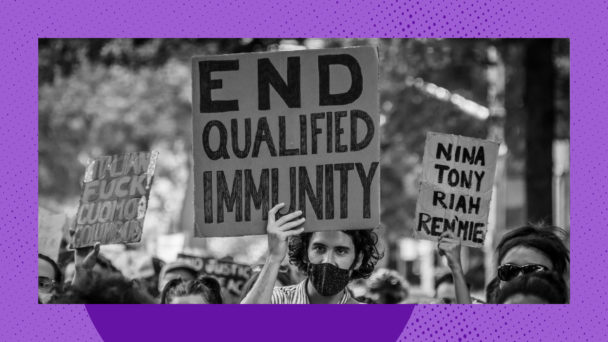
The most frustrating aspect of this case is that Clarkson did not abandon it because she was satisfied with the Ninth Circuit’s reasoning; she did so because she feared the current Court would take it even further. In the civil context, the Court has long expanded doctrines like qualified immunity, making it difficult to hold government officials liable unless they violate “clearly established” law. Even when courts occasionally deny immunity in extreme cases, the overall trend has been to reinforce protections for officials and resolve close cases in their favor.
More recently, the Court’s conservative majority has shown a willingness to extend this logic into the criminal sphere. In Trump v. United States, the Court held for the first time that a former president enjoys absolute immunity from prosecution for core official acts, and at least presumptive immunity for all other official conduct. The practical effect of this ruling is to shield a broad category of conduct so long as it can be characterized as “official,” thus placing people above the law when they act under the aegis of the federal government.
Although Trump v. United States concerns presidential immunity, it is driven by the same judicial instinct that drives cases like the one in Oregon: When in doubt, protect federal actors from accountability. Time and again, the Supreme Court has signaled to lower courts that expansive immunity doctrines are not only acceptable, but constitutionally grounded.

For state prosecutors, that signaling matters. Bringing charges against a federal agent now means more than proving a crime. It means entering a system where removal is likely, immunity is expansive, and appellate courts may be receptive to arguments for even broader protections. Especially as President Donald Trump claims that ICE and CBP agents have “absolute immunity,” the risk is not just losing a case, but also helping to produce a precedent that makes future similar cases unwinnable nationwide.
The Court’s immunity jurisprudence creates a one-way ratchet: States that push too far risk locking in even more sweeping protections. States that hold back leave existing precedents intact, and crimes by federal agents unpunished. A justice system in which accountability exists in theory but not in practice is not a justice system at all.
If the mere prospect of the Supreme Court expanding federal immunity deters enforcement of state criminal law, federal agents can operate with increasing confidence that even egregious conduct will never be punished. And the public, watching cases disappear before they ever reach a jury, will have fewer reasons to believe that the law applies equally to those who enforce it.