
Reshaping the federal judiciary has been the singular success of President Donald Trump’s political project. Throughout his first term, Trump and the Republican-controlled Senate—with the help of the conservative legal establishment—worked non-stop to leave no vacancy behind, stacking federal courts with movement conservatives ready and willing to impose their worldview across the country.
Trump seemed poised to do the same thing during his second term, this time guided by those more loyal to the man himself than to any particular legal philosophy. But Trump can’t fill vacancies unless judges create them, and for most of Trump’s second term, new ones have been few and far between: Before last week, only one new district court vacancy had arisen since December, and there hadn’t been a new court of appeals vacancy since October.
But starting on Friday, when Trump raged against the Supreme Court over its tariffs decision and attacked the justices personally, three appeals court judges have sent letters to the White House stating their intent to retire. With the midterms rapidly approaching and control of the Senate up for grabs, the question is whether these three new vacancies are the last drips of a well that’s running dry, or the warning signs of a dam about to burst. We’ll know the answer in the next few weeks.
Since Trump won re-election, only 34 judges—six appeals court judges and 28 district court judges, 27 Republican appointees and seven Democratic appointees—have created vacancies. (A judge creates a vacancy when they leave the bench or assume “senior status,” a form of semi-retirement in which judges take a reduced caseload.) And new vacancies have been scarce, particularly of late. In the 11 weeks before last Friday, only one district judge had decided to go senior: Western District of Wisconsin Judge James Peterson. Peterson was appointed in 2014 by President Barack Obama, and will assume senior status when a successor is confirmed.
But in the last few days, Trump has received some unexpected good news: Three circuit judges have decided to go senior: Sixth Circuit Chief Judge Jeffrey Sutton, Second Circuit Chief Judge Debra Ann Livingston, and Tenth Circuit Judge Timothy Tymkovich. All three were appointed by President George W. Bush, Sutton and Tymkovich in 2003 and Livingston in 2007. Sutton will assume senior status on October 1 and Livingston will do the same on July 1. Tymkovich will go senior when a successor is confirmed.
For more than three decades, Sutton has been an influential actor in the conservative legal movement. Between stints at the law firm of Jones Day, he served as Ohio’s state solicitor general, where he championed federalism-based arguments in the Supreme Court to limit the power of the federal government. As a circuit judge, he has continued to aggressively push the law rightward. In November 2014, Sutton broke with four other courts of appeals and many more district courts, writing an opinion upholding state same-sex marriage bans. He dissented when the full Sixth Circuit refused to rehear a decision leaving federal COVID-19 testing requirements in place. And he has been particularly unsympathetic to the transgender community, authoring decisions upholding Tennessee laws preventing transgender people from changing their birth certificates to reflect their sex consistent with their gender identity, and banning transgender minors from receiving gender-affirming medical care.
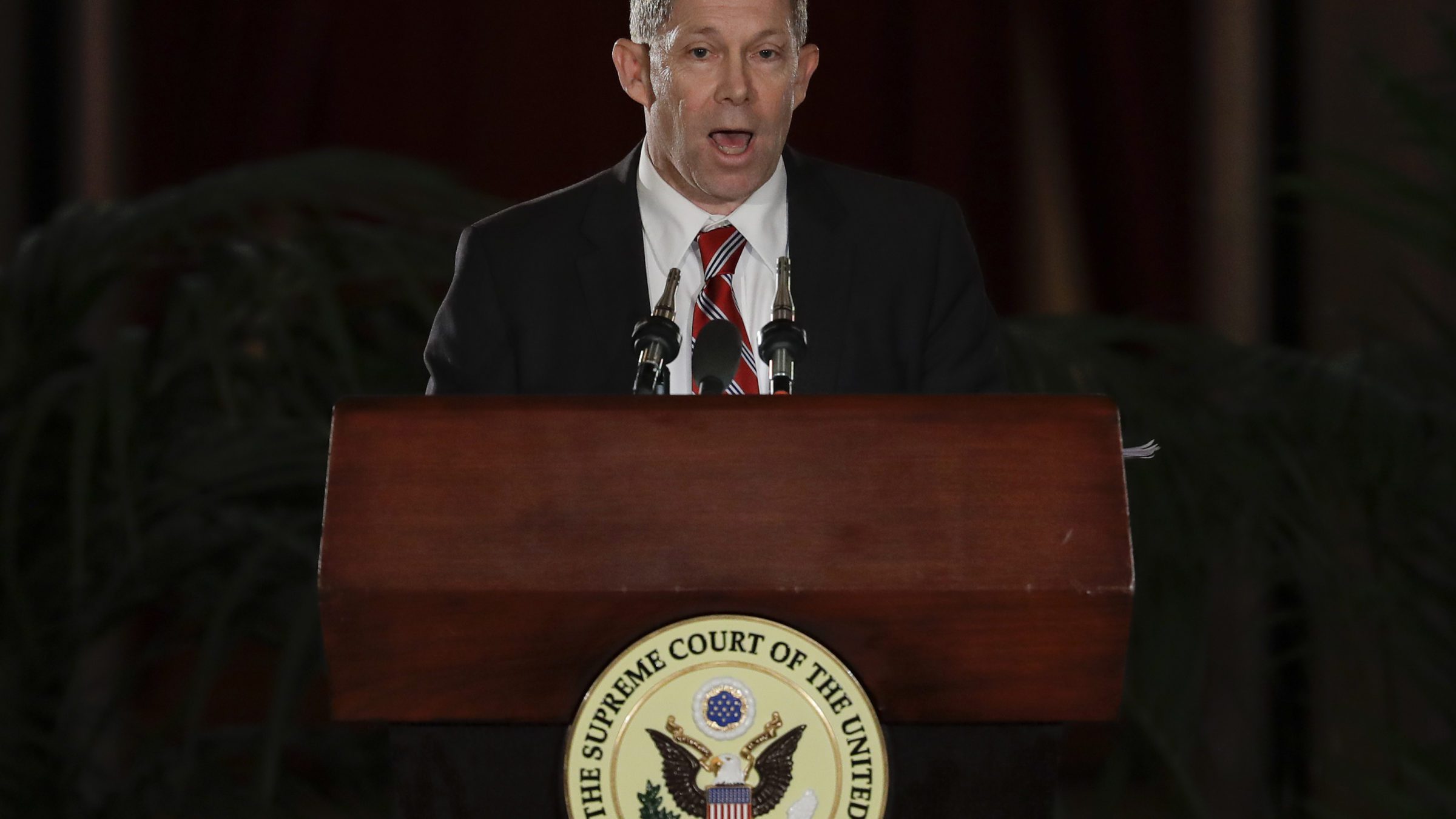
Sutton speaks at a memorial for Justice Antonin Scalia, November 2016 (Photo by Carolyn Kaster-Pool/Getty Images)
Like Sutton, Livingston has built a solid conservative record over her nearly 20 years on the Manhattan-based Second Circuit, which hears appeals from district courts in New York, Connecticut, and Vermont. Given its left-leaning jurisdiction, the Second Circuit doesn’t get many politically charged cases. But when it does, Livingston reliably sides with the court’s conservative minority. In 2018, she dissented when the full Second Circuit held that Title VII prohibits discrimination on the basis of sexual orientation. In 2019, she dissented from the court’s decision requiring that Trump comply with a subpoena and turn over his tax returns to the U.S. House of Representatives. And in 2021, she dissented from a decision barring anti-abortion protesters from harassing women trying to enter a reproductive health clinic.
All that said, in MAGA-adjusted terms, Sutton and Livingston arguably pass as moderate conservatives. In 2011, Sutton was the first Republican-appointed judge to rule in favor of the government in challenges to the Affordable Care Act. In 2025, Livingston joined an opinion upholding Connecticut’s assault rifle ban. Their willingness to write decisions like these is why neither Sutton nor Livingston were ever on any of Trump’s Supreme Court shortlists. You can bet their replacements won’t make the same mistakes.

Tymkovich, whose appointment to the federal bench was pushed by then-White House lawyer Brett Kavanaugh—has a cleaner conservative record. As Colorado’s solicitor general, Tymkovich argued in Romer v. Evans in defense of the state’s constitutional amendment barring state and local governments from protecting LGBTQ+ persons from discrimination based on their sexual orientation. The Supreme Court, in a 6-3 decision, held that Colorado’s law was unconstitutional.
As a judge, Tymkovich wrote an opinion treating for-profit corporation Hobby Lobby as a person under the Religious Freedom Restoration Act and holding that the company did not have to comply with the Affordable Care Act’s contraception mandate because doing so would substantially burden the religious beliefs of Hobby Lobby’s owners. This time, the Supreme Court sided with Tymkovich. On guns, Tymkovich has questioned the constitutionality of bans on felons owning firearms and last year authored an opinion striking down New Mexico’s seven-day cooling off period for firearm purchases. (That’s probably why, unlike Sutton and Livingston, Tymkovich was on Trump’s Supreme Court shortlist in late 2016, along with his then-Tenth Circuit colleague, Neil Gorsuch.)
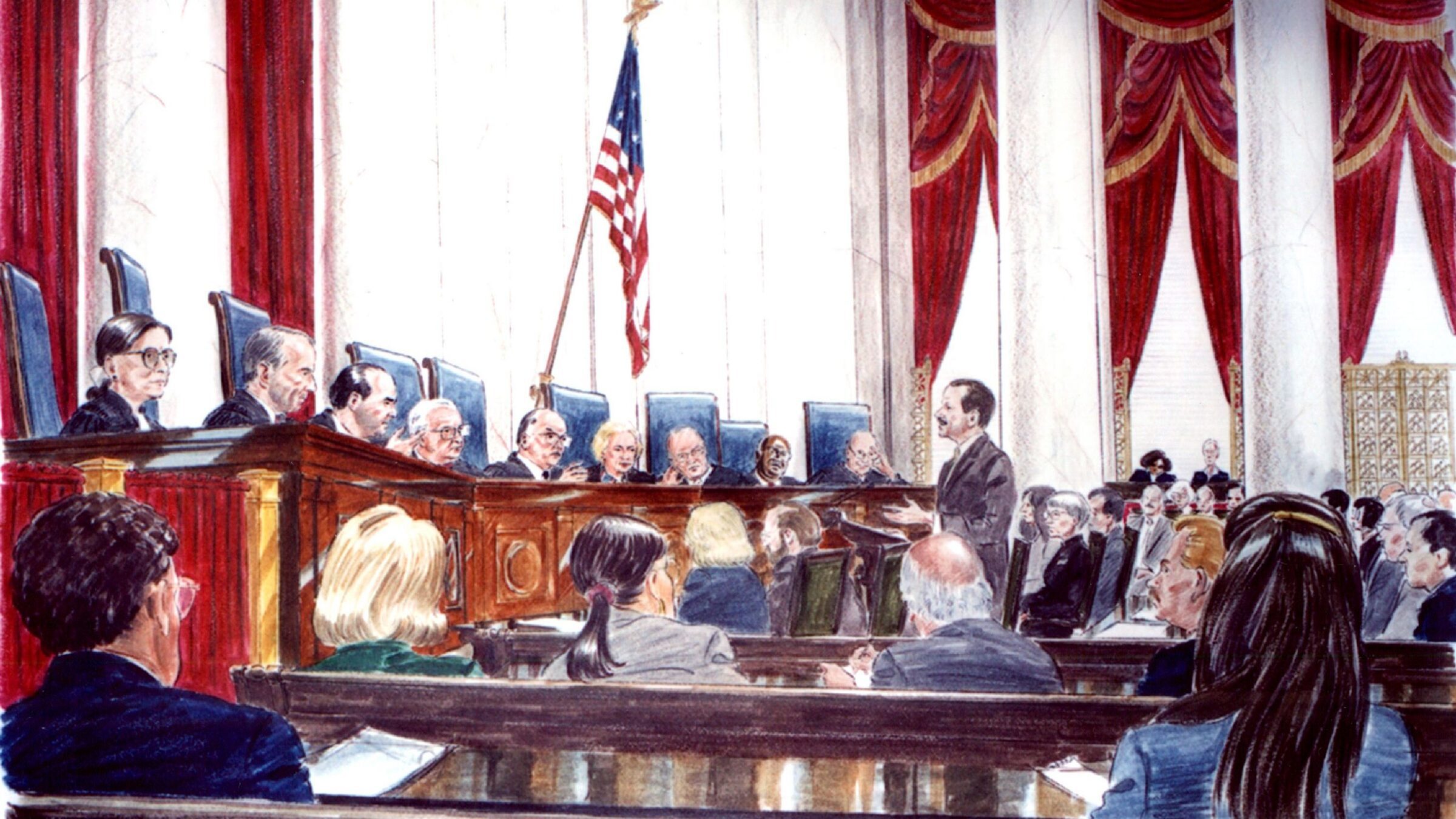
A Denver Post sketch of Tymkovich arguing Romer v. Evans, October 1995 (Photo By The Denver Post via Getty Images)
Perhaps more troubling than these three vacancies by themselves are the others they may inspire. If establishment conservatives like Sutton and Livingston are willing to let Trump replace them, that may give other judges—those who would prefer to be replaced by a Republican, but wish it were someone other than Trump—the cover they need to do the same without the guilt and shame that ought to accompany that decision.
The good news is that time is running out for more judges to follow suit. It often takes upwards of six months to find, vet, nominate, and confirm an appeals court judge and the Senate can only process so many court of appeals nominees at a time. And despite these new vacancies, it’s notable that most of the more than 20 other retirement-eligible Republican-appointed appeals court judges—including two appointed by Trump in his first term, Ralph Erickson and Kurt Engelhardt—have so far decided to stay put. It is reasonable to think that many will stay that way, even as Democrats’ chances of narrowing the Republican Senate majority (if not flipping the chamber outright) improve with each new state-sponsored abduction or murder in the streets.
So where does that leave Trump? As it stands, there are 37 current vacancies and nine future vacancies, with 12 nominees pending. Of the 25 district court vacancies without a nominee, 13 are for seats in states with at least one Democratic senator, which means Trump may not be able to fill them as long as Republicans continue to respect the blue-slip tradition. In the absence of a massive influx of new retirement announcements from judges sitting in red states, Trump’s two-year total could end up somewhere around 60, well short of the 85 judges he appointed in 2017 and 2018. And if Democrats manage to take control of the Senate in the midterms (and find their spines), they could cap Trump’s four-year total around that number, too.