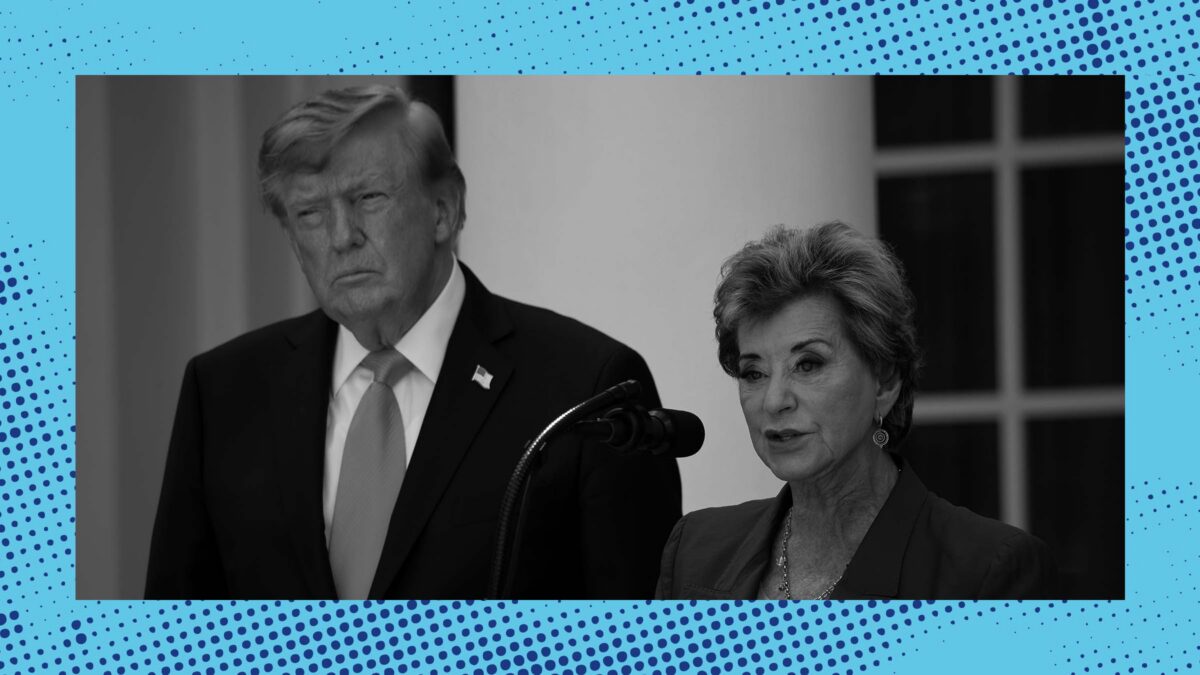
Last week, The Wall Street Journal reported that the U.S. Department of Education had taken the first step in hobbling the American Bar Association’s exclusive role in accrediting law schools. Most states require that students graduate from an ABA-accredited law school in order to sit for the bar exam, and accreditation allows law students to gain access to federal loans at better terms for students than private lenders. The Department of Education’s move fits into a larger mission from the Trump administration—to bring the ABA to heel and undercut any opposition it might pose, and to signal to other groups to tread carefully, lest they face similar attacks.
If this shift were to happen, it would not happen overnight. The accreditation and licensure of lawyers is a thicket of laws, regulations, and judicial rules, and the Department of Education has only just begun its process. And it would not necessarily be disastrous: Even if the Trump administration does remove the ABA as an accreditor, most law schools, as part of a larger university, would rely on the organization that accredits the university instead.
Even so, the Department of Education’s actions demonstrate how the Trump administration’s campaign against higher education and civil society dictates much of its policy agenda, no matter how picayune. On the same day that the Journal published its story, the ABA’s Accreditation Council voted to repeal a standard requiring law schools to train students on bias, cross-cultural competency, and racism in response to right-wing pressure from groups like Defending Education, which described the standard as “ideological instruction.” The coincidental timing highlights the pointlessness of accommodating this administration’s bully tactics.
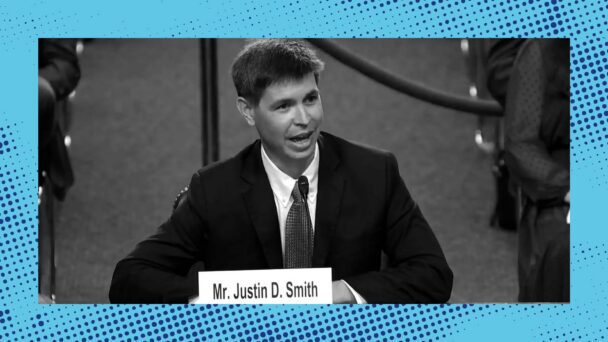
The American Bar Association has existed as a voluntary bar association of lawyers for nearly 150 years. Among its many functions is accrediting law schools by ensuring that schools comply with ABA-drafted standards governing curriculum, faculty status, law libraries, and even class durations. The standards themselves are fairly broad, and the goal has been to create a baseline for the quality of new lawyers regardless of where students go to law school.
My law school has to ensure we’re following ABA rules to a degree that colleagues in other departments would find baffling—for example, ensuring that every three-credit class meets for a minimum of 150 minutes per week for a total of fifteen weeks (or its equivalent), and has six hours of out-of-class reading or other work per week. The ABA standards don’t change radically over time, and ABA staffers periodically visit law schools to ensure that they are meeting the standards. Although the ABA has been loath to deny law schools accreditation, its oversight role gives the ABA a remarkable amount of power over what law schools do.
Republican-controlled states have been annoyed by this for some time now: The Texas state supreme court has stripped the ABA of that role already, and Tennessee and Florida are considering similar moves. However, even if Texas doesn’t require graduation from an ABA-accredited law school to sit for the Texas bar, UT-Austin will probably still follow ABA standards, since its alumni may want to gain admission to the bar in states like New York, Illinois, or Maryland. Most schools don’t want to unnecessarily limit what their graduates can do, and for now, attending an ABA-accredited school gives aspiring lawyers the most options.
The ABA has done some important work in pushing back against the lawless actions of the Trump administration, most notably in filing a lawsuit challenging the White House’s executive orders seeking to intimidate law firms. But it has also capitulated to conservative pressures, both from red states and the federal government. Last year, for example, the ABA suspended its diversity standard for law school accreditation, which required law schools to show “a commitment to diversity and inclusion” by demonstrating “a commitment to having a student body that is diverse with respect to gender, race, and ethnicity.” That’s in addition to the ABA’s vote last week on removing the standard requiring training on bias, cross-cultural competency, and racism.

These moves come in obvious response to the Trump administration’s opposition to any acknowledgment that we live in a racially diverse society with a woeful history of sexism, racism, and discrimination against minority groups who lack social and political power. That campaign has cynically weaponized the Supreme Court’s terrible decision in Students for Fair Admissions v. Harvard, in which the Court effectively banned affirmative action in college admissions, to claim that anything that smells of “DEI” is constitutionally suspect. This has no basis in that Supreme Court case or any other, but if you’re someone who finds the very existence of Black law firm partners or female judges horrifying, there’s no harm in shooting your shot with this hyperconservative Supreme Court.
The core of the Trump administration’s campaign against the ABA is that the ABA’s role in accreditation is anticompetitive. The Federal Trade Commission, which works to promote market competition, has urged multiple states to ditch the ABA as the accreditor for purposes of the bar given the monopoly the ABA holds.
While plausible arguments exist to question the ABA’s centrality in licensing lawyers, it’s impossible to separate the government’s position from its vendetta. The removal of the ABA as an accreditor for purposes of federally backed loans goes hand-in-hand with the FTC’s claims and with the pressure to repeal ABA standards that anger the conservative movement.
The ABA’s apparent efforts to placate its foes by changing its accreditation standards to avoid governmental retribution speak to several audiences. Law schools, law students, lawyers, and the public learn that the ABA is willing to toss aside even the mildest commitments to an inclusive profession and society. Opponents know that the ABA will undermine its own existence in order to try to keep the peace and its power. And the government sees that coming up with new threats pays off.
As a result, fewer law students will learn the extent to which law has and does perpetuate inequity. A generation of lawyers who don’t know how bad things are will be much less likely to fight for a better world—precisely the goal of conservatives and the federal government.