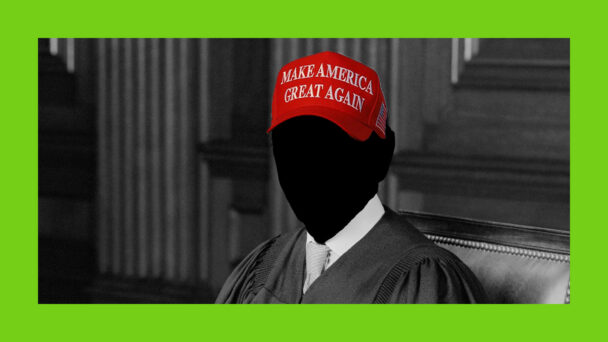
One of the most persistent tropes in the legal profession is that judges, by virtue of being judges, are magically capable of deciding cases according to the law and the law alone. When asked during confirmation hearings about previous jobs or cases or activities in which they expressed anything that sounds like a political affiliation or policy preference, judicial nominees typically downplay the significance of their previous engagements, because, they assure lawmakers, they would never allow their personal views to affect their work on the bench.
This is always a silly exercise, because the notion that judicial nominees shed a lifetime’s worth of experiences at the courthouse door is simply not consistent with how “being a person” works. It is an especially silly exercise in the case of someone like Justin Smith, a former member of President Donald Trump’s legal team whom Trump has since rewarded with a nomination to the Eighth Circuit Court of Appeals. On LinkedIn, Smith describes himself as “an attorney and strategist who fights for conservative values.” In a July 2024 blog post for Breitbart, Smith was even less circumspect, calling on “true conservatives” to help defeat the “abortion industrial complex,” stop the “woke ideology invading our schools,” and take the fight to the “radical left.”
Smith’s post was an op-ed in support of his old colleague Will Scharf, another Trump defense lawyer who, at the time, was seeking the Republican nomination for Missouri Attorney General. Scharf’s campaign was a primary challenge to the Republican incumbent, Andrew Bailey, and as Election Day approached, Smith wanted voters to understand that as conservative as Bailey might be, Scharf was on another level. In the op-ed, which Breitbart billed as an EXCLUSIVE, Smith hailed Scharf for beating back “the Left’s lawless efforts against President Trump,” and argued that Trump’s decision to place his trust in Scharf “should be enough for Missouri conservatives who are looking for a fighter for Attorney General.”
For anyone unpersuaded by Scharf’s history of pro-Trump activism alone, though, Smith asserted that Scharf would be “the fighter the pro-life movement needs,” and blamed Bailey, a staunch Trump sycophant in his own right, for fumbling away opportunities to make abortion care even more difficult for Missourians to access. Throughout the rest of the op-ed, Smith sprinkled in a bingo card’s worth of Fox News buzzwords—“critical race theory,” “DEI surveys,” and the dreaded “school mask mandates”—just to make extra clear to Republican voters that, if they really wanted an attorney general who shares their values, Scharf was the “clear choice.”
Unfortunately for Scharf, Smith failed to persuade a critical mass of Missourians to ditch Bailey, who won the August primary with 63 percent of the vote. Fortunately for Scharf, he landed a pretty good consolation prize: a job as Trump’s White House staff secretary, which is the same position Brett Kavanaugh held during the administration of President George W. Bush.
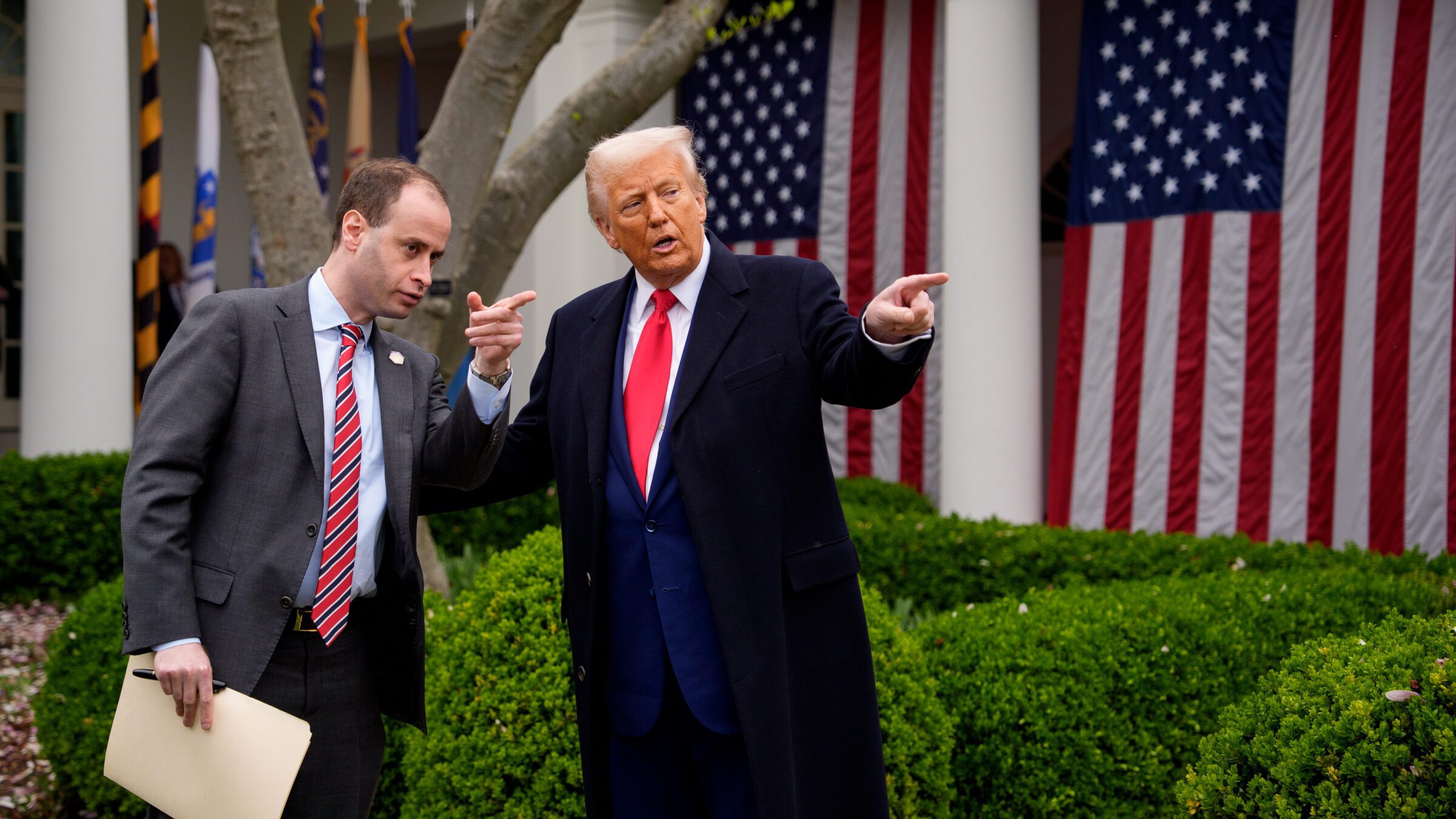
Scharf and Trump outside the White House, April 2025 (Photo by Andrew Harnik/Getty Images)
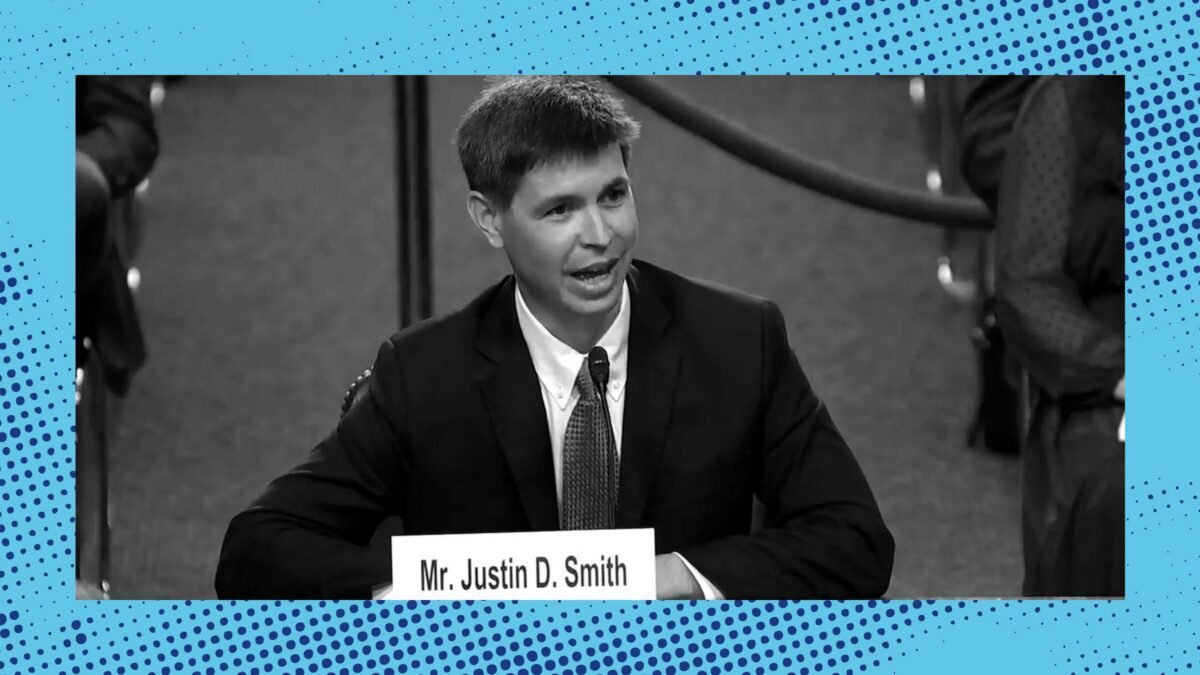
During Smith’s confirmation hearing on Wednesday, Hawaii Democratic Senator Mazie Hirono had some follow-up questions about Smith’s op-ed, since, historically speaking, contributors to a notorious far-right website with a long history of publishing gutter racism have not been viable candidates for life-tenured seats on the federal bench. Her first question for Smith sounds like a simple one: “Can you define the word ‘woke’”?
Smith began by ticking off the usual talking points: that although he’d been “proud” to support his friend Scharf in the election, the op-ed was a “piece of political advocacy,” and the views he expressed therein “would play no bearing” on how he decided cases. When Hirono correctly pointed out that this was not at all responsive to her question, Smith offered a lightly repackaged version of the same non-answer, asserting that as a judicial nominee, it would not be “appropriate” for him to comment on “political views” any further.
Clip via YouTube
The honest answer here is one Smith knows he cannot give. By representing Trump in court, Smith has already demonstrated his fealty to the president, which, as I’ve written before, is now the most important qualification for any aspiring judicial nominee. Railing against “woke ideology” in the far-right blog of record is just one more way for Smith to signal to the White House that he has the politics that are mandatory for this job: that whatever he says in order to get confirmed, he will decide cases from the perspective of someone who sees the “abortion industrial complex” as an existential threat to life and/or liberty, and believes he has a solemn moral obligation to destroy it by any means necessary.
The balance of Smith’s résumé is yet another good illustration of just how hollow the “judges do law, not politics” mantra really is. On Wednesday, Smith pledged to the Senate Judiciary Committee that he would treat everyone in his courtroom “fairly and impartially.” But in all the years leading up to Wednesday, Smith has never been shy about what he stands for: Again, he has yet to scrub that “fights for conservative values” language from his LinkedIn profile, and in his Breitbart post, he touted his experience working to “advance conservative values in Missouri for 30 years.” Given that Smith started college in 2003 and wrote those words in 2024, if my back-of-the-envelope math is right, he has considered himself to be a political activist since he was about nine years old.
At one point during the hearing, Louisiana Senator John Neely Kennedy, a Republican, tried to help Smith head off further questions about his loyalties by sarcastically asking if he, as a judge, would ever call Trump to ask how he should vote in a particular case. Smith, recognizing the question for the lifeline that it was, assured lawmakers that he would “certainly not be doing that.” But Kennedy’s facetious framing obfuscates a simpler reality. Both as a lawyer and as an anti-woke crusader, Justin Smith has already made clear that he will be exactly the kind of loyalist judge that Trump expects: the kind he never has to ask.