This article was published in partnership with Slate.
During President Donald Trump’s second term, much of the work of implementing his anti-immigrant agenda has been public, ugly, and violent: the draconian border policies, the cruel revocations of humanitarian parole programs, the murderous gangs of secret police dispatched to snatch people off the streets, and so on. But White House officials are also on the lookout for more obscure, overlooked ways that they can warp existing federal law to reduce the number of nonwhite people in this country at any given moment.
One recent initiative of this type relates to the visas held by international students, researchers and scholars, and journalists. For years, holders of these visas have been admitted for “duration of status,” which means they can stay for as long as they are making normal progress in their respective educational programs. Foreign journalists have been subject to a similarly flexible standard that allows them to remain in the country on an open-ended basis, provided that they continue working for the same employer.
Back in July, though, the Department of Homeland Security issued a rule to close this “loophole” and replace the “duration of status” system with very specific fixed periods: a maximum of four years for students and scholars, and just 240 days for journalists. Under the new regime, visa holders who need more time will have to file formal applications with the federal government, subjecting themselves to additional background checks, biometric vetting, and other bureaucratic hurdles.
The way that this administration has attacked foreign students over free speech suggests that this visa renewal application process could also be used to target the administration’s ideological foes. According to DHS Secretary Markwayne Mullin, though, the change is necessary to protect “national security,” prevent “immigration fraud,” and ensure that “foreign students remain focused on their primary purpose: completing their studies and returning home.”
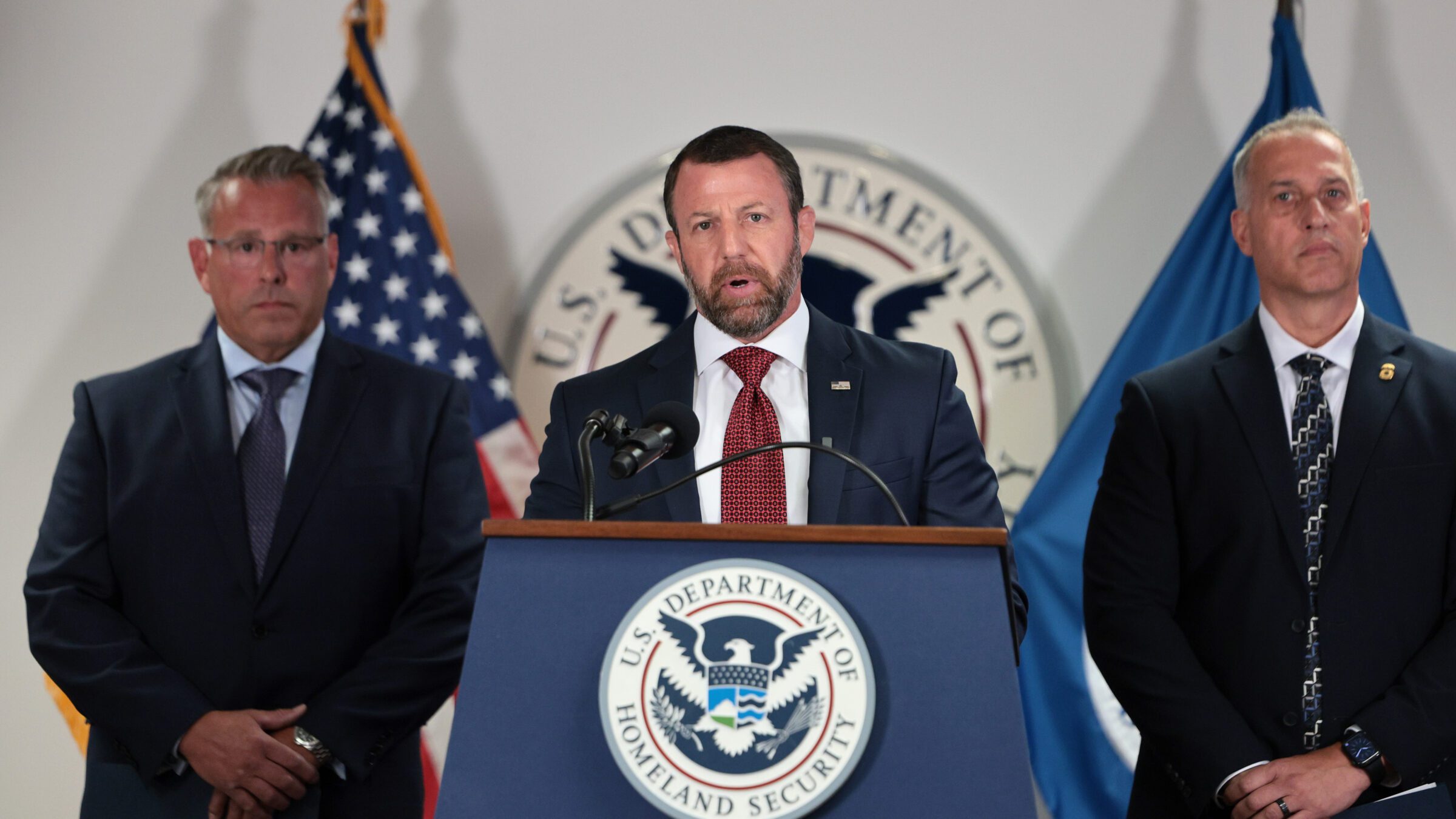
(Photo by Michael M. Santiago/Getty Images)
The change was set to take effect on Tuesday. But on Monday, a federal district court judge in Massachusetts postponed the effective date on the grounds that—and I am paraphrasing here—the rule is mind-bendingly stupid and would create a needless, self-inflicted economic catastrophe. At various points in his order, Senior Judge F. Dennis Saylor, a George W. Bush appointee, characterizes the government’s justifications for the rule as “exceptionally weak,” “largely disconnected from academic or practical realities,” and as resting on “unsupported expressions of belief.” When a federal judge is using phrases like these to describe your legal argument, that is a good sign that things are not going as you’d hoped.
Saylor begins by describing the devastating implications for visa holders: Under the new rule, he writes, DHS officials “will have the power to cut short the academic, research, or teaching activities of any non-U.S. citizen for no reason or any reason,” forcing them to “leave the United States without a degree and without any recourse.” There is no right to appeal these decisions, either, which means that if you enroll in a six-year graduate program, hit the four-year cap, and are summarily denied an extension by some faceless DHS official who has no obligation to explain themselves, you are shit out of luck.
From there, Saylor’s opinion consists mostly of expressions of bafflement at the idea that anyone would ever take this policy proposal seriously. He writes that the rule will have an “obvious deterrent effect on student enrollment,” and notes that dozens of international students have already withdrawn from their programs. It is “not difficult,” he says, to imagine how such a discretionary system could be abused to punish people expressing disfavored viewpoints, which the Trump administration has been especially fond of doing of late. He cites similar concerns for journalists, including the “obvious likelihood” of retaliation against journalists critical of the U.S. government.
Saylor is careful to note that as a judge, it is not his job to evaluate the merits of this (or any) policy. Instead, he emphasizes that he can only review the rule for compliance with the Administrative Procedure Act, a federal law that requires agencies to “examine the relevant data and articulate a satisfactory explanation” for their actions, and show a “rational connection between the facts found and the choice made.” If the agency can do these things, judges are supposed to let it do as it sees fit.
This is a pretty low bar. Yet Saylor had little trouble finding that in this case, DHS did not clear it. He points to the availability of simpler, less burdensome alternatives that the agency downplayed, dismissed, or ignored—allowing visa holders to stay for the duration of their programs, for example, rather than imposing a four-year cap on everyone. He criticizes DHS’s “conclusory or dismissive” responses to the 22,000 public comments it received about the proposal. He notes that international students support some 400,000 jobs in the U.S., and that the rule’s economic costs could reach tens of billions of dollars per year. As it turns out, Mullin’s assertion that international students’ “primary purpose” should be “completing their studies and returning home” does not suggest that he has a strong grasp on how the real world works.
Again, technically, this case is not about whether the rule is, in Saylor’s view, a good idea. But when the government’s arguments are this lazy, it is functionally impossible for Saylor to not at least implicitly acknowledge just how bad the idea is. In response to commenters’ concerns that the rule would cause student enrollment to plummet, for example, he points out that DHS said only that it “does not intend for the rule to cause [a] significant shift in student enrollment.” This is roughly analogous to me asserting that running headfirst into a telephone pole at a full sprint will not affect my health because I do not “intend” to concuss myself.
As a general matter, courts tend to be pretty deferential to the executive branch when it comes to immigration, often to the point of embarrassing credulousness. Back in 2018, for example, the Supreme Court decided in Trump v. Hawaii that the administration’s long-promised Muslim ban was a legitimate exercise of presidential power, and that Trump’s loudly professed Islamophobia was, legally speaking, irrelevant. Saylor acknowledges this dynamic in his order, writing that by invoking national security here, too, DHS “no doubt seeks to insulate its actions from judicial review to the greatest extent possible.”
Even under this generous standard, though, Saylor concludes that the administration’s case does not hold up. In its brief, DHS highlights a handful of instances—five, to be exact, involving 11 people out of tens of millions admitted over four-plus decades—in which international students were caught doing things like gathering information about the U.S. military. Against this factual backdrop, the notion that the rule is “necessary” for national security, Saylor writes, “borders on the absurd,” especially given that an across-the-board cap would do absolutely nothing to prevent this exact sort of breach. If you are a foreign spy whose cover story involves grinding your way through a history Ph.D. program, the fact that you “only” have four years to get the goods would probably not be a significant obstacle.
Saylor’s injunction is temporary, and it does not mean that some version of the rule will never take effect. But it does demonstrate that for as diligently as Trump has worked to pack federal courts with like-minded ideologues, there is a limit to how much barely disguised racism some federal judges will tolerate.