On September 4, the Department of Justice sent letters to top election officials in 29 states and the District of Columbia, threatening them with the possibility of “civil and criminal sanctions” if they fail to preserve records from the 2024 federal election.
The timing of the letters is curious, for two main reasons. First, federal law only requires election officers to retain records for 22 months following a federal election. Based on the statute—and the linear progression of time—state officials became legally free to destroy records from the 2024 election on September 5. Trump’s DOJ issued its threat on September 4.
In the letters, the acting chief of the DOJ’s voting section, Eric Neff, tried to justify this demand by claiming that the letters’ recipients are “under investigation” and have an obligation to retain the files as potential “evidence” in “ongoing litigation.” This reference to litigation hints at the second reason why the timing of the letters is so revealing: As the nation hurtles towards the 2026 midterms, which will determine control of Congress, Trump has sought to seize control of the elections—an illegal takeover powered in significant part by a flood of DOJ lawsuits.
Under Article I of the Constitution, election administration is none of the president’s business. Instead, the primary responsibility for regulating elections lies with the states, subject to Congress’s power to “make or alter” those regulations. Yet for months on end, Trump’s DOJ has been demanding that states hand over their unredacted voter registration files so that the administration can identify alleged noncitizens and direct states to remove those individuals from the voter rolls.
Most states have refused to do so, so the DOJ has tried to sue them into compliance. Federal district courts have dismissed nearly two dozen of these cases so far. But apparently, an unbroken string of 23 losses is not enough to discourage the DOJ from trying to get the files another way. In other words, the DOJ’s letters weren’t really warning states about 2024. They were warning states about 2026.
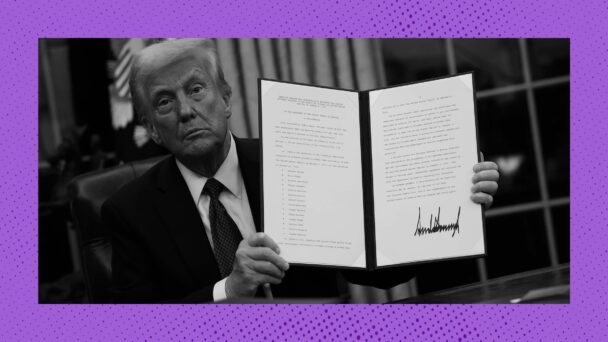
Last week’s letters represent just one of the ways that Trump’s DOJ has sought to intimidate election officials and voters. In July, for instance, the DOJ sent letters warning election officials in all 50 states that they may be criminally prosecuted if they knowingly allow noncitizens to remain on the voter rolls, or if noncitizens receive, cast, or have ballots counted in federal elections. More recently, the DOJ has been busy defending Trump’s executive order purporting to restrict mail ballots, by directing the attorney general to investigate and prosecute state officials who provide ballots to individuals whose names don’t appear on lists created by the Department of Homeland Security.

Democrats, civil rights organizations, and other groups have continuously pushed back against the DOJ’s abuses, and even some of Trump’s Republican allies have grown tired of his antidemocratic antics. Last week, Deidre Henderson, the lieutenant governor of Utah, told the Salt Lake Tribune that the Trump administration was “threatening election officials with prison sentences” and “making it so that we’re not able to do our actual jobs.” Back in July, Jim Craig, litigation chief in the Idaho attorney general’s office, directly told his federal counterparts that he didn’t appreciate their “insinuations” about prosecution. “Stop threatening your friends,” he said.
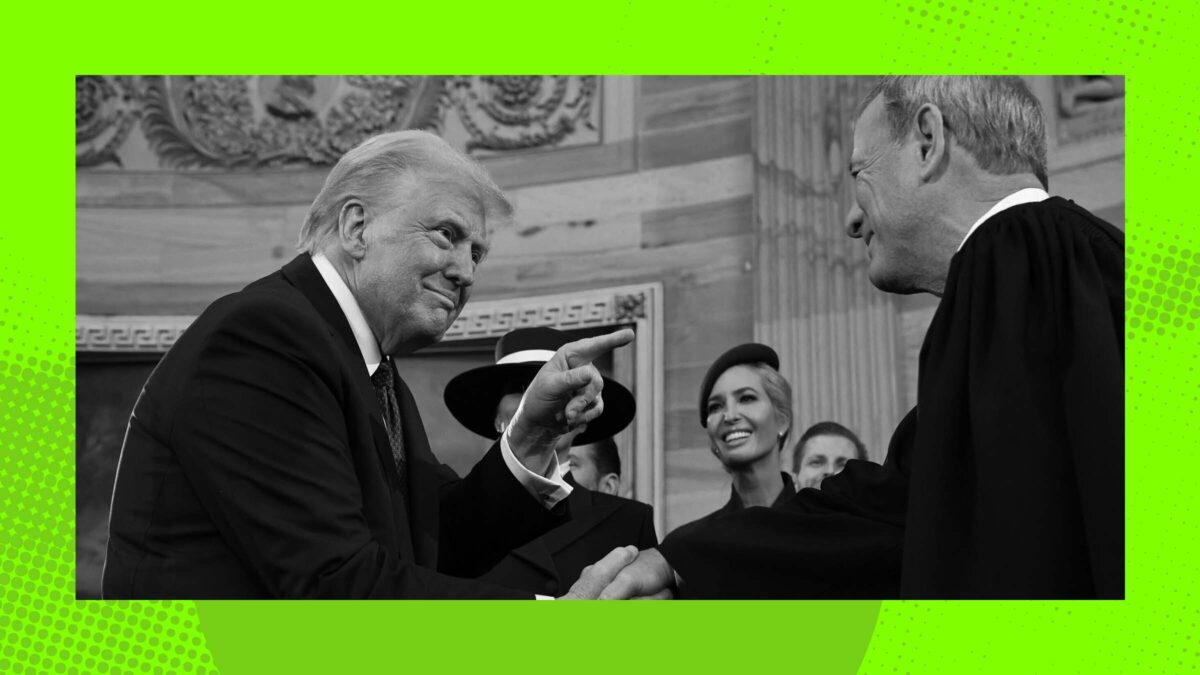
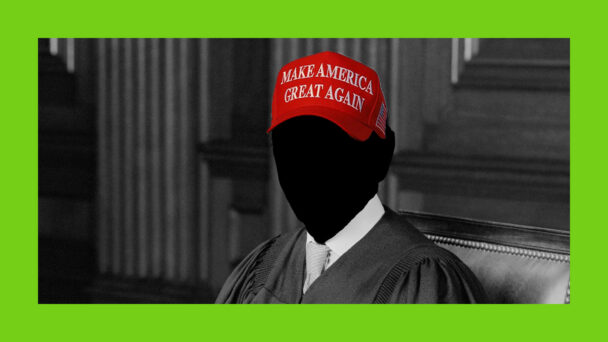
Trump’s most important friend, however, is Chief Justice John Roberts. And Roberts has already indicated that he doesn’t mind the weaponization of the DOJ one bit. In 2024, the Supreme Court considered whether Trump could be held criminally liable for using the DOJ in his attempt to overturn the 2020 election, by (among other things) directing the DOJ to pressure state officials by conducting sham investigations and sending letters full of false claims about election irregularities that ostensibly impacted the outcome. A federal grand jury indicted Trump for this conduct.
But in Trump v. United States, the Supreme Court declared that Trump was just doing his job, and could not constitutionally be indicted for that. In his majority opinion, Roberts said that investigating and prosecuting crimes is “a quintessentially executive function,” and that presidents cannot be prosecuted for “discussions with Justice Department officials.” By immunizing Trump from accountability for employing the DOJ in his election-rigging schemes, Trump v. United States incentivized Trump to do so again. Under this ruling, using the DOJ for election interference just falls under the president’s “conclusive and preclusive” authority.
Justice Sonia Sotomayor warned, in dissent, that such a rule would protect all kinds of clear malfeasance. “Even fabricating evidence and insisting the Department use it in a criminal case could be covered,” she said. Undeterred, Roberts created a vast sphere of criminal immunity. State election administrators are now suffering the consequences.