With the 2026 midterm elections approaching and control of the Senate uncertain, President Donald Trump and Senate Republicans are racing to confirm as many life-tenured federal judges as possible. That urgency was unmistakable in August, when Trump announced Eighth Circuit nominee Lee Rudofsky and a dozen district court nominees in a single week. Rudofsky’s confirmation would give Trump nominees six of the court’s 11 seats—an outright Trump majority on a court already dominated by Republican appointees.
The twist with this round of nominees, though, is that none of them can be confirmed before the midterms. And if Democrats win the Senate in November, Republicans will have only the lame-duck session—and all the hurdles that come with it—to push them through.
Vacancies
In July, three Republican-appointed judges announced plans to take senior status: Terrence Boyle of the Eastern District of North Carolina, Thomas Schroeder of the Middle District of North Carolina, and Bobby Shepherd of the U.S. Court of Appeals for the Eighth Circuit. Boyle, 80, was appointed by President Ronald Reagan, and Schroeder, 67, and Shepherd, 74, were appointed by President George W. Bush. The departures of Boyle and Schroeder add two more vacancies in North Carolina, where Trump and Senate Republicans seated four other federal judges last year.
Boyle is the longest-serving federal district court judge in active service, but he might have been the longest-serving federal circuit judge in active service had his two nominations to the Fourth Circuit—one by each of the Presidents Bush in 1991 and 2001, respectively—not failed because of Boyle’s anti-civil rights work for segregationist North Carolina Senator Jesse Helms. Neither of Boyle’s Fourth Circuit nominations ever received a floor vote amid significant opposition to Boyle’s record, as well as lingering anger over Helms’s efforts to keep the seat open for Boyle by blocking Black candidates nominated by President Bill Clinton.
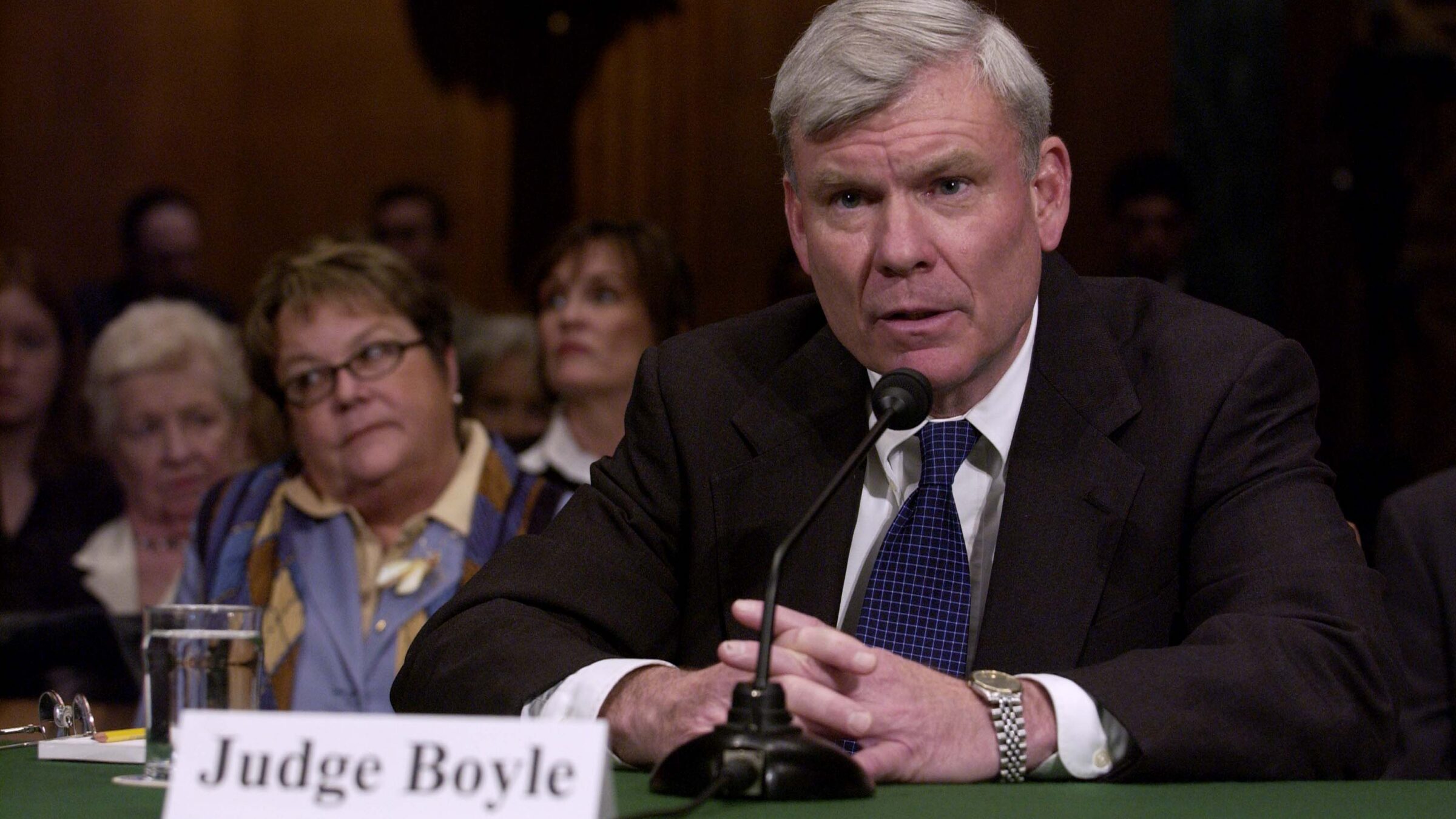
Boyle at his confirmation hearing in 2005 (Photo by Scott J. Ferrell/Congressional Quarterly/Getty Images)
The departure of Shepherd, who has served on the Eighth Circuit since 2006, is the bigger story, because his recent record includes a significant victory for Trump’s immigration agenda: In March, he wrote a 2-1 decision (with Trump appointee Ralph Erickson in dissent) allowing the administration to subject certain noncitizens to mandatory detention without bond, a decision that broke with the interpretation of federal law understood by the five previous administrations. Shepherd also has a long antiabortion record: In 2018, he upheld a Missouri abortion ban identical to the one struck down by the Supreme Court two years before in Planned Parenthood v. Hellerstedt. In 2020, he allowed Arkansas to halt elective surgical abortions during the Covid-19 pandemic. In 2015, he begrudgingly blocked North Dakota’s six-week abortion ban, but wrote separately to complain about the “ill-fitting and unworkable viability standard” announced in Planned Parenthood v. Casey and to “reiterate” his view that the Supreme Court should “reevaluate” it.
The Eighth Circuit already boasts a Republican supermajority: Ten of the court’s 11 active judges were appointed by Republican presidents, including five by Trump. Once Shepherd is replaced, the court will have an outright majority of Trump appointees—the first of any federal court of appeals to achieve that distinction.
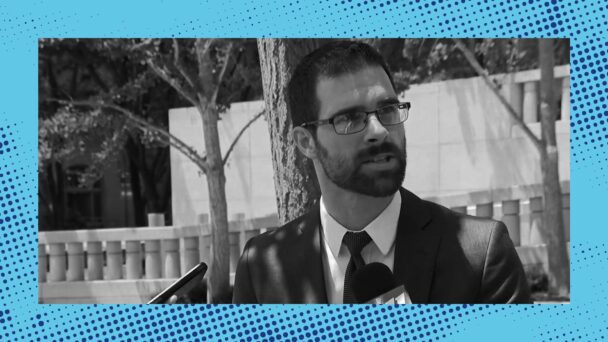
There is a family dimension to Shepherd’s retirement, too: His son, John Shepherd, was confirmed to the Western District of Arkansas in April. This is the second time Trump has placed the child of an Eighth Circuit judge on a district court as the parent retired from active service—Megan Benton, the daughter of former Eighth Circuit Judge Duane Benton, was confirmed to the Western District of Missouri in February. For Trump, it seems, life tenure should be a family tradition.
Nominees
Just three weeks after Shepherd’s announcement, Trump selected Eastern District of Arkansas Judge Lee Rudofsky to replace him. Rudofsky, a former Arkansas solicitor general and Walmart lawyer, has served as a federal district judge since Trump appointed him in 2019. If confirmed, he would become Trump’s seventh Eighth Circuit appointee, all of whom are white men.
Rudofsky has issued several troubling decisions in his short time on the bench. In a 2022 challenge to Arkansas’s legislative maps brought by the state chapter of the NAACP, Rudofsky concluded that private parties cannot sue to enforce Section 2 of the Voting Rights Act, leaving enforcement solely to the U.S. attorney general, which is sort of like letting the fox decide whether to investigate disappearances from the henhouse. The Eighth Circuit affirmed Rudofsky over the dissent of Judge Lavenski Smith, the court’s only Black judge.
Rudofsky also recently ruled against the Arkansas NAACP in another civil rights case, this one challenging the state education department’s removal of an AP African American Studies course from the curriculum in response to Arkansas’s LEARNS Act, a state law banning “indoctrination” in public schools. In that case, Rudofsky rejected the plaintiffs’ contention that the state acted with discriminatory intent, writing that a desire to prevent “left-wing indoctrination” was not equivalent to an intent to harm Black students. “End of story,” he added.
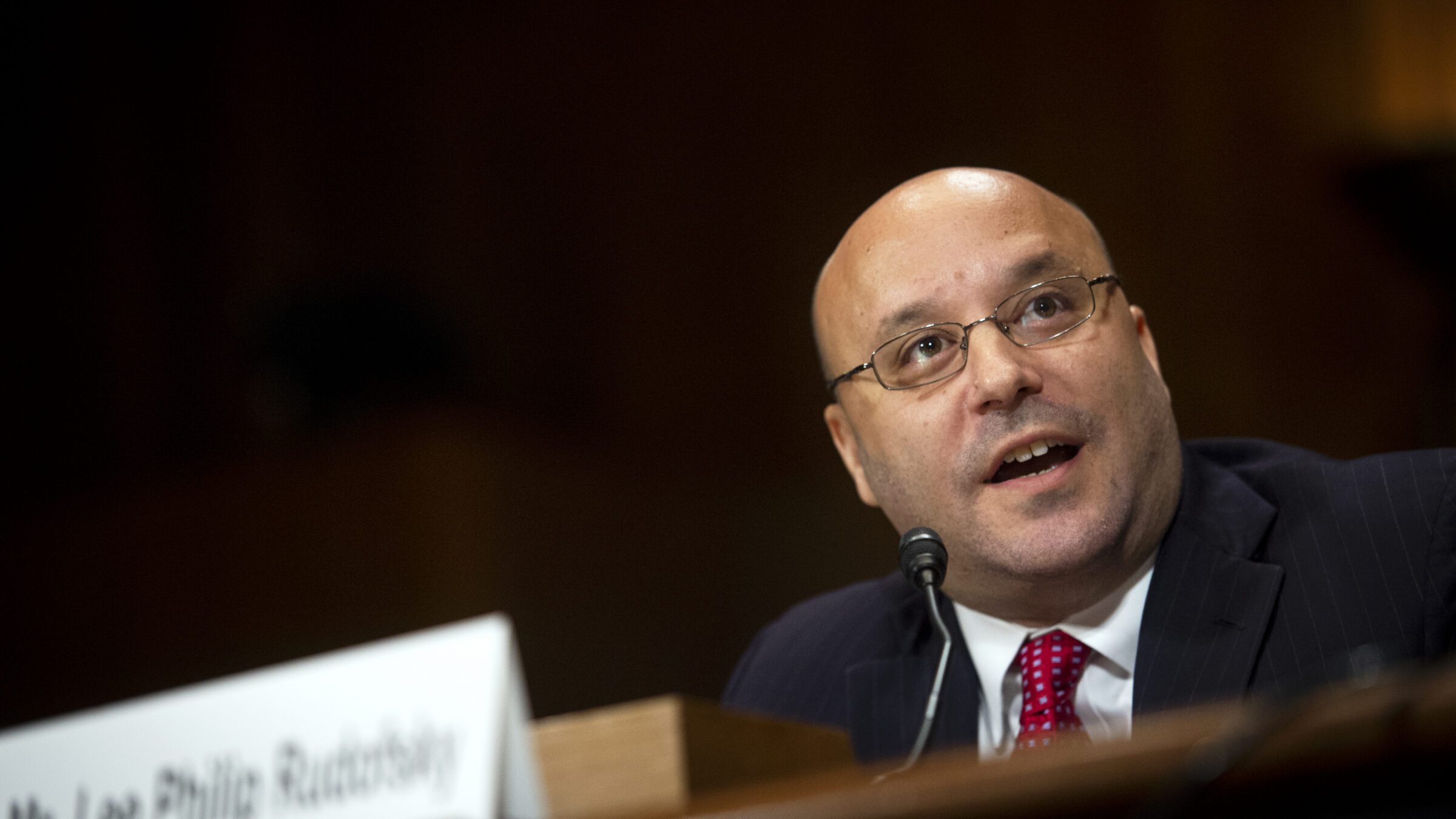
Rudofsky at his 2019 confirmation hearing (Photo by Caroline Brehman/CQ Roll Call)
Trump also announced 12 district court nominees. All are bad, but three really stand out from the pack and for all the wrong reasons.
First, Trump nominated Samuel Adkisson, 33, to the Eastern District of Tennessee, even though Adkisson graduated from law school only eight years ago. His résumé nevertheless reads like a MAGA judicial-nomination checklist: work on the Senate Judiciary Committee during Brett Kavanaugh’s confirmation; clerkships with Trump appointees Amul Thapar and Gregory Katsas before a Supreme Court clerkship with Chief Justice John Roberts; several years in private practice; and his current position as a special assistant in the White House Counsel’s Office.
When announcing Adkisson’s nomination on Truth Social, Trump specifically praised his work on the administration’s successful effort in Trump v. Slaughter, which overturned 90 years of precedent that allowed Congress to protect independent agencies from direct presidential control. Adkisson also helped challenge diversity-conscious financial aid policies at the University of Oklahoma and represented plaintiffs challenging diversity-related hiring practices for air traffic controllers. If there’s one thing this White House prizes, it’s experience making sure diversity doesn’t accidentally break out somewhere.
Zach West, nominated to the Northern District of Oklahoma, is another product of the conservative legal pipeline. Oklahoma’s former solicitor general and current director of special litigation in the Oklahoma Attorney General’s Office, West was a John Marshall Fellow at the Claremont Institute, which is something of a finishing school for the MAGA movement’s lawyers. He defended Oklahoma’s proposed taxpayer-funded religious charter school and challenged federal conditions designed to protect access to abortion-related care.
Finally, Jesus Osete, nominated to the Western District of Missouri, previously served as Missouri’s deputy solicitor general and clerked for Shepherd. He is currently the principal deputy assistant attorney general in the Justice Department’s Civil Rights Division. Together with Assistant Attorney General Harmeet Dhillon, Osete has helped redirect the division’s focus from traditional civil rights enforcement and toward the administration’s priorities: fewer gun restrictions, fewer protections for transgender people, more barriers to voting, and a newfound concern that white people are the real victims of discrimination.
Several of Trump’s remaining picks are already judges, including former Oklahoma appellate judge Trevor Pemberton (Eastern District of Oklahoma), longtime Kentucky state court judge Daniel Ballou (Eastern District of Kentucky), Florida state court judge Robert “Bobby” Long (Middle District of Florida), and federal magistrate judges Kyle Reardon (District of Alaska) and Richard Bennett (Southern District of Texas). Career federal prosecutors Courtney Coker and Peter Mansfield were nominated to the Northern District of Texas and Eastern District of Louisiana, respectively.
The final two nominees come from different corners of the conservative legal pipeline: Bradford Kelley, nominated to the Eastern District of Louisiana, previously served as chief counsel to a Republican EEOC commissioner. North Dakota Solicitor General Philip Axt, a law school classmate of Adkisson’s and another Claremont fellow, was nominated to his state’s federal district court.
Hearings
The Senate Judiciary Committee held one last nominations hearing on August 5 before the six-week recess, for Anna St. John, whom Trump nominated to the Fifth Circuit only three months after her confirmation to the Eastern District of Louisiana, and for Alabama Supreme Court Justice Greg Cook, nominated to the Northern District of Alabama.
As with earlier Trump nominees, St. John and Cook were asked whether President Joe Biden won the 2020 election. Neither would give a direct answer, saying only that Biden “was certified by the Electoral College and served for four years.” St. John similarly declined to characterize January 6 as an insurrection, saying only that the Capitol was “breached” and that “news reports show[ed] that there were some physical assaults on law enforcement.” New hearing, same scripted non-answers.
Confirmations
Cognizant of the calendar, Senate Majority Leader John Thune prioritized confirming as many judges as possible during the four weeks the Senate was in session before the August recess. In July, the Senate confirmed Matthew Schwartz to the Second Circuit, Benjamin Flowers to the Sixth Circuit, Daniel Traynor to the Eighth Circuit, Rob Jones to the Southern District of Texas, Jeffrey Kuntz to the Southern District of Florida, Michael Martin to the Eastern District of Michigan, Antonio Pozos to the Eastern District of Pennsylvania, and Kara Westercamp to the Court of International Trade.
What’s Next
When the Senate returns on September 14, it will vote to end debate on Matthew Byrne’s nomination to the Southern District of Ohio, setting up his confirmation later that week. Daniel Domenico (Tenth Circuit), Angela Colmenero (Southern District of Texas), and Kasdin Mitchell (Northern District of Texas) are already on the Senate floor, and should be in the clear for confirmation before the Senate leaves again in October. St. John and Cook won’t make it to the Senate floor until September 28—the last week before the Senate leaves—so Thune will have to manage floor time carefully to squeeze them in.
The rest of the nominees, though, face a more uncertain path to confirmation. The problem (for them) is that the Senate calendar can accommodate only two more hearings before the midterms: one on September 16 and one on September 30. Most of Trump’s August nominees will fill those out.
Then, those who have their hearings on September 16 will be eligible for confirmation starting on November 30, and those who have their hearings on September 30 will make it to the Senate floor on December 7. The remaining nominees will have to wait until November 18 for the last possible hearing before the end of the year. Those nominees will get to the Senate floor on December 14, the beginning of the last week that the Senate is scheduled to be in session this year.
The calendar is tight, but the stakes are high. Every nominee Republicans push through during the lame-duck session will remain on the bench long after the senators casting those votes are gone. A few frantic weeks in November and December could shape voting rights, immigration, and presidential power for a generation. If Democrats take back the Senate in the midterms, they better be ready for the fight.