On April 29, the Supreme Court heard oral argument in a pair of cases that will determine whether the Trump administration can remove over 350,000 Haitian and 6,000 Syrian beneficiaries of a federal humanitarian program that protects against deportation. President Donald Trump has made abundantly clear that he does not want these people in the United States because he does not want people of color in the United States. But for most of Wednesday’s argument, the justices pretended to have no idea how race could be relevant to the matter before them.
Temporary Protected Status is a program Congress created in 1990 to ensure that people from countries experiencing “extraordinary and temporary conditions” are not deported to places where their safety would be in jeopardy. The Department of Homeland Security first designated Haiti for TPS after a devastating earthquake in 2010, and it has repeatedly redesignated the island nation for protected status due to “simultaneous economic, security, political, and health crises.” DHS similarly first designated Syria for TPS in 2012 in response to the government’s “brutal crackdown” against a freedom movement, and later redesignated it due to an “ongoing civil war” with “dire” humanitarian consequences.
Because of Temporary Protected Status, over 1 million people from countries like Haiti and Syria have been able to make lives for themselves in the United States, without fear of detention and deportation into unsafe environments. These people include healthcare workers, restaurant owners, and teachers. And they have become deeply rooted in the country, buying homes and raising U.S. citizen children. In an amicus brief, over 400 residents of Springfield, Ohio say they have “personally benefited” from Haitian TPS holders’ contributions to the city’s “economic, civic, and religious life,” and that they are “united in caring” for their Haitian neighbors.
But that is not how the Trump administration sees them.
On the campaign trail, Trump smeared TPS holders as “illegal immigrants,” and said they are “poisoning the blood” of the country. He and his running mate, JD Vance, regularly proclaimed that they would end the TPS program if elected, and accused Haitian TPS holders in Ohio of “eating the dogs” and “eating the cats.” Vance, an Ohio native, also blamed Haitians for every conceivable ill in the state, from the spread of communicable diseases to increases in car insurance rates.
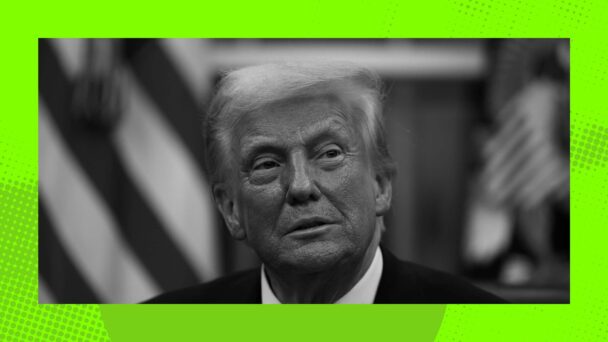
Immediately upon entering office, Trump and Vance made good on their threats. Former DHS Secretary Kristi Noem announced on January 29 that Trump was “pausing” the entire TPS program to “re-evaluate.” Days later, she started churning out terminations of TPS country designations, claiming that TPS holders’ continued presence in the United States was “contrary to the national interest.”
In December 2025, shortly after announcing the termination of Haiti’s TPS designation, Noem called Haitians and other TPS holders “killers, leeches, and entitlement junkies,” and posted on social media “WE DON’T WANT THEM. NOT ONE.” Two weeks later, Trump boasted about putting a “permanent pause” on “Third World migration” including from “hellholes” like Haiti, and asked why the United States admits “people from shithole countries” rather than “nice” countries like Denmark, Switzerland, and Norway.
Haitian and Syrian TPS holders both filed lawsuits challenging the rescissions of protected status in federal court, and won preliminary injunctions blocking their removal while the cases are pending. The judge in the Syria case, Mullin v. Doe, found “a wealth of evidence” showing that Noem violated the TPS statute, which requires the Secretary to engage in “consultation with appropriate agencies of the Government” and “review the conditions in the foreign state” before making termination decisions.
The judge in the Haiti case, Trump v. Miot, reached the same conclusion, and also found it “substantially likely” that the terminations were “preordained,” and based on bare, unconstitutional racial animus. The Trump administration filed a slew of emergency appeals, which led to yesterday’s expedited oral argument at the Supreme Court.
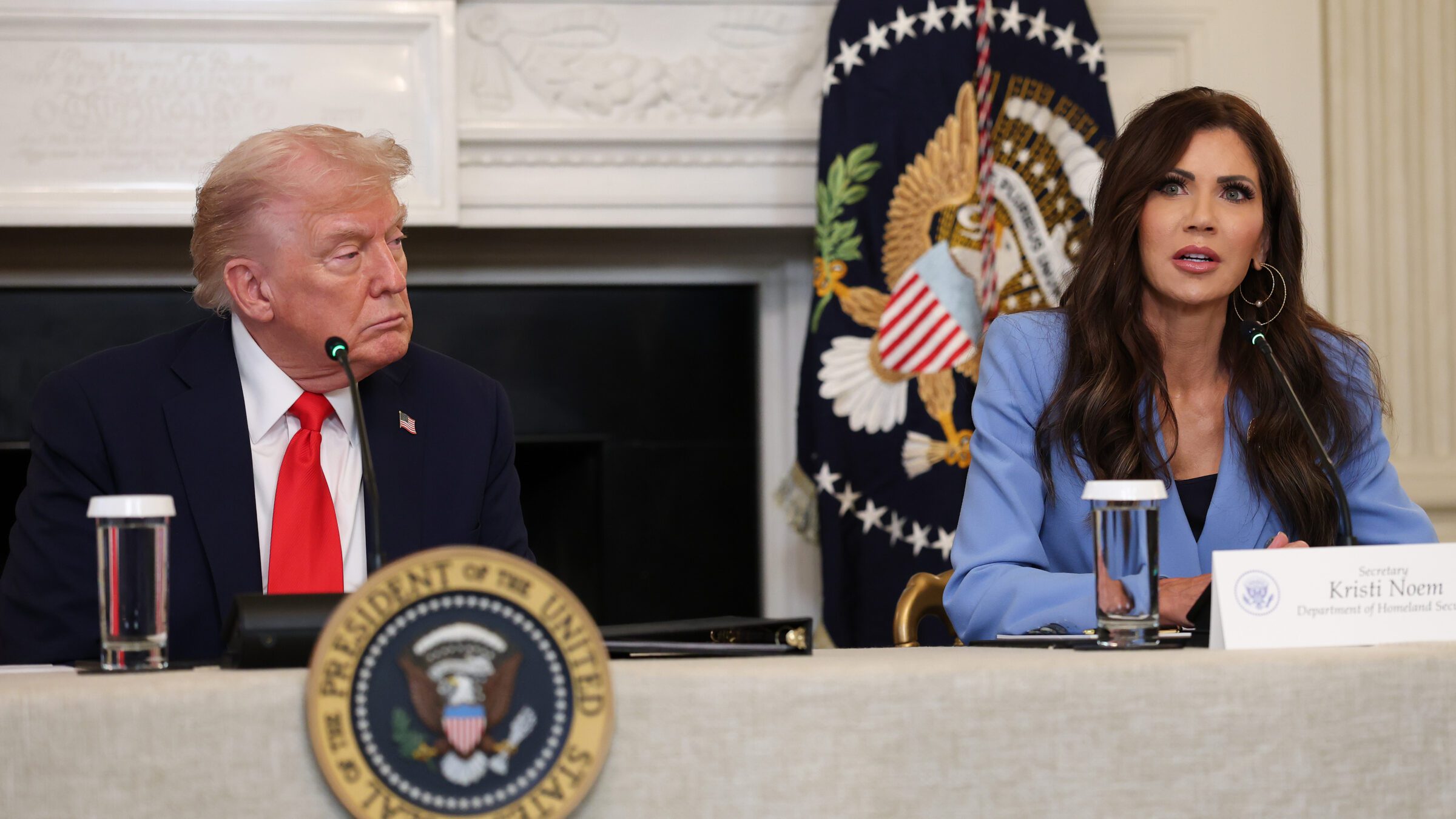
(Photo by Anna Moneymaker/Getty Images)
On Wednesday, though, most of the justices did not discuss the gutter racism driving the Trump administration’s mass termination of TPS status. The Republican justices had barely any questions at all for the administration’s counsel, Solicitor General D. John Sauer. And a clear majority of oral argument was spent discussing a threshold question (and Sauer’s primary argument) as to whether courts have any authority to hear the case at all. The TPS statute says there is “no judicial review of any determination” with respect to the termination of a TPS country designation. Sauer argued that those words are “broad” and “expansive,” and so the provision bars judicial review of “both the Secretary’s ultimate decision” and “each antecedent step along the way.” Basically, in the government’s view, Congress can require the DHS Secretary to take certain steps, but no one is allowed to do anything if the Secretary decides not to take them.
Justices Ketanji Brown Jackson and Sonia Sotomayor pushed back against this vision of unchecked executive power in a narrow but important way: The TPS holders aren’t challenging the Secretary’s authority to make termination decisions, but are instead challenging how the decision was made. The TPS statute requires termination decisions to be based on facts and undertaken in good faith. And as Jackson and Sotomayor pointed out, here, Trump, Vance, and Noem have supplied plenty of evidence that the decisions were based on racism.
Sotomayor recounted some of Trump’s hateful public statements. “We have a President saying at one point that Haiti is a ‘filthy, dirty, and disgusting S-hole country.’ I’m quoting him,” she said. Sotomayor also raised Trump’s complaints about the U.S. taking people from these countries instead of countries like Norway and Sweden where, she noted, the people are “all virtually white.”
Sotomayor also brought up Trump’s characterization of “illegal immigrants” (which he conflates with TPS) as “poisoning the blood” of the nation. For her, the statements were a “prime example” showing that, under the Court’s precedents, an impermissible “discriminatory purpose” may have “played a part in this decision.”
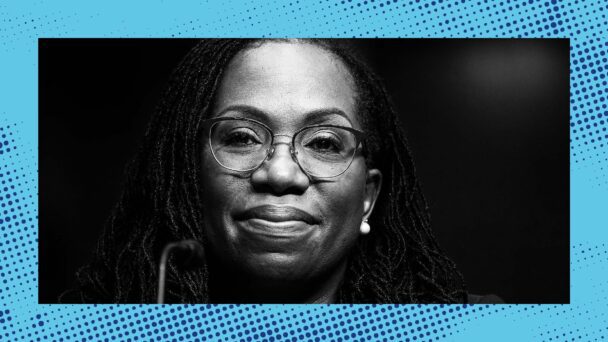
Jackson further pressed Sauer on the Trump administration’s policy of welcoming “white South Africans” into the country while “Black African immigrants are not allowed.” And she quoted some of the president’s more flagrant remarks about presumed biological inferiority. “What about ‘poisoning the blood of Americans?’” she asked. “What about ‘bad genes?’”
Confronted with this direct evidence, Sauer nonetheless continued to insist that the statements had been “wrenched from context” and did not “raise any plausible inference of animus” because “none of them, not a single one of them, mentions race or relates to race in any way.”
Government officials have long used racially-coded rhetoric and dog whistles to advance harmful, racist policies—and Trump’s dog whistles are more like bullhorns anyway. But for Sauer, a mountain of context clues was irrelevant. As Jackson put it, a fair summary of the government’s position is that, in order for courts to acknowledge the president’s discrimination against Black people, “We have to have an actual racial epithet.”
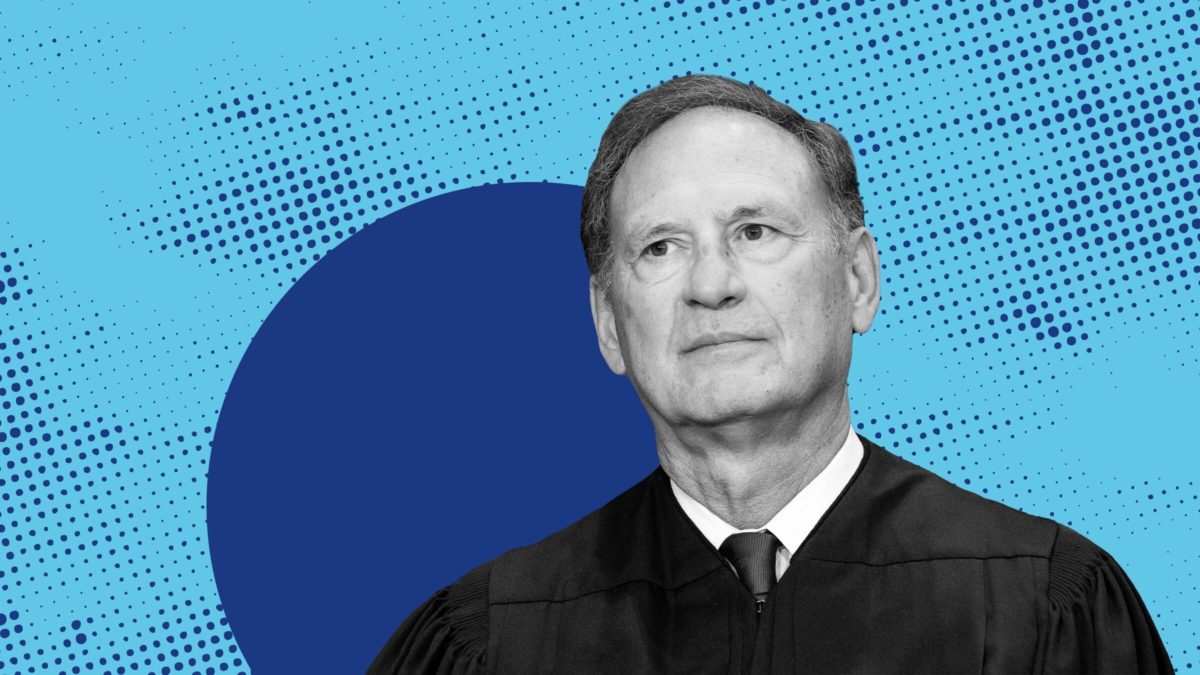
The only Republican on the Court to comment on the role of race in the TPS terminations was Justice Sam Alito, and he limited his input to dismissing the whole conversation as a nasty enterprise. After the attorney for the Haitian TPS holders referred to Trump’s racism against “non-white immigrants,” Alito said, “I don’t like dividing up the people of the world arbitrarily into three racial groups.” He also questioned what it means to be “non-white” anyway, and got a laugh from the room by asking whether “southern Italians” count.
Alito’s purported distaste of racial division and flippant attitude towards racial discrimination in the terminations of Temporary Protected Status—voiced mere hours after he and the other Republicans destroyed historic protections for voters of color—encapsulate the dangerous illogic at the heart of conservative jurisprudence. Republican justices refuse to acknowledge obvious racism right in front of them. And in doing so, they relieve themselves of any legal obligation to do something about it.