Red-state prosecutors are developing a nasty habit of ignoring their own laws to criminally charge women who have abortions. The latest disturbing episode comes out of Kentucky, where a prosecutor recently indicted a woman for fetal homicide after she allegedly ended her pregnancy via medication abortion—an act that lawmakers have explicitly exempted from the state’s fetal homicide law.
One day later, the prosecutor dropped the charge, using language that suggests she might not have read the statute carefully enough.
On January 1, Kentucky State Police said they’d arrested a 35-year-old woman for fetal homicide after she allegedly told workers at a primary care clinic she’d used abortion pills and buried fetal remains in her yard. (How did police get involved? Those workers then called the cops.) Although abortion is banned in Kentucky, such laws apply to licensed medical providers—that is, they only prohibit clinicians from providing abortion care, and they exempt pregnant people from charges. At the moment, only one state, Nevada, explicitly criminalizes people self-managing their abortions, and only after 24 weeks.
But law enforcement finds other ways to arrest people for abortions. Police charged the woman with fetal homicide, abuse of a corpse, and tampering with physical evidence. They pursued these charges even though Kentucky’s fetal homicide law plainly forbids charging a pregnant person. The exceptions subchapter of this law, which is intended for use when someone harms a pregnant person who loses their pregnancy, states clear as day that “nothing in this chapter shall apply to any acts of a pregnant woman that caused the death of her unborn child.” (Laws banning “abuse of a corpse” were meant to address grave robbing and necrophilia, not women burying their own fetal remains.)

On January 2, the day after the woman’s arrest, the ACLU of Kentucky flagged the exception in a local news story and suggested someone might have made a mistake, perhaps unfamiliar with the intricacies of the statute. “I would caution people against taking what is in the [police] report as gospel,” the organization’s communications director, Angela Cooper, said. “No individual officer can be expected to know all of the ins and outs of the law, and just because a charge is written in a report does not necessarily mean that that’s what the court’s going to do.”
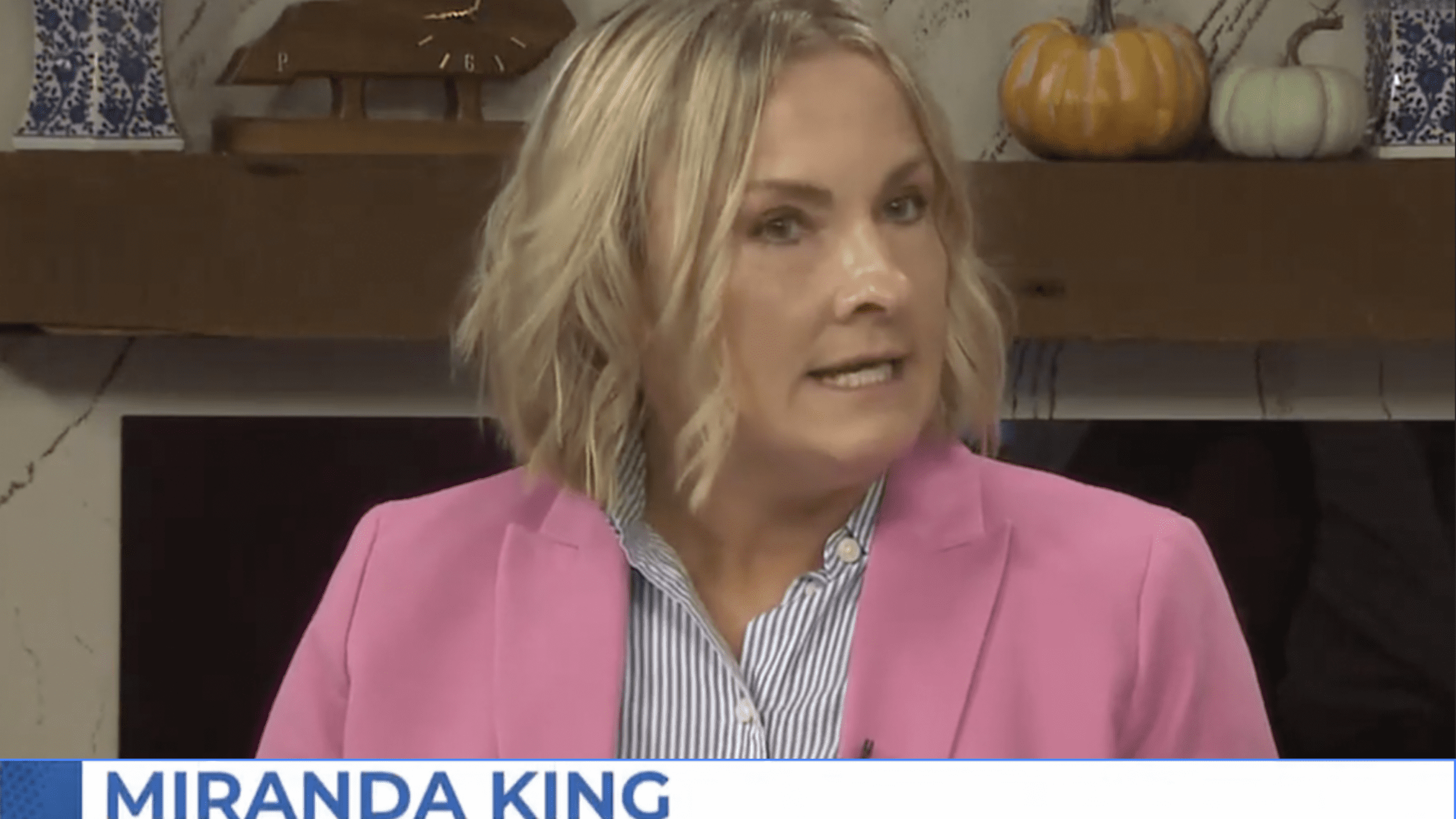
As it turns out, police here had some help—but not the useful kind. On January 5, I reached out to a Kentucky State Police public information officer, asking about the exception language. He eventually told me that police had discussed the investigation with Commonwealth Attorney Miranda King, a Democrat. King nevertheless presented the first-degree fetal homicide charge to a grand jury in an expedited, direct indictment on January 6.
The grand jury approved the charges, but King dismissed the fetal homicide charge one day later and announced at the same time she’d added a charge of concealing the birth of an infant instead. (Concealment statutes date to the late 17th century as a way to criminalize women for having children out of wedlock.) The state police officer did not respond to my question about the homicide charge until after King had dismissed it.
Screenshot via YouTube
In attempting to explain the wrongful charge, King said, unprompted, that she opposes abortion. “I sought this job with the intention of being a pro-life prosecutor but must do so within the boundaries allowed by the Kentucky State law I’m sworn to defend,” King said in a January 7 statement. “I will prosecute the remaining lawful charges fully and fairly.”
But in a new interview with The Lexington Herald-Leader, King said the flub occurred because her office made a mistake. “When we looked at it for the grand jury, we took a more intense look at it, and we realized we were unable to prove it,” she said. In her motion to dismiss, King wrote that the statute “unambiguously exempts” the woman from prosecution. If the law has what King now calls an unambiguous exception, that suggests that her office simply didn’t read it before advising the cops on the case. King’s office did not return my email or phone call requesting comment.
The Herald-Leader’s reporter, Taylor Six, pushed King on the timeline for when she realized her mistake, and her response was that she was duty-bound to say nothing. “It would be an ethical violation to discuss anything the grand jury did or didn’t do,” she said. I’m not a lawyer, but I think it should be an ethical violation to cause a woman’s mugshot to be splashed across the internet for a felony she didn’t commit.
There are safeguards intended to prevent civil rights violations such as this one. Normally, a Kentucky defendant facing a felony has a preliminary hearing before a judge to determine if there is probable cause to send the case to a grand jury. King was in an apparent hurry to indict the woman because she bypassed that hearing and went directly to a grand jury, which indicted the woman five days after her arrest. This is known as a direct indictment and the Herald-Leader said the last time King used the maneuver was to indict a woman for the murder of her 10-year-old son. Using prosecutorial discretion in a case where a parent is accused of killing their preteen makes some sense: The child was clearly a human being, but a fetus is not.
Kentucky isn’t the only state where this has happened. A woman is suing officials in Texas for wrongly charging her with murder in 2022 despite the homicide statute’s exemption for women who end their own pregnancies. They quickly dropped the charges, but she’s seeking $1 million in damages, arguing that their failure to correctly apply the law irreparably harmed her reputation. In depositions, those officials said they wouldn’t do much differently.
Unlike the Texas debacle, where the case was dropped, King is still pursuing three other charges against the woman. The woman’s attorney, public defender Heather Estes, told the Herald-Leader that the case is still in the early stages and that her client “is not guilty of any crimes.” Again, I am not an attorney, but it seems like this woman should have some redress against the Kentucky officials who rushed to charge her with a felony.
Perhaps most ominously, the exceptions barring criminal charges for self-managed abortions are in danger in multiple states, including Kentucky. Republicans are trying to pass laws that would allow women to be prosecuted not just for what they do with fetal remains, but for ending their pregnancies—once a third rail in the anti-abortion movement. If these laws pass, we’ll see many more pregnant people thrown in jail by all-too-eager cops and prosecutors.