The installation of university leaders—deans, provosts, and presidents—usually happens without incident. By the time a university has announced new leadership, the vetting has long since receded in the rear view mirror; it’s time for champagne and new fundraising campaigns.
The news last week that Professor Emily Suski, whom the University of Arkansas announced as its new law school dean in early January, would not actually assume the position was thus unexpected and bizarre. Suski, a tenured professor and clinic director at the University of South Carolina, seemed like a strong choice for Arkansas, given her extensive administrative experience and years of teaching at public universities in the South. The current dean at Arkansas had reached the end of her term; after a national search in which four finalists presented their leadership vision to the law school faculty and university administration, Suski prevailed.
In early January, Arkansas’s provost, Dr. Indrajeet Chaubey, issued a statement announcing Suski’s appointment that described her as an “accomplished scholar” with “extensive experience in leadership roles in legal education and practice.” Now, the page that previously celebrated Suski’s hire mysteriously refers to “feedback” received from “key external stakeholders” that has since motivated the university to “go in a different direction.”

What could have prompted such a late-stage revocation of a job offer, other than something like a heretofore undiscovered felony conviction? As has become all too common in recent years, state governmental officials singled out Suski’s views as a problem. Her crime? She had the temerity to sign on to an amicus brief in a trans rights case in which the Supreme Court heard oral argument last week.
Anyone familiar with the manufactured panic about trans rights won’t be surprised that government officials in a red state objected to Suski’s support of an amicus brief—a brief that, in the words of its lead counsel, was “narrow and careful.” But one Arkansas senate leader, speaking with the bigoted confidence of the completely ignorant, told the Arkansas Advocate that “there’s no way the people of Arkansas want somebody running and educating our next generation of lawyers and judges [to be] someone that doesn’t understand the difference between a man and a woman.”
That view reportedly led to pressure on the university to rescind Suski’s offer, given the power that the Arkansas state government has over the university’s finances. Governor Sarah Huckabee Sanders, a Republican, described the university’s caving in the face of state bullying as a “common sense decision,” which is true insofar as it makes sense to give your wallet to someone mugging you at gunpoint.
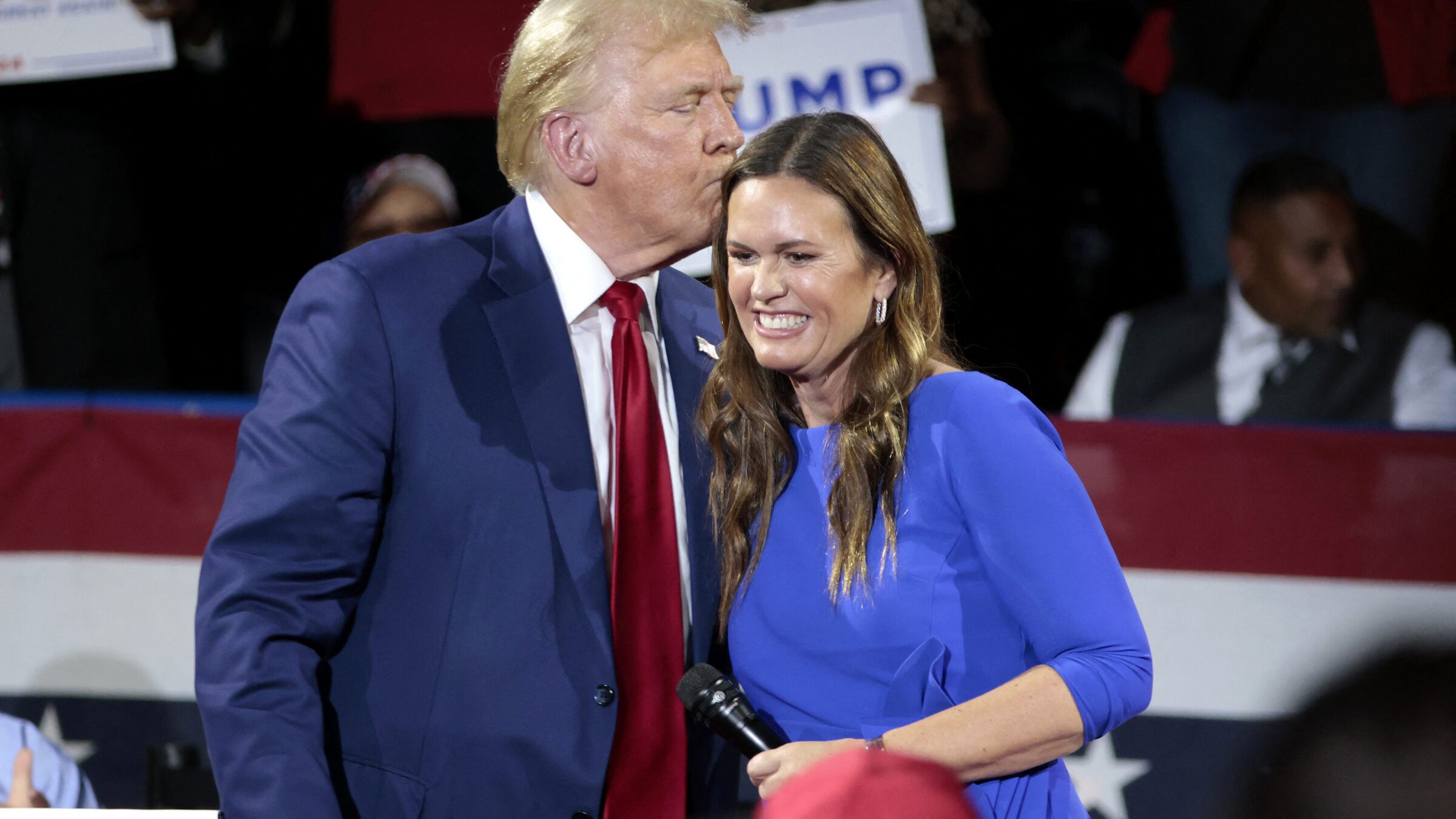
(Photo by JEFF KOWALSKY/AFP via Getty Images)
Not everyone has rolled over in the face of such brazen threats. On Instagram, one Arkansas legislator called the decision a “horrifying, unprecedented, and absolutely unconstitutional abuse of state power” that followed from a few state legislators who threatened to “substantially reduce” the law school’s funding in the next budget cycle. For her part, Suski said in a statement that she was “disappointed and hurt by the university’s decision to rescind her contract.” And given that her contract was fully signed, I would expect litigation or a settlement to follow.
A tenured law professor not receiving a promised promotion may seem minor in the grand scheme of American decline, but not when we consider the volume of recent attacks on academic freedom. Arkansas has made it very clear that dissent from its elected leaders’ far-right orthodoxy will not be tolerated; indeed, it will be punished.
That’s inconsistent with the democratic values of a free society. Higher education depends on the acceptance of differing views. Universities treat free inquiry as one of their principal purposes. Except, apparently, in states like Arkansas.
As a practical matter, universities have found it quite difficult to recruit presidents, provosts, and deans in recent years. For public universities, which have to navigate the challenges of state politics, finding leaders can prove particularly challenging. Between right-wing backlash to any whiff of inclusive hiring, the incessant need to fundraise, and the Trump administration’s aggressive efforts to try to bring universities to heel, one wonders why any savvy professor would seek a leadership role. As a result, when qualified and experienced candidates like Suski seek out a deanship, provosts and presidents should thank their lucky stars. Wonderful: an external expert wants to take on this impossible job!
But for public schools in states hostile to the very existence of higher education, appointing leaders has become far more complicated. As a result, senior appointments at flagship universities draw much more scrutiny. Law professors who engage on “political” issues may not seem “the right fit” for some universities in this reactionary moment; advocacy for any formerly consensus topic—defending democracy, promoting human rights, resisting fascism—can become a disqualifying credential for lawmakers who don’t support these values, and believe law students should not learn about them.
The obvious questions that follow from punishing Suski for signing on to an amicus brief should disturb anyone who cares about higher education. Hundreds of law professors add their names to amicus briefs each year; are each of them now out of luck for a deanship? And what’s the limiting principle? Will Arkansas Law no longer hire faculty who take positions supporting access to abortion, or regulating firearms, or defending immigrants? Who will be foolish enough to throw their hat in the ring to be Arkansas’s next law dean, given the cowardice exemplified by the university’s abandonment of its preferred candidate? And how many other law schools and universities will follow Arkansas’s illiberal playbook?
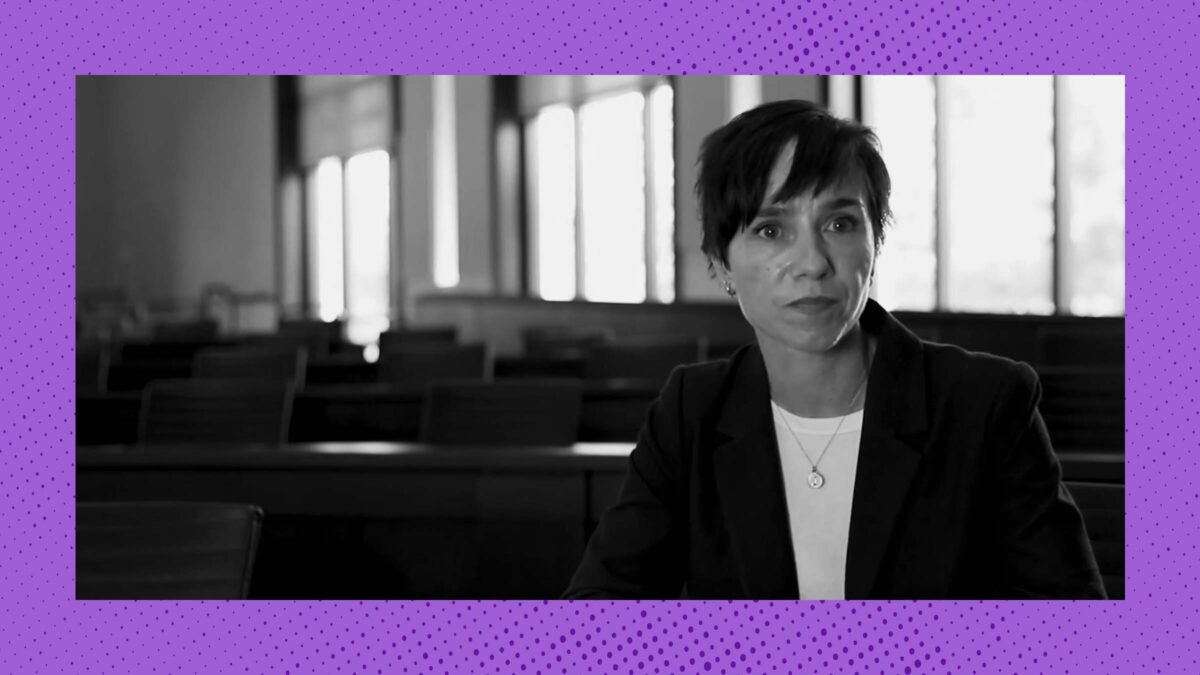
Suski discussing research related to Title IX in 2023
All of this, of course, remains entirely intentional from those who want to transform legal education and academia into ultra-conservative institutions, as the activist Chris Rufo has done to Florida’s New College. One Arkansas legislator, supporting the university’s revocation of Suski’s offer, asserted without evidence that “law schools nationwide, including ours, have long operated in monoculture echo chambers… Many stakeholders, including me, believe that we need to reshape the culture of legal education.” Mission accomplished.
By appointing and then removing Emily Suski, university administrators and the politicians they answer to send a clear message: Comply or perish. Scholarship, client representation, and public statements that run afoul of the powers that be will hurt your career. So stay silent, or, even better, choose to support the preferred political messages. The reward of a plum leadership post may await you.
This tactic, regardless of its long-term success, will most obviously affect faculty who stand up for affirmative action, or supporting immigrants, or providing public benefits to the poor, or any other “woke ideology” anathema to right-wing politicians. That’s of a piece with the Trump administration’s approach to intimidating lawyers who represent causes they disapprove of. It also dovetails with the federal government’s goals of weakening higher education and any civil society institutions that might resist their lawless goals.

In the meantime, Arkansas will now likely have a temporary, interim dean leading one of its flagship public law schools, who may lack the power to fully advocate for the law school’s students and faculty to university leadership, to the state government, and in the court of public opinion. The faculty face uncertainty on how much they themselves can speak out without facing pressure from the same legislators that caused the reversal of Suski’s appointment. And clinical faculty who represent clients distasteful to the state government will no doubt come under special scrutiny, given how brazen politicians were in punishing someone who dared support a cause they disagreed with.
The shameful rescission of Emily Suski’s appointment serves as an overdue call for law schools and universities more generally to actually stand up for academic freedom. Their leaders must realize that attempting to appease hostile powers will never buy permanent security, and that caving under political pressure will only undermine their institutions rather than save them.
No thoughtful academic would ever agree to lead the law school knowing that their job could be taken away so swiftly. And no one within the law school community can feel confident that the university has their back.