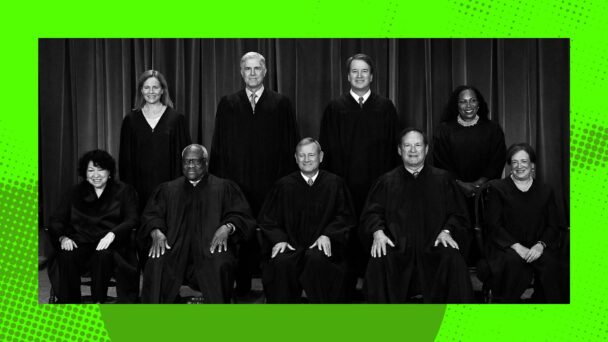
Late last month, the Supreme Court in Learning Resources, Inc. v. Trump struck down President Donald Trump’s attempt to impose tariffs under the International Emergency Economic Powers Act (IEEPA). But beyond that shared conclusion, the six justices in the majority splintered over the rationale.
Three conservatives—Chief Justice John Roberts, and Justices Neil Gorsuch and Amy Coney Barrett—invoked the “major questions doctrine,” arguing that if Congress intends to give presidents the power to make decisions of vast economic and political significance, it must do so clearly, and that in the IEEPA, it did not. The three liberals who concurred in the judgment—Justices Sonia Sotomayor, Elena Kagan, and Ketanji Brown Jackson—argued that “ordinary tools of statutory interpretation” sufficed to invalidate the tariffs, and saw no need to place a “major-questions thumb on the interpretive scales.”
Both trios of justices claimed to be acting with fidelity to the statute. But conspicuously absent from both the three conservatives’ opinion and also the concurrence from the three liberals is any discussion of the legislative history of the IEEPA, which Congress enacted in 1977 to enable presidents to respond quickly and flexibly during periods of economic “emergency.” In other words, in the course of arguing about what “Congress likely intended” when it passed IEEPA, neither side went to the source to try to find the answer.
The justices were not always so reluctant to use legislative history, which the Court treated as an essential interpretive tool for most of the twentieth century. The justices viewed themselves as responsible for implementing not just statutory text but statutory purpose. To do that, they routinely examined committee reports, floor debates, and other materials produced during the legislative process.
For example, in Heart of Atlanta Motel, Inc. v. United States, the Court looked closely at the legislative record behind Title II of the Civil Rights Act of 1964. The Senate Commerce Committee had made explicit that the law aimed to remedy “the deprivation of personal dignity that surely accompanies denials of equal access to public establishments.” That statement mattered. After reviewing the hearings, reports, and debates, the Court confirmed that Congress intended the statute to eradicate racial discrimination in places of public accommodation. By grounding its decision in Congress’s expressed purpose, the Court upheld the law’s application to hotels serving interstate travelers under the Commerce Clause.
Led by Justice Antonin Scalia, whom President Ronald Reagan appointed to the Court in 1986, leaders of the conservative legal movement began challenging the use of legislative history as a credible tool of statutory interpretation. This critique, though most vocally championed by Scalia, emerged from a broader conservative backlash to the rights-expansive jurisprudence of the Civil Rights Movement era.
On the bench, Scalia criticized legislative history as an unreliable guide to congressional intent, arguing that reliance on committee reports and floor statements invited judges to cherry-pick snippets that supported their preferred policy outcomes, and exposed courts to manipulation by congressional staffers. In Scalia’s view, only the text enacted by Congress is “law”; everything that led to it is meaningless at best and misleading at worst.
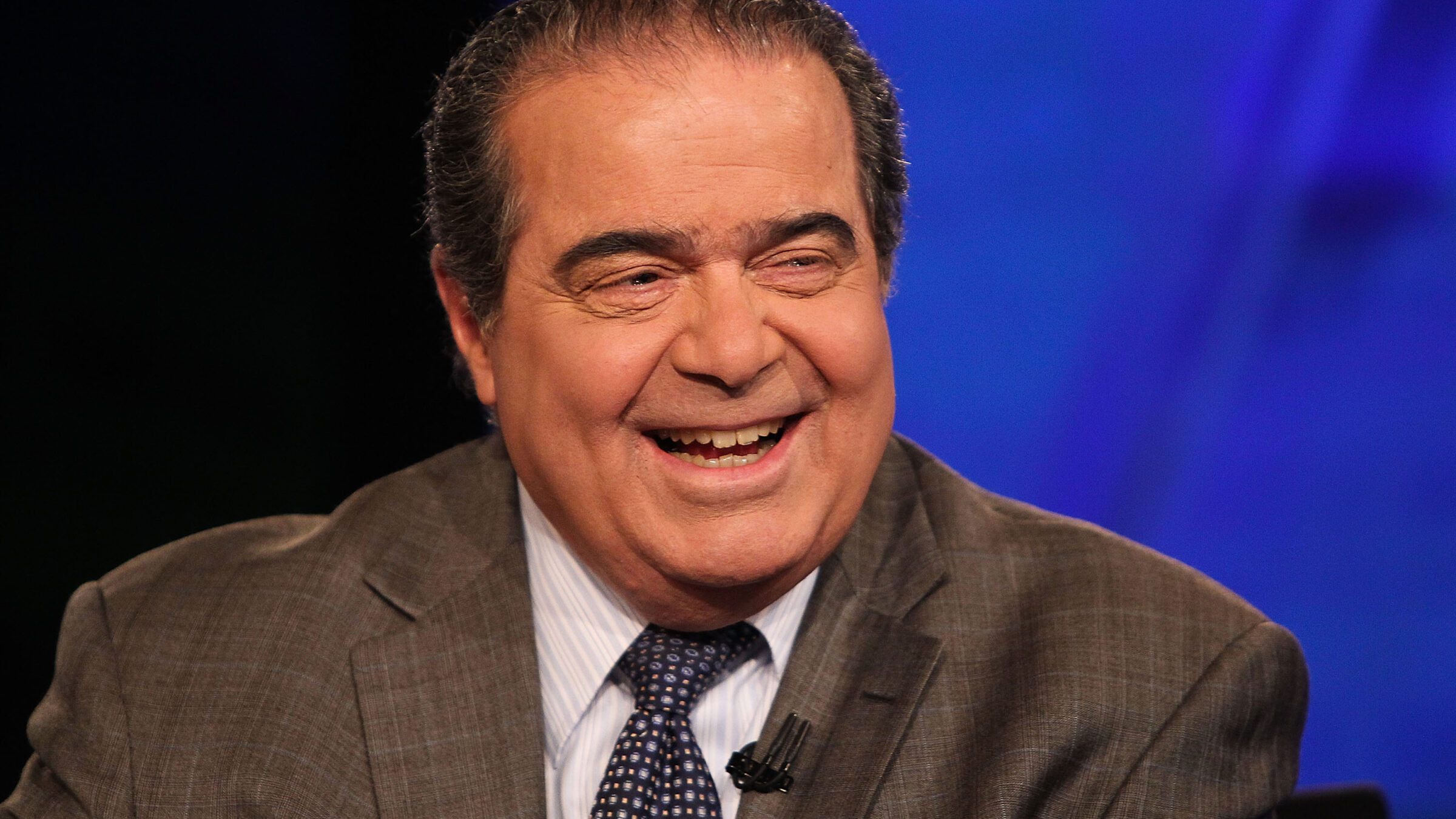
(Photo by Paul Morigi/Getty Images)
Over time, Scalia’s objections sharpened into a broader philosophical attack. In a 1993 concurrence in Conroy v. Aniskoff, Scalia declared that “the greatest defect of legislative history is its illegitimacy,” insisting that “we are governed by laws, not by the intentions of legislators.” Scalia’s methodology reshaped what counts as “proper” statutory interpretation within the legal profession, among liberals and conservatives alike. Scalia’s influence is perhaps best demonstrated by Justice Elena Kagan’s 2015 proclamation: “We are all textualists now.”
And yet, neither statutory text nor the major questions doctrine produced an answer to which everyone could agree in the tariffs case. Instead, these approaches revealed how malleable textualism and the major questions doctrine, on their own, can be. By rejecting legislative history in the name of avoiding speculation and judicial overreach, the Court frees itself to do both, claiming the authority to decide for itself what Congress meant.
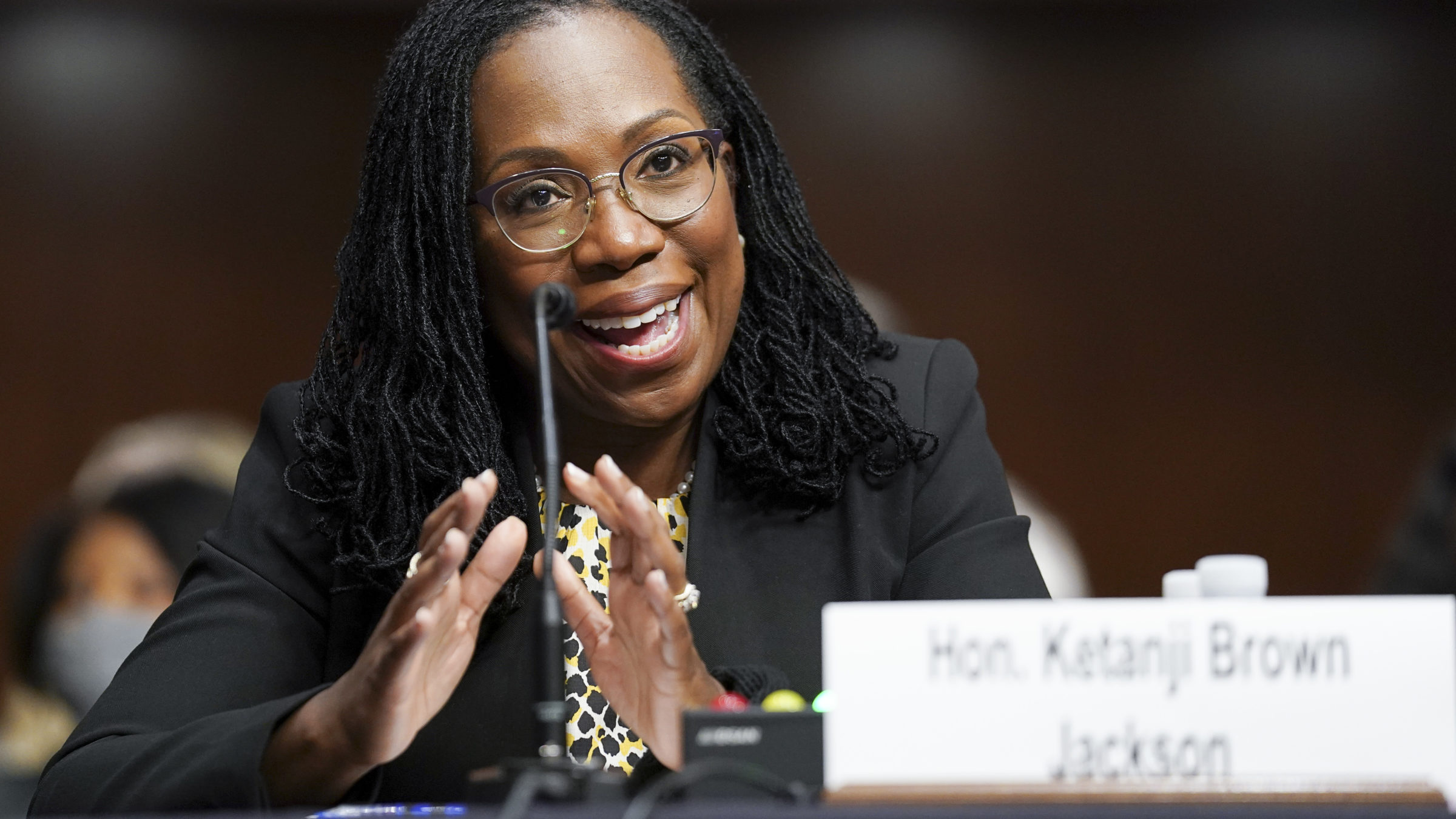
Only Justice Ketanji Brown Jackson, who wrote a solo concurrence in Learning Resources, demonstrated what the Court gains when it consults legislative history, and what it loses when it does not. Rather than rely on the abstractions of the major questions doctrine and of rules of statutory interpretation, she examined the Senate and House reports accompanying the IEEPA. She argued that the legislative record shows that when Congress authorized presidents to “regulate…importation,” it meant something specific and limited: the power to freeze or control foreign-owned assets during a national emergency. (Examples of emergencies that led to the invocation of IEEPA in the past were the September 11 attacks and the 1979 Iran hostage crisis. In both instances, Presidents George W. Bush and Jimmy Carter used the specific authority authorized by Congress to freeze or block the financial transactions of their targets.)
(Photo by Kevin Lamarque-Pool/Getty Images)
Tariffs are different. As Jackson explained, they are taxes on imports that raise revenue. They do not freeze assets or block foreign transactions. Reading the IEEPA to allow tariffs would stretch a narrow emergency power into a broad trade authority—something Congress never said it was granting. Her concurrence ends with a simple reminder: that when Congress explains why it included certain language in a statute, courts must “give effect to the will of the people,” and not “step into Congress’s shoes” instead.
The other three conservatives, all self-proclaimed textualists and adherents of the major questions doctrine, would have reached an entirely different outcome. In dissent, Justices Clarence Thomas, Samuel Alito, and Brett Kavanaugh argued that the major questions doctrine does not apply with full force in the context of foreign affairs. That carveout would have preserved Trump’s authority to impose tariffs, and opened the door to more ambitious expansions of executive power in the future. In his concurrence, Gorsuch warned that the dissenters’ theory would carry “enormous consequences hard to reconcile with the Constitution.”
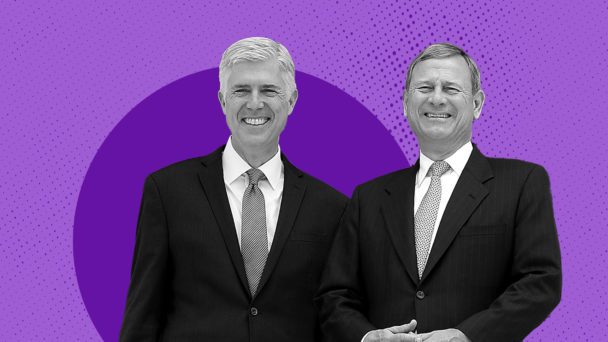
Notice what is happening here: Textualists warn that legislative history invites speculation, empowers judges to cherry-pick materials, and risks replacing enacted law with judicial preferences. Yet without legislative history, the justices—all of them—are still speculating about what Congress “would likely have intended,” constructing doctrinal exceptions, and debating how far a judicially created canon should extend.
Legislative history preserves context that other tools of statutory interpretation omit. As this case shows, the scope of statutory terms that appear expansive in isolation can become clearer with an examination of what Congress said at the time. Legislative history also preserves democratic accountability, since committee reports and debates are what legislators use to explain bills to one another and to the public. Ignoring these materials allows the Court to replace evidence of what Congress did with judicial intuition about what Congress must have meant to do, or should have done instead.
The result in Learning Resources demonstrates the hazards of this approach. In the name of protecting the sanctity of the legislative process, the justices refused to consider the materials Congress generated to explain its work, and embraced doctrines with no clear constitutional foundation instead.
This is not restraint. It is a choice. And when courts substitute clear-statement rules and elastic doctrines for the record Congress created, they do not safeguard our democracy. They sidestep it.