If you’ve gone to a concert in the United States at any point in the past 15 years, you’ve probably been fleeced by Live Nation Entertainment. The corporate behemoth, formed from the 2010 merger of Live Nation and Ticketmaster, controls the venues, ticketing, and promotion for live music events throughout much of the country.
When fans want to see their favorite performers, they typically have no choice but to buy tickets via the company’s platform. When they do so, they can expect both sky-high ticket prices and any number of fees for the “convenience” of using a website notorious for long waits, crashes, and removing people’s tickets from their carts.
Fans hate this, but since the company is effectively holding Taylor Swift hostage, they pay the ransom. In a series of Slack messages sent between 2021 and 2023, ticketing directors at Live Nation Entertainment joked about how they “almost” felt bad for “taking advantage” of “stupid” concertgoers. “Robbing them blind baby,” said one employee.
In theory, federal law prohibits any single company from having this sort of total control over an industry. So, in May 2024, the Department of Justice sued the company for antitrust violations. According to Jonathan Kanter, head of the DOJ’s Antitrust Division under President Joe Biden, the goal of the lawsuit was to “break up Live Nation-Ticketmaster’s monopoly” and “restore competition for the benefit of fans and artists.”
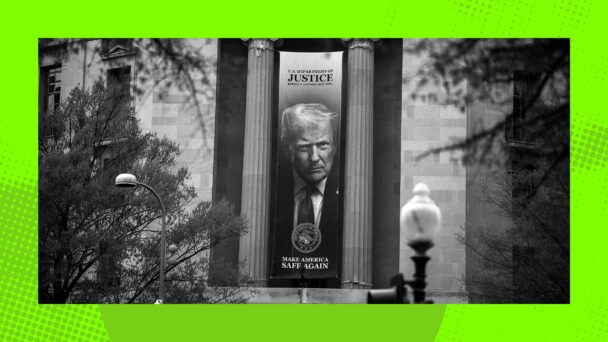
The Trump administration, however, has different goals: In February 2026, after a meeting in the Oval Office with Live Nation CEO Michael Rapino, Trump directed the DOJ to settle the case, according to NBC News. A few days later, the Justice Department announced a deal that would allow Live Nation to retain Ticketmaster as a wholly owned subsidiary, preserving its monopoly on live music and leaving concertgoers at its mercy.
For decades, the conservative legal movement has pushed the idea that presidents must be able to direct the work of executive agencies like the Justice Department. Now, the so-called “unitary executive theory” has given way to a personalist dictatorship that further entrenches corporate power at the public’s expense.
New reporting by the Wall Street Journal sheds light on the extent of Trump’s personal involvement in the Live Nation-Ticketmaster case, as well as the company’s behind-the-scenes maneuvering to end the lawsuit by currying favor with the president. In January 2026, Live Nation informed the Justice Department that it was bringing in new lawyers from Sullivan & Cromwell, a BigLaw firm with close ties to the president. At settlement talks, Live Nation was represented by James McDonald, a then-partner at S&C who didn’t have much in the way of antitrust experience, but did represent Trump in his attempt to overturn his criminal hush money conviction in New York. (Last month, Trump named McDonald the new U.S. Attorney for the Southern District of New York.) The WSJ also reports that Live Nation “reminded” DOJ officials that the federal case against it was commenced by the Biden administration, and Trump “likes to make deals.”
According to the Wall Street Journal, Trump met with Rapino on Friday, February 27, to discuss ticket sales at the Kennedy Center, which plunged after Trump took it over. True to his nature, Trump asked Rapino if they had a deal yet in the antitrust case. Rapino said no, and that the trial was scheduled to begin on Monday, March 3. Trump then told a “senior DOJ official” to settle. Attorney General Pam Bondi started bullying the attorneys general of states that had joined the lawsuit, urging them to settle, too. Bondi warned state Republican officials that the deal was “personal” to Trump.
The DOJ managed to peel off six states, but most of them rebuffed the administration’s pressure and continued the trial as scheduled, without the Justice Department. Thankfully for fans of live music, the states’ perseverance paid off: In April 2026, a federal jury found the company liable for operating as an illegal monopoly. The states have since proposed a range of possible remedies, including a court order that would require Live Nation to divest Ticketmaster after all.
The good news, then, is that the Live Nation Entertainment we know and despise may soon cease to exist, despite Trump’s interference. The bad news is that this outcome is only possible because the law at issue in this case allowed states to pick up the federal government’s slack. Trump’s directive and Live Nation’s lobbying effort reflect the Justice Department’s abandonment of its once-prized independence, and with it, any semblance of the DOJ’s responsibility to the public.