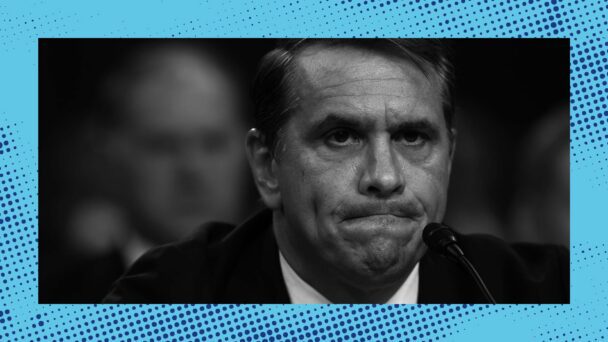
John Keller, a longtime federal prosecutor, resigned from a senior post at the Department of Justice last year, after Trump administration officials directed him to dismiss corruption charges against former New York City Mayor Eric Adams. In an interview with NPR on Wednesday, Keller shined a light on how the administration is continuing to make it virtually impossible for the DOJ to fight corruption.
Since returning to the White House, for instance, Trump has pardoned at least 15 people who were charged or convicted of public corruption. Keller said these pardons have produced a “chilling effect” that deters prosecutors from “pursuing public corruption cases at all.” And even when the DOJ is willing to bring such cases, Keller said, mass firings and resignations have made it “practically more difficult” to do so. In January 2025, the DOJ’s Public Integrity Section had around 40 full-time staff. Now, according to NPR, there are only two.
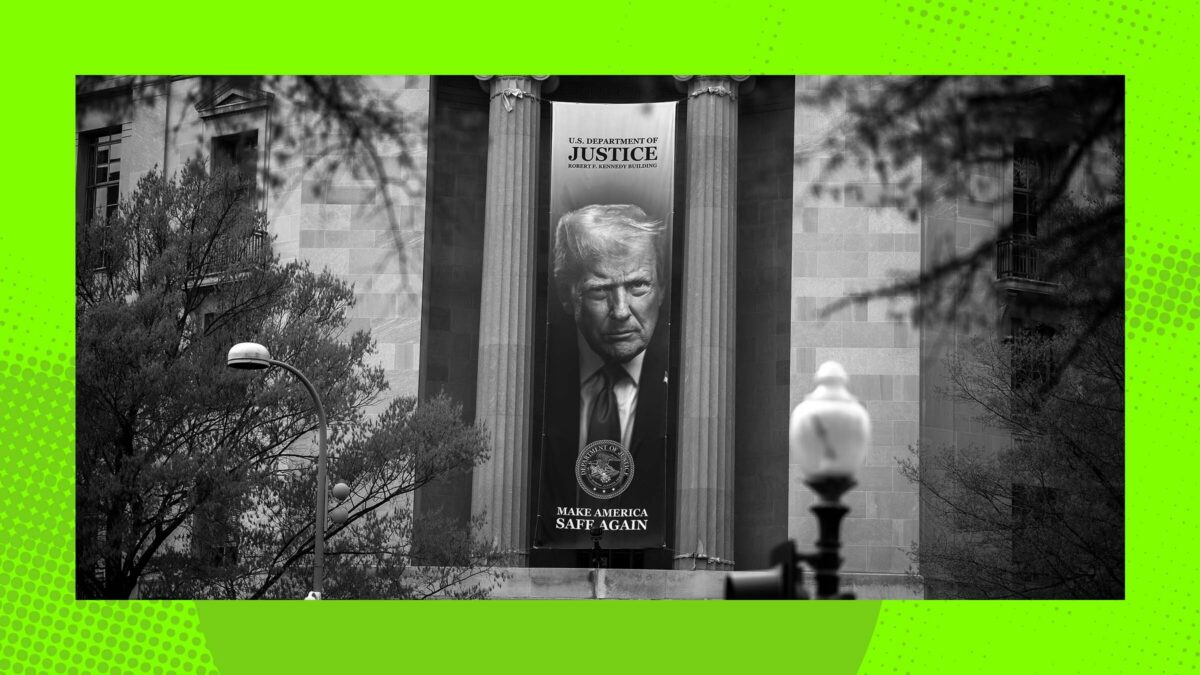
Keller’s comments suggest that the DOJ, once a bulwark against public corruption, has given up the fight. And in some cases, it has joined the fight on the side of public corruption: Over the past year and a half, Trump’s DOJ has entered several “settlement agreements” to resolve legal claims filed by Trump allies. In these cases, the Justice Department is not only failing to hold bad actors accountable. It is rewarding bad acts with massive taxpayer-funded payoffs.

In March, for example, Trump’s DOJ agreed to pay $1.25 million to Michael Flynn, a former Trump advisor who pleaded guilty in 2017 to lying to the FBI about his interactions with the Russian government. Trump pardoned him before leaving office in 2020, but apparently that wasn’t enough for Flynn, who then sued the government, alleging that his prosecution was politically motivated. Courts dismissed the lawsuit, but after he filed an amended complaint in 2025, the DOJ entered a settlement agreement with him anyway. Flynn has another government payday heading his way, too; in April, the government settled a second Flynn lawsuit, alleging that the Army illegally garnished his retirement pay, for an undisclosed sum.
Also in April, Trump’s DOJ agreed to pay another $1.25 million to Carter Page, another former Trump advisor accused of improper activities with the Russian government during the first Trump administration. Page later filed a lawsuit alleging that the government’s surveillance of him was unlawful. A court dismissed that case, too, but DOJ again entered a settlement agreement with him anyway.
And just this week, a separate House Judiciary Committee investigation revealed that the DOJ has paid over $3 million to Trump supporters who lost their jobs at the FBI after egregious misconduct: One agent, for example, refused to participate in an investigation of a violent white nationalist group, while another participated in the January 6 insurrection and lied about it. Both received hundreds of thousands of dollars in government cash.
All told, the DOJ has paid at least $8.5 million to settle legal claims by the president’s supporters, according to a report by The Washington Post last month. And it may yet get significantly worse. Earlier this week, the New York Times reported that the DOJ is considering “settling” a lawsuit Trump filed against the Internal Revenue Service demanding at least $10 billion—a sum greater than the IRS’s entire budget request to Congress for Fiscal Year 2027.
In his lawsuit, Trump argues that the agency didn’t do enough to prevent a former IRS contractor from leaking his tax returns to the Times and ProPublica during his first presidential term. That contractor was sentenced to five years in prison in January 2024, but Trump is still scheming for some form of compensation. According to the Times, one of the settlement options currently under review is “the possibility of the I.R.S. dropping any audits of Mr. Trump, his family members or businesses.” It is a federal crime for the president to request the IRS conduct or terminate an audit into a particular taxpayer.
Government officials are supposed to serve the public, not themselves. For decades, the DOJ played a critical role in enforcing public corruption laws around the country. But under Trump, people who abuse the public trust aren’t just unpunished. They’re rewarded.