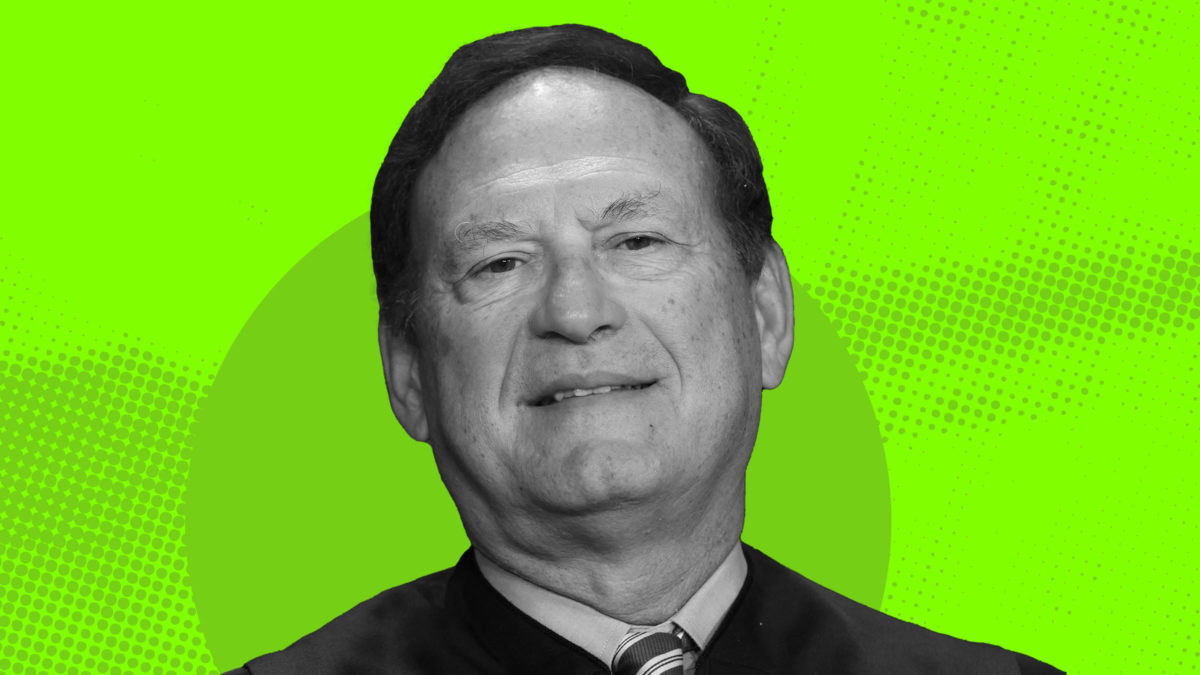
Against Justice Samuel Alito’s most fervent wishes, a federal district court order that prohibits the U.S. Postal Service from implementing a rule overhauling mail-in voting will remain in place during the 2026 midterm elections. Earlier this month, the Trump administration asked the Supreme Court to temporarily lift the order, which would have allowed it to immediately disenfranchise millions of Americans who vote by mail. But in an unsigned opinion on Monday, the Court in Postal Service v. California denied that request.
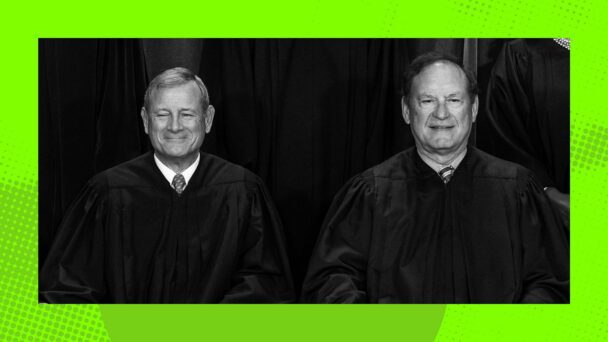
In its opinion, the Court reasoned that the Trump administration was “unlikely to succeed” on the merits of its legal claim, and the “equitable factors” didn’t support lifting the order either. This is basically the polite way of saying “this is obviously illegal” and “this is too much of a hot mess, even for us.” But in a dissent joined by Justice Clarence Thomas, Alito contended that the mess was worthwhile. Although Alito claimed to take the “practical effects” of implementing the rule “very seriously,” he argued they were outweighed by the government’s “strong interest” in combating “election fraud.”
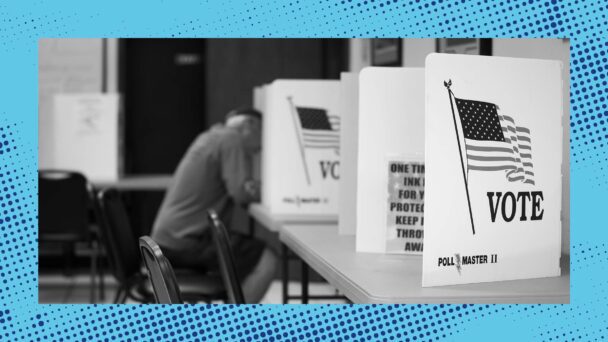
This “strong interest” is untethered from reality. Decades of research has shown that voter fraud is vanishingly rare. And one recent study that specifically examined mail voting between 2016 and 2022 found an average of four cases of fraud for every 10 million mail votes, or about 0.000043 percent.
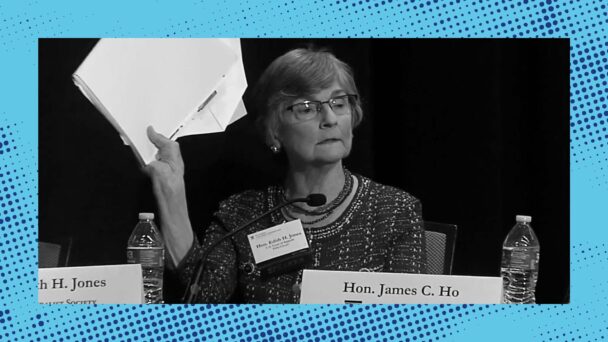
Nevertheless, Alito has been preoccupied with voter fraud for years, and has used his unfounded fears to justify broad attacks on the right to vote. Just during the Court’s most recent term, Alito signaled his distrust of mail-ballots at least three times. First, in October 2025, the Court heard oral argument in Bost v. Illinois, a case about whether candidates for federal office have a right to sue over election rules in federal court. The Court would go on to rule that they do, reasoning that candidates have a unique stake in “the rules that govern the counting of votes in their elections.” At oral argument, though, Alito suggested that the candidates left a valid argument off the table by not alleging “what most people believe to be true”—namely, that counting mail-in ballots “generally hurts Republican candidates” and “generally helps Democratic candidates.”
Second, in March 2026, the Court heard oral argument in Watson v. Republican National Committee, a case about whether states have been violating the federal laws that establish “Election Day” by counting ballots that were mailed on or before that date but arrive a short time afterwards. Alito argued that counting these ballots is a threat to election integrity, because they can “radically flip” the “apparent outcome”—language commonly used by Republican politicians to frame the process of counting votes as suspicious.
Finally, in June 2026, Alito dissented in Watson, and in his opinion went on at length about the “vulnerabilities” of mail-in ballots; the majority, he said, had issued a decision that “compounds” the democratic danger. According to Alito, not only does counting valid and timely-cast votes facilitate “charges of a rigged election,” it empowers “bad actors” to “stuff ballot boxes when early election results suggest a tight race.”
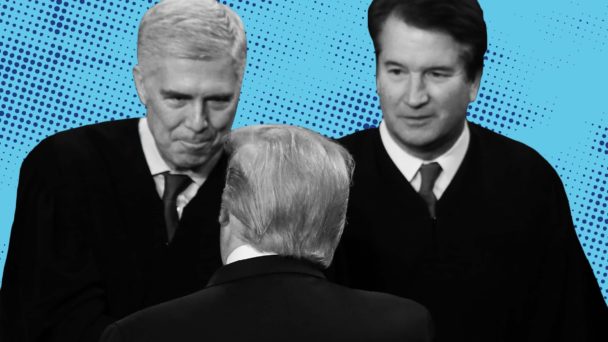
Alito’s openness to election conspiracies is not limited to the Court’s most recent term, or even to the courtroom. In July 2021, for example, Alito wrote the majority opinion in Brnovich v. Democratic National Committee. That decision significantly limited people’s ability to challenge discriminatory laws under the Voting Rights Act by inventing several “guideposts” for judges to use in determining whether a state regulation really violated the statute.
Under Brnovich, one such “important factor” for judges to consider is “the strength of the state interests” that a voting rule serves. And in case there was any doubt, Alito declared that “the prevention of fraud” is a “strong and entirely legitimate state interest.” He further claimed that states “may take action to prevent election fraud without waiting for it to occur.” In doing so, he handed states pretext on a platter: If state lawmakers want to suppress the ability of certain citizens to participate in the political process, all they have to do is say the words “voter fraud,” and suddenly, a whole host of discriminatory voter laws are A-okay.
The nonexistence of voter fraud is one of the reasons why the Trump administration’s attempted defenses of the new mail ballot rule repeatedly failed in district courts. In a series of recent orders blocking the rule, federal district court judge Indira Talwani stressed that the record was “devoid of any evidentiary support” regarding mail-in voter fraud, and she concluded that the administration’s interest in “correcting an unsubstantiated problem through likely unconstitutional means” could not justify the “overwhelming risk of pervasive disenfranchisement.” In another legal challenge to the rule, Trump-appointed federal district court judge Carl Nicholas similarly found that the administration had failed to “point to any record evidence” suggesting that the 2026 midterm elections will be tainted by fraud, and that any harm to the government was “significantly outweighed” by the harm to the public.
The belief that voter fraud poses a real threat to democracy cannot be reconciled with the evidence. Ultimately, the only place where widespread voter fraud exists is in the minds of people like Alito and Trump, who have spent their lives poisoning their brains with right-wing propaganda, and who believe that some Americans don’t deserve the power of the vote.