On April 29, the Supreme Court issued its long-awaited decision in Louisiana v. Callais, stripping the Voting Rights Act of its remaining effectiveness. Callais stands beside the Court’s 2013 decision in Shelby County v. Holder and its 2021 decision in Brnovich v. Democratic National Committee as watershed moments in the conservative legal movement’s efforts to rig elections in their favor.
“The Voting Rights Act is just one of the tools that prevents racial discrimination in voting, not only with new laws and other procedures, but also in the redistricting context,” John Cusick, assistant counsel at the Legal Defense Fund, told me. “Unfortunately, given the history of racial discrimination in America, we know that states and even local jurisdictions have not complied with those obligations.”
But the VRA was, once upon a time, a bipartisan effort, bolstered by years of legislative reinforcement and across-the-aisle goodwill. The statute, which prohibits discrimination based on race in the electoral process, was first signed into law by President Lyndon B. Johnson on August 6, 1965. At the time, it was one of a slew of legislative victories capping off the Civil Rights Movement. In the years since, it has become the most contested win from that era.
Between the 1870s and 1960s, the strength of Black Americans’ right to vote fluctuated. After the Civil War, Congress ratified the Thirteenth, Fourteenth and Fifteenth Amendments to expand the rights of newly freed Black citizens, but the ensuing decades saw waves of effort designed to suppress Black votes, especially in the South: poll taxes, when many struggled to find work, and literacy tests, where policymakers withheld funding and resources from Black schools. Under the heavy boot of Jim Crow racial segregation, the Black vote was held down to such a degree that communal voting power was meaningless in the national scheme.
Voting rights thus became one of the major issues championed by civil rights leaders in the mid-20th century. “Give us the ballot, and we will no longer have to worry the federal government about our basic rights,” as Dr. Martin Luther King Jr. put it in a 1957 speech.
Eight years later, Congress passed the first iteration of the Voting Rights Act on an overwhelming, bipartisan basis: 77-19 in the Senate and 333-85 in the House. Most of the nay votes were cast by representatives from Alabama, Georgia, Louisiana, Mississippi, North Carolina and Texas. In states like Texas and Virginia, many of those votes came from “Dixiecrats,” a faction of Southern Democrats who opposed the Civil Rights Movement. But their influence didn’t stick: Congress repeatedly reauthorized the Voting Rights Act in the decades that followed, and the last reauthorization, signed by President George W. Bush in 2006, passed in the House with a 390-33 vote, and in the Senate with a 98-0 vote.
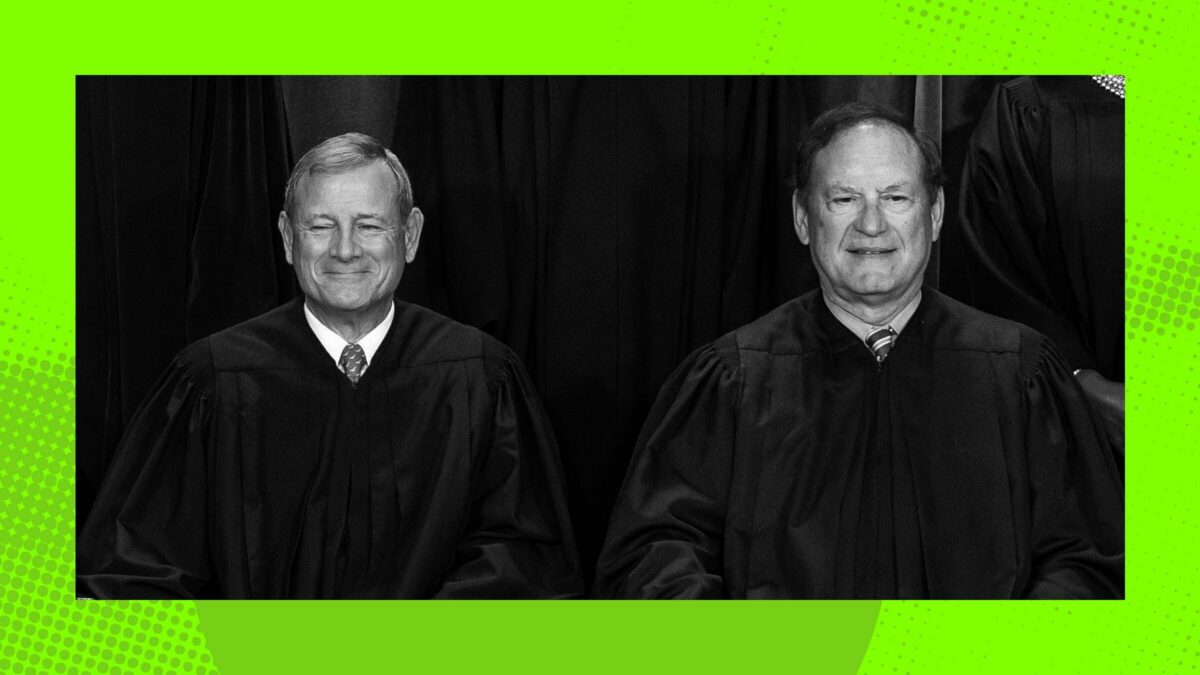
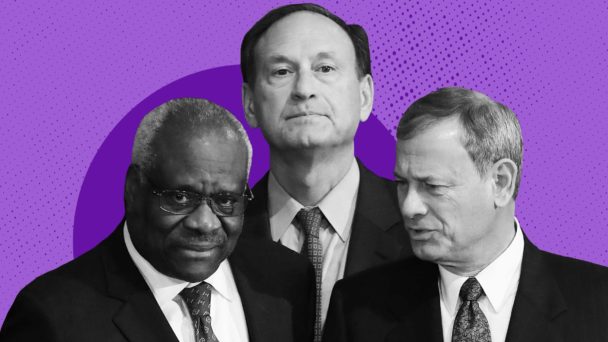
However, opposition to the legislation survived in the South and spread among members of a new generation of conservative lawyers, including two who would go on to sit on the Supreme Court: Chief Justice John Roberts and Justice Samuel Alito.
“This is partly a story about the justices themselves,” Bruce Spiva, senior vice president of the Campaign Legal Center, told me. “Justice Roberts has had it in for the Voting Rights Act since he worked in the Reagan administration.”
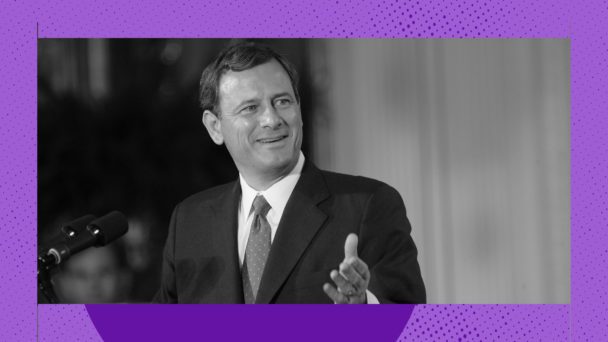
Indeed, in 1982, Roberts was a young lawyer in the Justice Department when Congress was considering a set of significant amendments to the Voting Rights Act. Two years earlier, the Supreme Court had decided Mobile v. Bolden, a legal challenge to a system of electing city commissioners in Mobile, Alabama, on an at-large basis—a system that had the effect of diluting the Black vote. In its opinion in Bolden, the Court upheld Mobile’s system as constitutional, and ruled that going forward, challengers to facially neutral voting laws would have to prove that policymakers intended to discriminate against minority voters.
In 1981, Congress introduced amendments that would strengthen Section 2 of the VRA by clarifying that it prohibits electoral rules like Mobile’s—rules that have the effect of denying minority groups the right to vote, regardless of intent. “Mobile v. Bolden [had] essentially narrowed Section 2 and said that you had to prove intentional discrimination in order to make out a claim,” Spiva told me. “And Congress basically reversed that.”
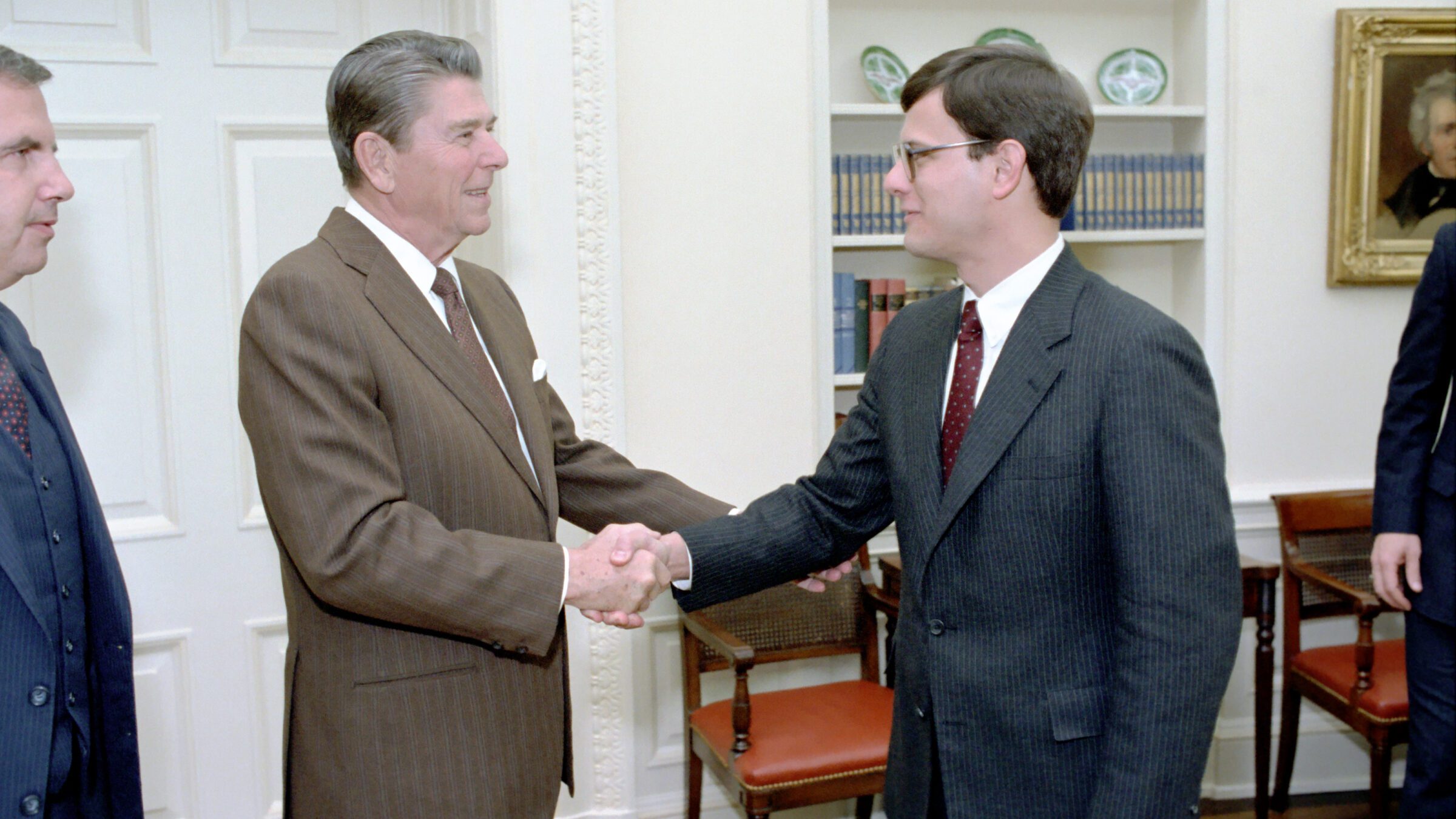
Reagan and Roberts, January 1983 (National Archives)
As a young Reagan staffer, Roberts took umbrage with this proposal. In a January 1982 memo, he argued that the amendments were misleading because many lawmakers “did not know they were doing more than simply extending” the Act. He also argued that the constitutional standard of intent had already been set in stone by the Fifteenth Amendment, which prohibits restrictions on the right to vote based on “race, color or previous condition of servitude”; the amendments to Section 2, he said, would sever the law “from its constitutional base.”
Just like today, Roberts was overlooking the real-world consequences of covert tactics that attempt to limit the Black vote through “neutral” means. As historian and attorney Gerald Horne outlined in a 1982 op-ed, commissioners in Burke County, Georgia kept crafting rules—requiring registration at the courthouse during business hours only, not providing registration cards at certain poll sites, and so on—that so depressed the Black vote that there were no Black commissioners elected to represent a county that was 58 percent Black.
“Opponents of the Voting Rights Act of 1965 wish to bring all of the South down to the level of Burke County,” Horne wrote.
Justice Samuel Alito, similarly, has a documented distaste for laws that classify people based on race, but his understanding is a bit more personal, according to historian Peter Canellos. “From his earliest days, Alito has communicated a sense that his own people, his own family, his fellow Italian Americans, faced tremendous discrimination in their early decades in the United States,” Canellos, author of Revenge of the Sixties: Sam Alito and the Triumph of the Conservative Legal Movement, told me. “I think he feels that they fought hard and continue to fight hard to overcome it without the kind of special protections that have been given to racial minorities.” While applying to the Justice Department in 1985, just a few years after Roberts’s campaign against expanding the VRA, Alito boasted about his work on Supreme Court cases seeking to prohibit the use of “racial and ethnic quotas.”
Although Alito ascended to the halls of power via an elite education through Princeton and Yale, his family faced a different reality as Italian immigrants at the turn of the 20th century. Alito’s father faced trouble landing his first job after graduating from Trenton State Teacher’s College in the 1930s; when asked for his ethnicity on applications, he put down that he was “American” rather than “Italian.” In remarks at Rutgers University in 2008, Alito said that his father “had earned through hard work the right to be called simply an American, period, not any type of hyphenated American.”
This sentiment reappears throughout Alito’s opinions on the subject today. “I don’t know how strongly it affects his jurisprudence, but it’s clear that he feels that the courts and Congress have gone too far in having race-based solutions to racial discrimination,” Canellos said. “You wonder if he feels a certain amount of discrimination is inherent in the system and that the constitutional remedies are limited, and should be limited.”
Both justices’ rejection of race-conscious remedies has led them towards an erroneous reading of the VRA. “One of the places where I think Alito goes wrong is treating this as if it’s the same as the affirmative action cases, that it’s giving some kind of special benefit to communities of color,” Spiva said. “Not so. This is a remedy for demonstrated discrimination; the only thing that it lacks is you don’t have to show what’s in the mind and heart of the legislature that passed it.”
In the wake of Callais, Roberts and Alito have both lambasted critics for calling their decision partisan. “We’re not simply part of the political process, and there’s a reason for that,” Roberts said at a conference in Hershey, Pennsylvania. “I’m not sure people grasp that as much as is appropriate.”
Nevertheless, the decision’s ongoing effects will embolden more partisan gerrymandering—and political parties in America are indelibly tethered to race. A 2024 Pew study found that the GOP has a 15-point advantage among white voters while Black voters still overwhelmingly skew Democrat. Callais doesn’t just enable politicians to carve up maps in favor of America’s whitest political party. It ensures that minority voters will be excluded from the political process.