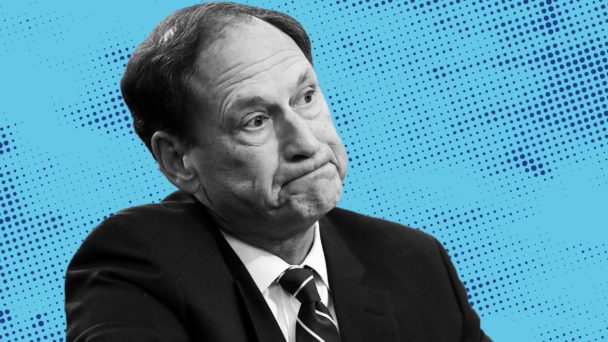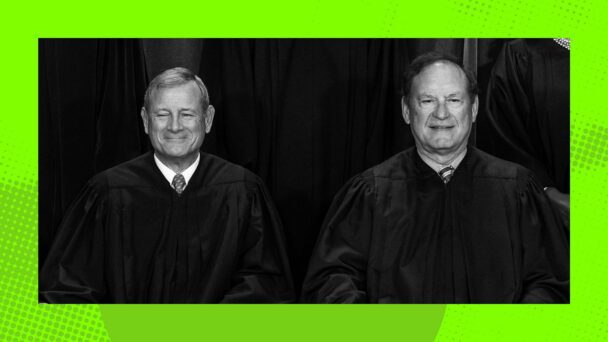
On April 29, the Supreme Court decided Louisiana v. Callais, a decision that completed the conservative legal movement’s decades-long effort to gut the Voting Rights Act—and, by extension, the Fifteenth Amendment itself. Justice Samuel Alito’s opinion for the Court’s six-justice conservative supermajority did not formally erase the Amendment’s protections. Instead, it narrowed the scope of what counts as “unconstitutional racial discrimination” in voting, and simultaneously limited Congress’s authority to respond to it.
The Fifteenth Amendment, ratified in 1870, provides that the government cannot deny or abridge the right to vote “on account of race, color, or previous condition of servitude.” Just as important, it gave Congress broad authority to enforce that guarantee through “appropriate legislation.” The Reconstruction Framers, having witnessed the horrors of chattel slavery and the legal subjugation of an entire race, understood that racial inequality was structural, not merely the product of isolated prejudice. They knew formal equality would mean little without federal power to protect Black political participation from states determined to undermine it.
Yet from the moment the Fifteenth Amendment was ratified, the Supreme Court has often stood not as its guardian, but as a barrier to its full realization. The modern Court’s embrace of constitutional “colorblindness,” in Callais and other cases, is not a departure from this history. It is the continuation of a long judicial tradition that has constrained, limited, and hollowed out Reconstruction’s democratic vision.
The Court first had the chance to interpret the Fifteenth Amendment in United States v. Reese in 1876, just six years after the Amendment was ratified. In Reese, the Court invalidated key portions of the Enforcement Act of 1870, a federal voting right statute that prohibited groups from conspiring to interfere with citizens’ constitutional right to vote. But in Reese, the Court reasoned that the Fifteenth Amendment “does not confer the right of suffrage upon anyone,” and only prohibits discrimination on the basis of race. Congress, therefore, could regulate only explicit racial discrimination and nothing more—a ruling that allowed states to evade the Amendment’s prohibitions using facially neutral mechanisms that achieved racial exclusion.
Four decades later, in Guinn v. United States, the Court struck down Oklahoma’s infamous “grandfather clause,” which exempted most white voters from literacy tests while effectively disenfranchising all Black citizens. The Court recognized that the provision sought to “recreate[] and perpetuate[] the very conditions which the Amendment was intended to destroy.” But it simultaneously reaffirmed that literacy tests were generally constitutional, describing them as “the exercise by the State of a lawful power.” In doing so, the Court condemned only the most blatant forms of racial discrimination while implicitly legitimizing the broader machinery of disenfranchisement designed to achieve the same result.
The Court’s cases dealing with white primary elections, implemented in many states across the Deep South like Alabama and Florida, were perhaps the high-water mark for meaningful enforcement of the Fifteenth Amendment. In Smith v. Allwright, decided in 1944, the Court held that Texas could not exclude Black voters from Democratic primaries, which, in the one-party South, effectively determined who would ultimately hold office. At the same time, though, the Allwright Court ran through some elaborate doctrinal reasoning to classify the Democratic Party’s actions as “state action” so that the Court could apply constitutional protections.
In doing so, the Court reified the idea that the Fifteenth Amendment constrained only official government discrimination, not the broader network of private actors and institutions capable of suppressing Black political participation. As discriminatory systems evolved into more facially race-neutral forms, Allwright would provide the foundation for later courts to narrow the Fifteenth Amendment’s reach
After Congress passed the Voting Rights Act of 1965, state officials in South Carolina quickly challenged the law, arguing that it violated states’ authority to administer their own elections. But the Court rejected this argument a year later in South Carolina v. Katzenbach. In upholding the Voting Rights Act, the Court acknowledged that Congress possessed “full remedial powers” to combat racial discrimination in voting “to its utmost extent,” reflecting the Court’s recognition that the Reconstruction Framers intended Congress—not the judiciary—to be “chiefly responsible for implementing” the Fifteenth Amendment’s guarantees.
Starting in the 1980s, though, that consensus quickly unraveled amid the rise of the conservative legal movement and the Reagan-era push toward “colorblind” constitutionalism. In City of Mobile v. Bolden in 1982, the Court considered an “at-large” system of electing city commissioners in Mobile, Alabama—a system under which no Black candidate had ever been elected, despite substantial Black population growth and overwhelming evidence of racial bloc voting.
Lower courts found that the electoral system violated the Fifteenth Amendment and “invidiously discriminated” against Black citizens. But the Supreme Court reversed, concluding that the Fifteenth Amendment prohibited only intentionally discriminatory denials of voting rights. Because Black citizens could “register and vote without hindrance,” Justice Potter Stewart concluded in his plurality opinion, their constitutional rights had not been abridged.
In a solo dissent, Justice Thurgood Marshall sharply rejected that logic. The Fifteenth Amendment, he argued, prohibits not only outright denial of voting rights, but also the abridgment of those rights. He reasoned that the Court’s narrow interpretation “would convert the words of the Amendment into language illusory in symbol, and hollow in substance,” and leave Black voters with the right to cast “nothing more than… meaningless ballots.”
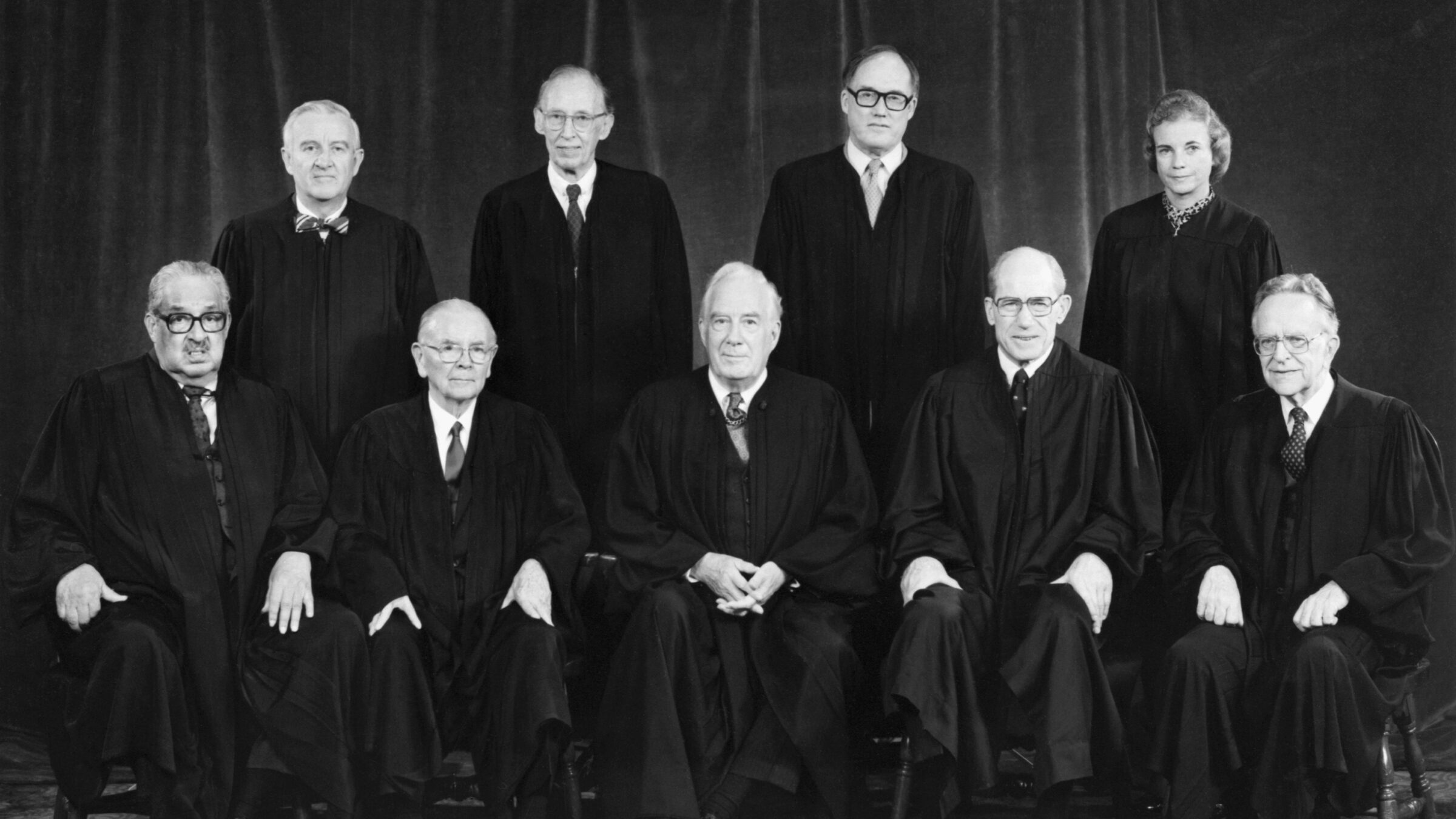
The Supreme Court poses for a portrait, January 1982 (Bettman/Contributor/Getty Images)
Congress responded to the Court’s decision in Bolden by amending the Voting Rights Act in 1982 to restore an effects test for vote dilution claims. For decades, this beefed-up version of Section 2 became the primary tool through which Black voters challenged practices that diluted their political power. But the constitutional philosophy underlying Bolden never disappeared. And as the Court grew more conservative, it continued to narrow the definition of discrimination and increasingly treated race-conscious remedies with suspicion.
Callais marks that project’s culmination. In Callais, which the Court decided late last month, a six-justice conservative supermajority determined that remedying racial vote dilution through the creation of majority-Black districts was not a compelling justification for drawing new congressional maps under the Voting Rights Act. The decision fits neatly into the Court’s ongoing campaign to redefine discrimination while treating race-conscious remedies as constitutionally suspect. The practical consequence is clear: The Court, not Congress, now determines how much racial discrimination the Constitution permits.
The deeper issue is that today’s Court is using an interpretive framework that is at odds with Reconstruction, which sought to establish multiracial democracy as a permanent constitutional principle and empowered Congress to defend that principle against hostile states. The Radical Republicans who drafted it feared that Southern governments would devise facially neutral systems capable of suppressing Black political power while formally complying with constitutional text. They were correct. What they may not have anticipated was the extent to which the Supreme Court itself would facilitate that process.
The Fifteenth Amendment that survives today is a diminished version of the one ratified in 1870. Instead of treating race-conscious protections as constitutionally necessary, it treats them as constitutionally suspect. And Congress’s enforcement authority—authority explicitly granted to the people’s elected representatives so they could secure the Amendment’s promise—is now subordinate to the Supreme Court’s own judgment.