
Earlier this month, the Supreme Court of Virginia overturned an election, handed the Republican Party a “massive win,” and became the latest judicial body to issue a profoundly anti-democratic ruling ahead of the 2026 midterm elections.
At issue in the case, Scott v. McDougle, was the outcome of an April 21 referendum in which 51.69 percent of Virginia voters chose to “temporarily adopt new congressional districts to restore fairness in the upcoming elections.” Less than three weeks later, though, the state’s supreme court struck down those new maps. In a 4–3 vote, the justices ruled that the legislature had not followed proper procedures in putting the question on the ballot, and that the state’s old maps must remain in place for November.
Virginia’s attorney general appealed the case to the U.S. Supreme Court, but the justices denied the attempt to reinstate the maps the voters approved. As a result, Republicans will continue to have a significant advantage in the 2026 redistricting battle for control of the House of Representatives.
What’s happening in Virginia—and what could soon follow in states across the country—is not just a story about democracy. It’s a story of how state courts, like their federal counterparts, too often protect entrenched power. And the danger that was put on stark display in the Virginia redistricting case is not one that is limited to cases about elections. The courts that preserve minority rule in politics are too frequently the same ones preserving minority economic rule, making life ever harder for working people.

At the federal level, the pattern is familiar: In this oligarchic moment, political and economic power are increasingly one and the same, and we’re watching our courts protect and entrench those twinned interests. Federal judges decide more than just election cases—they decide whether workers can leave coercive contracts; whether public employees can bargain collectively; whether injured workers can get relief; and whether corporations can be held accountable when they abuse their power.
Unfortunately for the American people, many state supreme courts seem committed to these very same goals. Virginia stands as a good example of this. The state’s supreme court has a long history of making life harder for working people and protecting the bottom lines of corporations.
If you live in Virginia and experience workplace violence—physically assault or sexual harassment by a supervisor, for instance—rather than being able to sue your employer for damages, like in the vast majority of states, a series of Virginia Supreme Court decisions means that your only financial remedy is likely workers’ compensation. Workers’ comp, while important, provides a paltry amount of money compared to what one might expect to be awarded in a lawsuit. Additionally, it serves as a far less significant deterrent to bad behavior by employers, putting workers at increased risk in order to protect the bottom line of corporations.
Workers in Virginia are also unlikely to be protected against indiscriminate termination, thanks largely to the state supreme court’s strong embrace of the at-will employment doctrine. At-will employees can be fired at any time, for almost any reason. It’s a system that favors employers—and one that the courts in Virginia have consistently chosen to reinforce. In 2016, the state supreme court ruled that a requirement that at-will employees receive “reasonable notice” before being discharged did not mean that employees needed to be given advance notice. The Virginia Supreme Court also recognizes fewer exceptions to the at-will employment doctrine than most state supreme courts, meaning Virginia workers have less job security—and thus less economic stability—than almost anywhere else in the country.
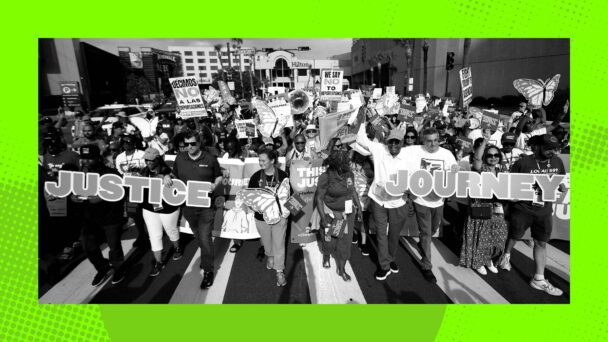
Historically, when governments won’t protect workers, the workers themselves have been able to do so through the power of unions. Unfortunately for Virginians in the public sector, the state supreme court denied them that right for decades. In 1977, the Virginia Supreme Court ruled that local governments were not permitted to bargain with workers, invalidating labor contracts governing the working conditions of over 30,000 workers. It took over 40 years for the legislature to restore those rights. In the meantime, tens of thousands of workers were denied the benefits of a union, including higher wages, better benefits, and safer working conditions.
Virginia might be the latest example of an anti-worker court issuing an anti-democratic decision, but it is unlikely to be the last. For too long, progressives have failed to organize against the anti-worker, pro-corporate tendencies of state courts across the country. These courts may now be pivotal decisionmakers when it comes to whether our democracy will withstand the onslaught of oligarchic, authoritarian attacks.
The fight for our democracy and our economy is not only happening at the federal level. If progressives only notice state courts when an election case makes national news, we have already arrived too late. Every day, state courts are issuing decisions that affect the lives of working people, and they deserve the same focused attention from the progressive movement that any other level or branch of government receives. The fight for worker power is a state-court fight, too. The progressive movement needs to treat them as such before it’s too late.