Joseph Lamont Williams, a 49-year-old Black man, used to live in a public housing complex in East Nashville. For the past several years, he’s lived in a nearby public park, sleeping on picnic tables, using the sun’s warmth to heat his food, and exercising on the playground.
In Tennessee, Williams’s survival is a criminal offense: The state’s anti-camping law, passed in 2022, makes it a felony to sleep on public property, punishable by up to six years in prison and $3,000 in fines. On June 28, police came to the park and told Williams they had a warrant for his arrest. Williams ran, so the officers tased him. Prosecutors added a misdemeanor charge of evading arrest to go along with the two counts of felony camping.
Ultimately, prosecutors dropped the felony charges in exchange for Williams pleading guilty to the misdemeanor. After he’d spent nine days in jail, a court sentenced him to time served and ordered him to pay $396.50 in court costs. Upon his release, a friend accompanied Williams back to the park.
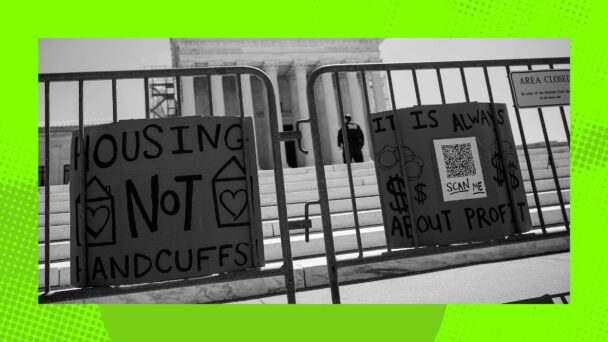
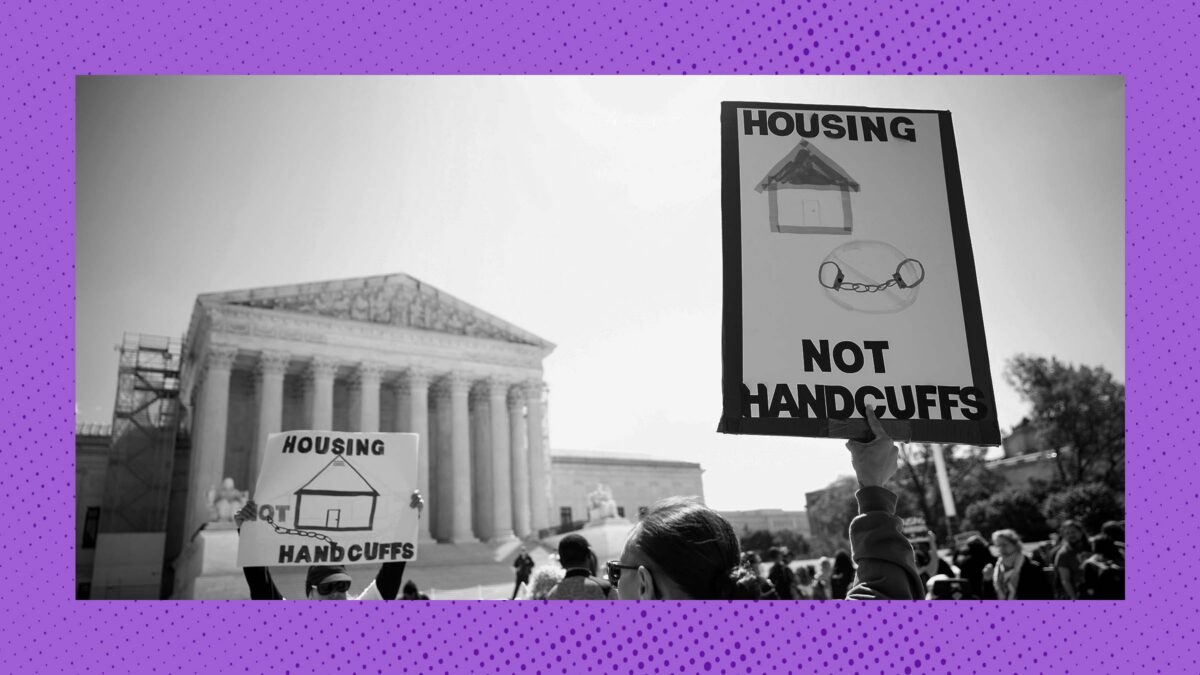
In one sense, Williams’s story is unique: Tennessee is the only state to treat sleeping on public property as a felony. But in another sense, Williams’s story is distressingly commonplace. Two years ago, in a case called Grants Pass v. Johnson, the Supreme Court upheld the constitutionality of an ordinance in an Oregon city that made “camping” on streets, sidewalks, and other public property a jailable offense, even when no other shelter is available. Since then, laws like the one in Grants Pass have surged across the country, impacting more than 745,000 unhoused Americans on any given night.
In the first year after Grants Pass, the National Homelessness Law Center identified 260 new local laws that impose criminal penalties on people who live outside. The NHLC has also identified at least 11 statewide bans on “camping,” which are proliferating as part of a campaign coordinated by billionaire-backed think tanks like the Cicero Institute, which NHLC Campaign and Communications Director Jesse Rabinowitz recently described as “the Heritage Foundation of homelessness.”
During the current legislative session, the NHLC has tracked 58 bills introduced across 20 states that criminalize homelessness, compared to just 29 anti-criminalization bills in 15 states. Under a new law in Louisiana, for example, people caught sleeping outside may be punished with jail time or participation in a court-ordered “treatment program” which the person is expected to pay for, lest they be compelled to perform unpaid labor “for the benefit of the community.”
Earlier this month, North Carolina Governor Josh Stein, a Democrat, vetoed a similar bill, arguing that criminalization would only make it harder for unhoused people to “get back on their feet and live in safe, affordable housing.” Last week, the Republican-led state legislature announced that it plans to override his veto.
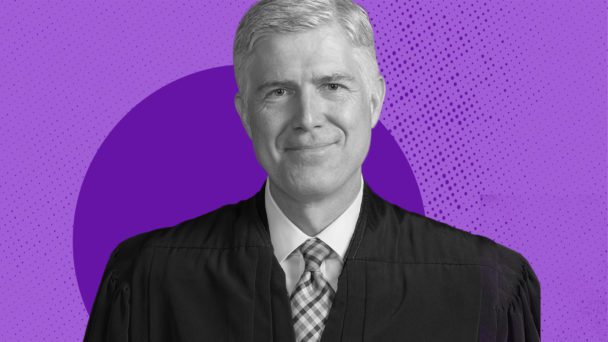
The Eighth Amendment of the Constitution prohibits the infliction of “cruel and unusual punishments.” Yet anti-camping laws punish people with fines and imprisonment for the offense of being poor in public. Grants Pass does not require such cruelty, to be clear, but it permits it.
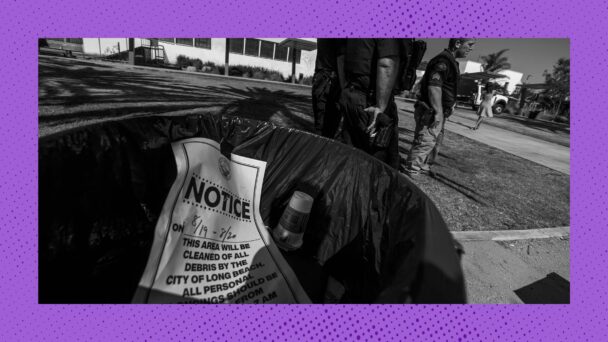
The Supreme Court’s creation of that permission structure directly led to more laws that criminalize homelessness, and more aggressive and racialized enforcement. Last year, for example, CalMatters analyzed data on arrests and citations for anti-homelessness offenses in California in the six months before and after the Court’s ruling, and found dramatic increases across the state: Stockton, for instance, leaped from 14 citations before Grants Pass to 213; Sacramento, from 96 to 283; San Francisco, from 71 to 427.
A new research brief published in the American Journal of Public Health has observed a similar effect in Oakland, California, which conducted 785 “sweeps” of encampments between January 2021 and December 2024. Before Grants Pass, crews swept an average of 14.4 camps each month. In the six months after the decision, crews swept an average of 32.2 camps per month—more than twice as many. The researchers also found that after Grants Pass, sweeps shifted to neighborhoods with smaller shares of white and Asian residents, larger shares of Black and Latino residents, lower median household incomes, and higher poverty rates.
Criminalizing homelessness does not address the causes of homelessness. It inflicts cruelty on unhoused people like Williams, who, as he told NPR, has no other place to go. It is a policy choice, and in Grants Pass, the Supreme Court freed policymakers to choose it.