By October 2022, Kendrick Jarrell Beaird already had multiple felony convictions, which meant that federal law prohibited him from having a gun. Yet that month, Dallas police officers saw Beaird remove a gun from his waistband and point it at another person at an abandoned fast food restaurant. After a federal grand jury indicted him, Beaird pled guilty to one count of violating the federal “felon in possession” law. And in August 2024, a federal district court sentenced him to six years in prison.
In order to calculate Beaird’s sentence, the district court relied on the recommendation of the U.S. Sentencing Commission, an independent agency within the judicial branch that Congress created in 1984 in an effort to make criminal sentencing more transparent and consistent. The Sentencing Commission issues guidelines that federal judges are statutorily required to “consider” whenever they impose sentences. The Commission also publishes policy statements and commentary that explain what their guidelines mean.
As relevant in Beaird’s case, the Sentencing Guidelines call for a longer sentence if an unlawfully possessed gun is “capable of accepting a large capacity magazine.” And the commentary says that a gun qualifies if there is a magazine attached that holds “more than 15 rounds of ammunition.” Beaird’s magazine held 17.
Beaird appealed the sentencing enhancement, though, and argued that the “large” magazine guideline didn’t apply. According to Beaird, a 17-round magazine is “perfectly ordinary sized” in “the contemporary consumer market,” and the court was wrong to defer to the commentary saying otherwise. On Monday, the Supreme Court heard oral argument in Beaird v. United States to determine how much the Sentencing Commission’s commentary is worth listening to.
Until a few years ago, this would have been an open-and-shut case. Although the Commission’s guidelines are advisory, the Supreme Court has recognized that they are “the lodestone of sentencing,” and further held that the Commission’s commentary explaining its own advice is generally “authoritative” as to what that advice means.
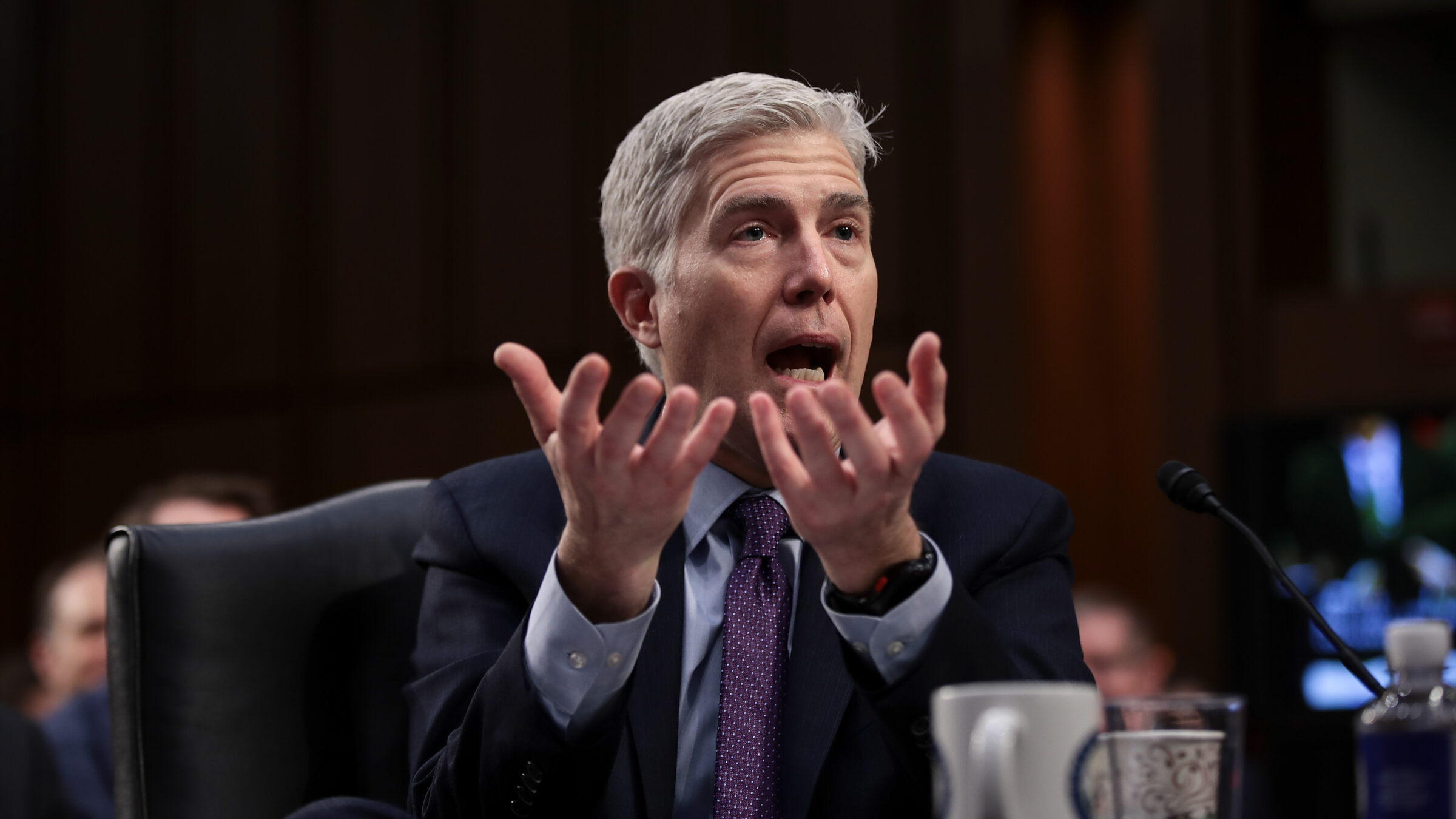
In recent years, though, the right-wing majority on the Supreme Court has become increasingly hostile to the concept of deferring to expert agencies. Most notably, in the 2024 case Loper Bright v. Raimondo, the Court overturned longstanding precedent that required courts to defer to executive agencies’ interpretations of the statutes they enforce, if the statute was ambiguous and the agencies’ interpretation was reasonable. Throughout Monday’s oral argument, Justice Neil Gorsuch pressed his colleagues to extend Loper Bright to the criminal legal system, too, lest Loper Bright lose some of its force.
Gorsuch warned of a domino effect if the legal requirement that judges consider the Commission’s guidelines empowers the Commission to “issue binding interpretations” on courts. “Most agencies have the power to issue interpretive rules,” he said. “You don’t think the federal government’s other agencies will come in here and say, ‘We’ve got similar language?’” he asked. Gorsuch claimed that, “in the next case,” the executive branch will argue that its agencies “should be allowed to write binding regulations,” too. “What would be left of Loper Bright?” he asked.
Most of the Court seemed unconvinced by Gorsuch’s predictions of doom. For example, while Gorsuch argued that listening to the Sentencing Commission would create “a pretty big hole in Loper Bright,” Chief Justice John Roberts questioned whether Loper Bright was even relevant.
“Loper Bright concerned executive agencies interpreting statutes instead of courts interpreting them,” said Roberts. This case involves “an agency in the judicial branch” that “issues non-binding advice.” Roberts said he didn’t know why they should invite the lower courts to engage in “an academic exercise” and not “just look at what the Commission meant.”
That failed to placate Gorsuch, who said that Congress had provided “no explicit direction” that would carve the Sentencing Commission’s advisory guidelines out from the holding of Loper Bright. And besides, asked Gorsuch, “Isn’t it a topsy-turvy world where commentary is binding but the guidelines aren’t?”
(Photo by Drew Angerer/Getty Images)
Justice Samuel Alito was skeptical. Alito asked Beaird’s attorney to “concretely” explain how judges should determine what counts as a “large capacity magazine” if not by using the commentary. When the attorney argued that “the average gun” should not merit a sentencing increase, Alito replied with mild disbelief: “Your methodology would be to examine all semi-automatic weapons and see what is the average?” he asked. “I just don’t see how this could possibly work without some degree of deference to what is essentially a policy call by the Sentencing Commission.”
Gorsuch continued to resist the idea that Sentencing Commission policy statements could “override judicial opinions.” But Justice Ketanji Brown Jackson suggested that Gorsuch was really resisting the policy choices of Congress, which set up an “entire system” that cabined judicial discretion in efforts to “try to reduce unwarranted sentencing disparities,” she said. Jackson argued that by establishing “a baseline,” Congress might be able to ensure that defendants who are “similarly situated” are “treated similarly,” too. “Why do you think that Congress intended for judges to have the discretion to interpret the guidelines inconsistently when they are calculating them?” she asked.
The Supreme Court’s decision in Loper Bright invited every federal judge in the country to second-guess agencies’ interpretations of their statutory mandates and substitute their own conclusions instead. In Beaird, Gorsuch was eager to extend this logic to criminal sentencing, only to find that the rest of the Court does not share his enthusiasm. But one of the perks of life tenure is: There’s always more time to wear your colleagues down.