This article was published in partnership with Slate.
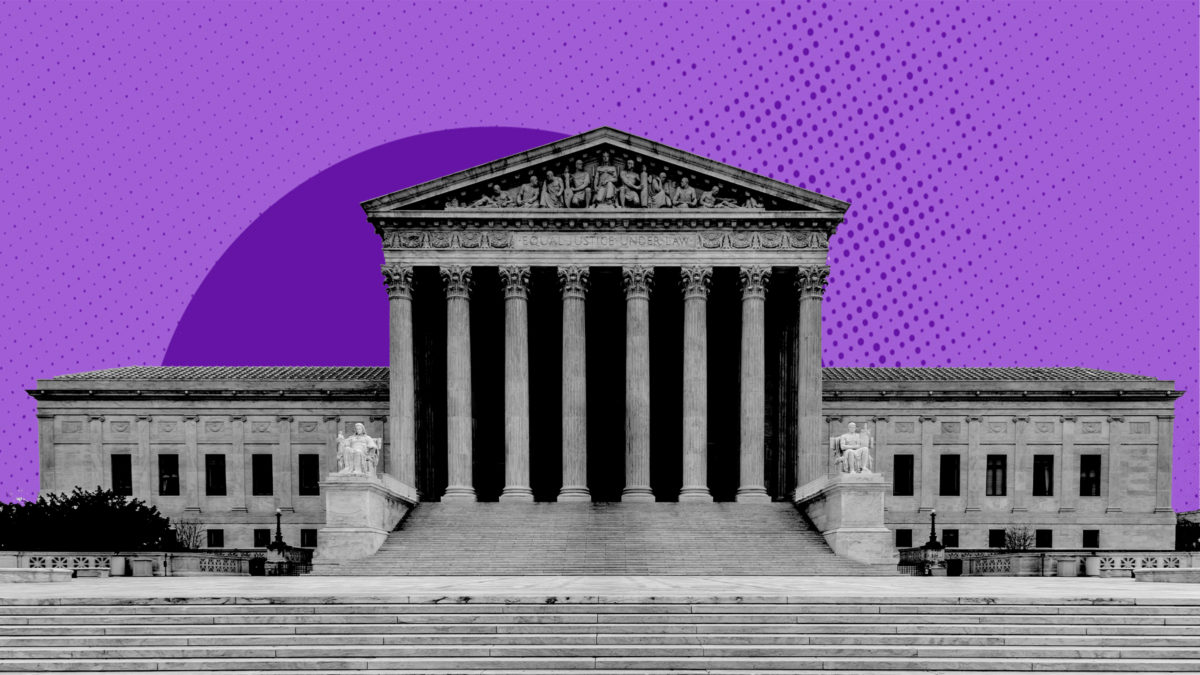
The Supreme Court officially began its new term on Monday morning with oral argument in Suncor Energy v. Boulder County. Befitting an institution with vast power over the public despite historically low public support, the court’s opening case this term is about elite impunity: Suncor will determine whether communities may sue oil and gas companies in state court and hold them financially responsible for literally fueling climate change.
Back in 2018, Boulder County filed a lawsuit in a Colorado state court against fossil fuel industry giants Suncor Energy and Exxon, alleging that the companies caused extensive—and expensive—alterations to Boulder’s climate. Boulder alleged that the companies knew that their unchecked production and promotion of fossil fuels would “result in dangerous changes in the climate,” but continued such activities anyway, and engaged in a decades-long campaign of “concealing” those dangers and “misrepresenting” them to the public.
As a result, the complaint says, instead of snow in the winter, Boulder gets more “high-intensity, short-duration rainfall events” that overwhelm its drainage systems and cause flooding. Instead of rain in the spring, Boulder gets more droughts that “have substantial implications for agriculture, wildfires and water availability.” And instead of warm days in the summer, Boulder gets more heat waves that lead to “premature deaths” and “adverse economic impacts,” particularly on outdoor labor sectors like agriculture and construction.
Boulder has already spent over $100 million repairing damage related to climate change, and expects to spend over $100 million more in order to adapt its infrastructure over the next 25 years, as it attempts to mitigate the effects of flooding, droughts, wildfires, and other harms. “Taxpayers cannot pay the full costs,” says the state’s complaint, “nor should they.”
Climate change has a hefty price tag, which is why dozens of state and local governments like Boulder’s have filed lawsuits to force the culprits to help pay the costs. It’s also why polluters like Suncor Energy and Exxon are desperate to get the lawsuits thrown out of court. In 2022, however, a Colorado trial court denied Suncor’s motion to dismiss. And last year, the Colorado Supreme Court affirmed that decision, meaning Boulder’s lawsuit could finally move forward. So, the corporations turned to the U.S. Supreme Court for help.
Specifically, the companies are asking for the justices to reverse the state high court’s decision and hold that federal law preempts Boulder’s claims. As a result, the Supreme Court’s decision in Suncor Energy will not tell the public if Boulder’s effort to hold polluters accountable will succeed. Rather, the decision will tell the public if Boulder’s effort can even proceed in the first place.
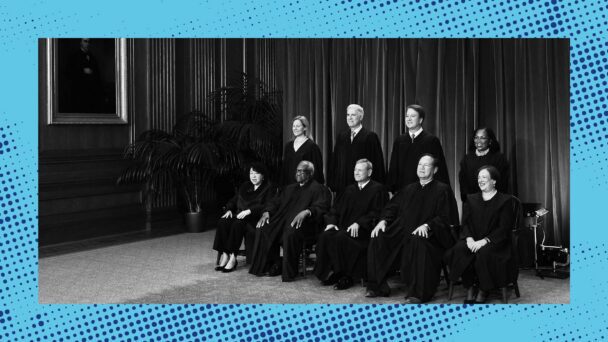
The path the court will choose is not an entirely foregone conclusion: Although the court routinely takes the side of corporate power over people and the planet, Justice Sam Alito’s last-minute recusal from the case means Boulder only needs one Republican justice to defect to produce a stalemate that leaves the Colorado Supreme Court’s decision in place. Monday’s oral argument provided the first bit of insight into whether any of the GOP justices seem moveable in this case, or if they remain united in support of the fossil fuel industry.
Representing the oil companies on Monday was Kannon Shanmugam, head of the Supreme Court litigation practice at Davis Polk. Shanmugam characterized Boulder’s case as “unprecedented,” and argued that the Constitution does not permit individual localities to “use state law to regulate global conduct.” Sarah Harris, principal deputy solicitor general in Trump’s Justice Department, also participated in the oral argument as amicus, and made similar calls for impunity. Harris claimed that Boulder was trying to hold companies liable for “all their fossil fuel activities worldwide.” According to Harris, Boulder’s “entire thesis” depended on the idea that the “mere fact of having injuries” empowered it to regulate “worldwide conduct.”
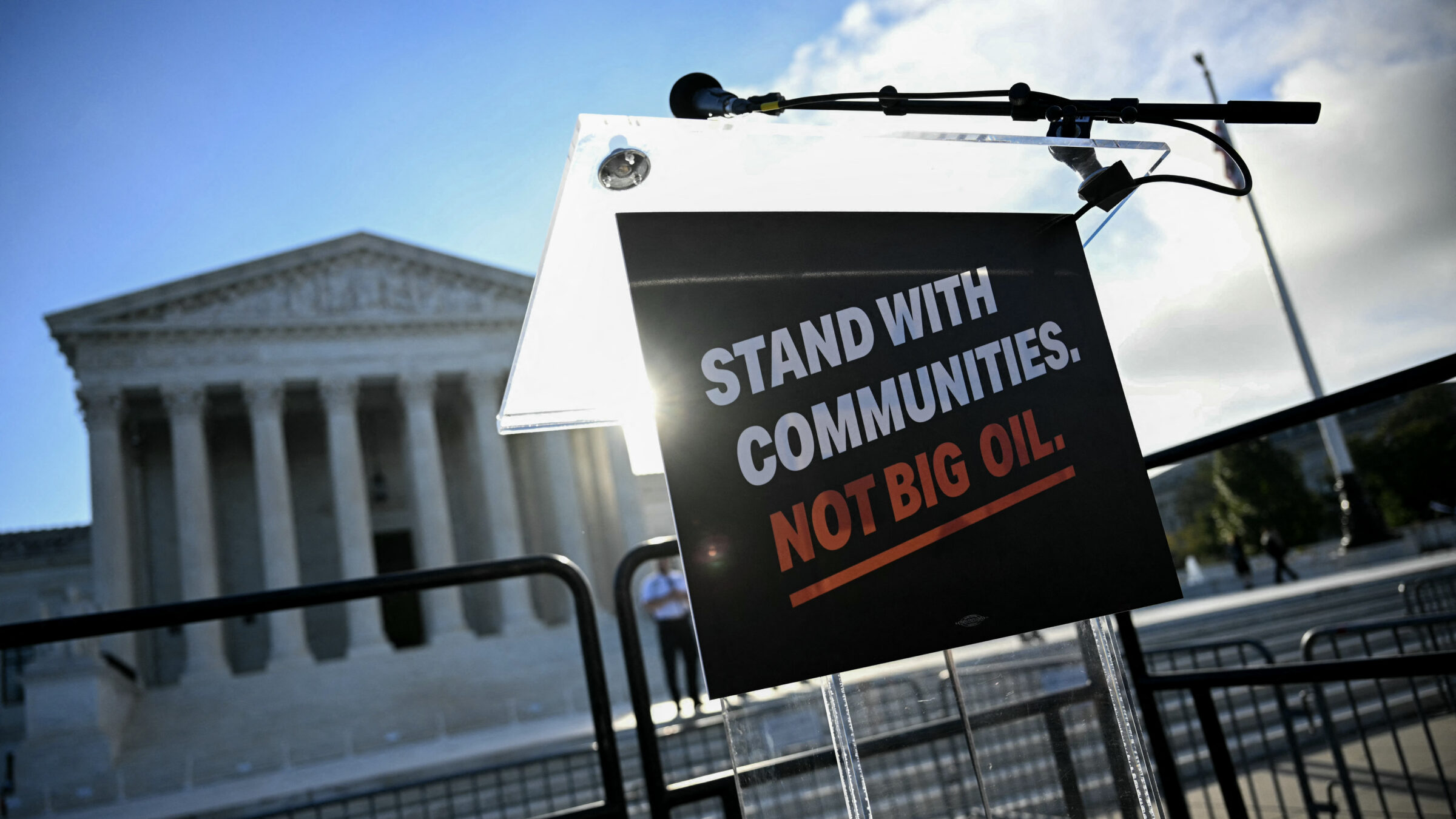
(Photo by Jim WATSON / AFP via Getty Images)
Notably, Colorado’s trial court rejected this line of attack years ago, because it fundamentally misstates what Boulder is trying to do. Boulder County’s lawsuit is not some novel attempt by a municipality to regulate greenhouse emissions around the world, and it does not purport to control any activity outside of its borders. All Boulder is trying to do is get oil companies to help pay for the costs of their allegedly vast deception around the causes of climate change—still needing to be determined in court—and local damage to the environment. As the trial court put it, “the energy companies are arguing against a case the local governments did not plead.”
Justice Elena Kagan disposed of this argument with similar ease on Monday, and highlighted that Boulder’s lawsuit “follows the same model” as Big Tobacco lawsuits in the 1990s and, more recently, opioid litigation. There too, Kagan explained, companies made “misrepresentations” that led to “overuse” of their products, producing devastating consequences that state and local governments were able to recover for under state law. “This is the same kind of lawsuit against the same kind of actors for the same kind of harm,” she said.
Justices Brett Kavanaugh and Amy Coney Barrett, however, failed to appreciate the difference between normal tort liability for in-state injuries and regulation of interstate pollution, which Kavanaugh repeatedly insisted was a “federal law matter.” Kavanaugh, for instance, argued that Boulder’s case can’t be analogized to previous tobacco and opioid cases because, under the court’s precedents, “air and water pollution are different.” Barrett also asked the attorney representing Boulder County, Kevin Russell, to explain why a state may not pass a law “purporting to cap emissions in the other 49 states” but “the same thing can happen through the tort suit.”
Russell’s explanation was simple: “It isn’t the same thing,” he said. Crucially, he said, the tort suit wouldn’t prohibit the companies from engaging in any conduct; it only requires the companies to pay for some of the damage that conduct causes. Kavanaugh called this response “a little cavalier,” and warned that “enough of these” lawsuits could “bankrupt” the fossil fuel industry. “So why is the state tort suit different than the state law?” Kavanaugh continued. “I’m just not understanding that.”
Kavanaugh’s open worry for the economic prospects of oil and gas companies is connected to a broader fear of too much justice, expressed by both the companies and by some of his Republican colleagues on the bench. Justice Clarence Thomas asked Russell to identify a “limiting principle” for who could be sued under Boulder County’s legal theory. Russell named multiple constitutional limitations, but Shanmugam still claimed on rebuttal that there was “no limit,” and that they risked lawsuits from at least “90,000 municipalities.” Chief Justice John Roberts also asked Russell if, should Boulder County prevail before the court, there would be “at least 50” new lawsuits the “next day,” filed by “a municipality in every single state.” All they would have to do is “copy your pleadings,” Roberts suggested.
Russell responded that nothing in the Constitution says preemption arises whenever “a state law, if copied in other states, could cause a lot of litigation.” Basically, the idea that polluters have caused too much harm to have to pay for all of it is more of a personal problem than a legal one.
In fairness, Roberts did seem to recognize some problems with the breadth of the immunity that the oil companies were asking for, as did Justice Gorsuch. When Shanmugam argued that Boulder was attempting to restrain out-of-state conduct, Roberts pushed Shanmugam to concede that there are situations where someone who “engages in conduct in State B” that “causes harm to somebody in State A” can be “sued under the law of State A.” When Shanmugam argued that none of the harm Boulder alleged was “directed at Colorado,” Roberts asked why it should make a difference if the person in State B was “aiming at C” but “hit somebody in A.” When Harris suggested that even inaction by Congress could have a preemptive effect on state court proceedings, Gorsuch reacted with mild disbelief. “Nobody can sue at all?” he asked.
Roberts’ and Gorsuch’s inquiries touched on the heart of Suncor, and the impunity problem in which the court plays a central part. As the federal government’s response to the climate crisis ranges from disinterest to disdainful, state and local governments have had to ask: Can’t anyone do anything about this harm? Again and again, the court’s answer has been no. Now the prospect of accountability turns on getting a single Republican justice to say yes.