Chief Justice John Marshall wrote in Marbury v. Madison that the United States was “a government of laws, and not of men.” Among many other things, this means that the government must provide “genuine justifications for important decisions.” This obligation applies with equal force to courts, whose authority rests on their obligation to provide legal reasons for their orders.
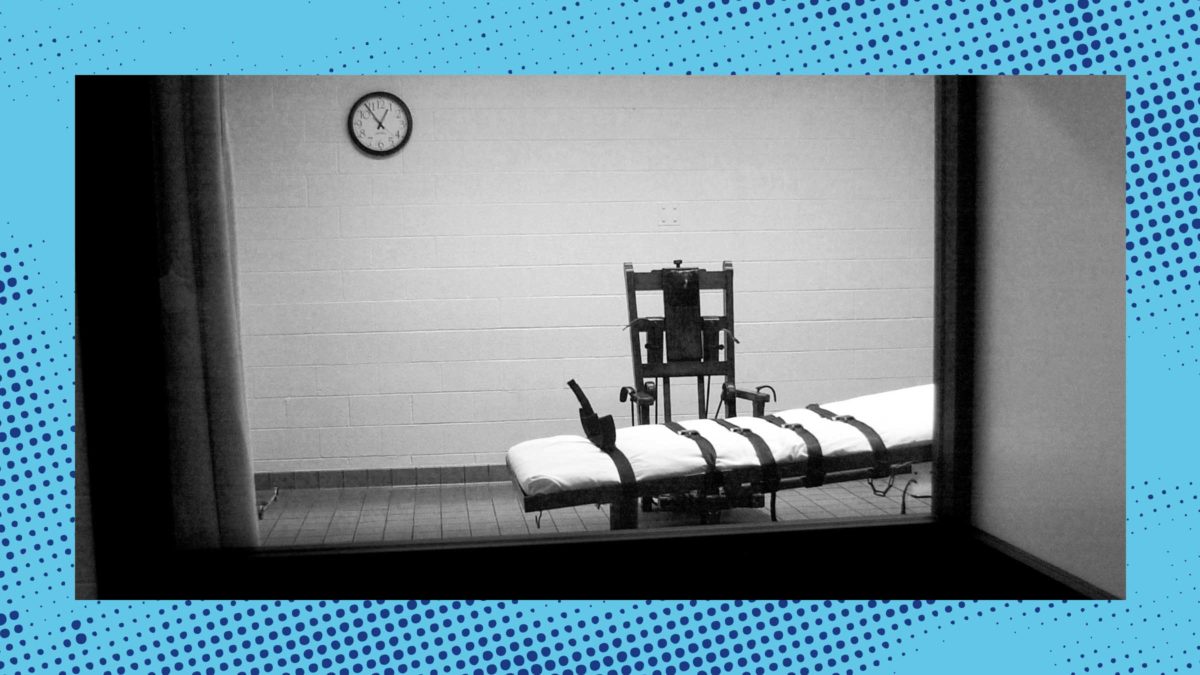
The Roberts Court’s ongoing difficulty with this duty reached a nadir last week, when it vacated the Sixth Circuit’s stay of Christa Pike’s execution without a word of explanation. By Thursday morning, Pike was in critical condition after a botched execution attempt, and Tennessee Governor Bill Lee had declared a moratorium on further executions. The chief of Tennessee’s prisons has since resigned.
Pike’s story is just the latest shameful chapter in the Roberts Court’s enthusiastic embrace of the death penalty. It was also, unfortunately, predictable. Her case marked Tennessee’s second failed execution of the year, and the moratorium is the second of Lee’s tenure. Just last year, the state of Alabama executed Anthony Boyd by nitrogen gas after the Court rejected his request for the more humane alternative of a firing squad. It took more than thirty minutes for Boyd to suffocate to death; journalists observing the execution reported that he drew more than 225 “deep, agonized breaths,” an outcome Justice Sonia Sotomayor’s dissent had predicted.
What makes Pike’s case especially galling, though, is the arbitrary nature of the Court’s intervention. Pike’s legal challenge to Tennessee’s effort to execute her is complex—both procedurally and substantively. Simply to give itself adequate time to consider her claims, the Sixth Circuit on Wednesday morning deemed a “short stay of execution” necessary. But less than twelve hours later, a majority of the Court vacated the stay, essentially giving the state permission to kill Pike while the Court’s colleagues on the Sixth Circuit were still reading her briefs.
None of this had to happen. In its handling of Pike’s case, the Court disregarded its own law governing appeals of lower court stays; its status as a court of final review; and its obligations to provide reasoned decisions, to respect its colleagues on the Sixth Circuit, and to acknowledge the dignity and process due to a person facing execution. Its vast carelessness demands a response: Congress should take away the Court’s power to interfere with temporary lower court stays of execution.

Start with the most basic point: As a matter of law, the Court’s decision—whatever its reasoning—could not have made sense. The Court’s precedents establish that Tennessee, as the party seeking to vacate a lower court injunction, had to show that the Sixth Circuit’s order would cause the state “irreparable harm”; that it had a “strong” likelihood of success on the merits; and that the public interest favored vacating the stay. It also had to show that vacating the stay would not cause “substantial injury” to Pike—obviously, in the context of a stay of execution, an impossible showing.
The last factor alone should have killed Tennessee’s argument before the Court. But it fared no better in the rest of the test: Because the Sixth Circuit hadn’t even said anything about the merits of Pike’s appeal, those merits were not before the Court. Instead, Tennessee would have to show that the Sixth Circuit erred simply by taking the time to look at her claims, and that doing so caused the state irreparable injury. The state’s argument, which focused on the merits of Pike’s underlying challenge, did not come close to meeting that burden.
In short, the Court ran roughshod over its own law and interfered with a lower court’s management of its docket in order to allow a state to execute someone with a pending challenge to her sentence—and did not even bother to explain its decision. If, as the Court has said, its “power lies…in its legitimacy,” the Court’s actions forfeited both, and Congress should respond accordingly.
Clip via YouTube
There is no reason that the Court needs the authority to moot a capital appeal over the objection of a lower court that merely wants the time to consider its jurisdiction to hear the appeal. And there are good reasons to take that power away.
First, the power is unnecessary. When the Court vacates a stay of execution, it apparently sees itself as vindicating the interests of the state, the victim(s) and their loved ones, and the public. But federal district and circuit court judges are, if anything, traditionally seen as more responsive to those kinds of interests than the loftier Supreme Court. There’s no reason to think that lower court judges will predictably err in favor of people on death row making last-minute challenges to their executions. In a 2022 student note examining the Court’s capital shadow docket and suggesting similar jurisdiction-stripping legislation as one potential solution, Isaac Green found that lower courts have granted stays of execution “at largely the same rate” as the Court itself.
Second, when such errors occur, they are fixable. The cost of a lower court that erroneously stays an execution is a temporary delay, which the Court can correct when the case reaches it in due course. The cost of a wrongful vacatur by the Court is a rushed or botched execution, or even the wrongful execution of a person with a valid challenge to their sentence.
Third, as Sotomayor noted in dissent in Pike’s case, the Court’s rush to “interfere[] with the Sixth Circuit’s routine administrative handling of a capital case” reflects a striking absence of “respect for the judgment” of its lower court colleagues. In vacating the stay, the Court did not even take the case away from the Sixth Circuit. It just told the state that it could kill Pike before the Sixth Circuit could conclude its consideration of her claims. But Congress need not share the Court’s dim view of its colleagues’ ability to manage their dockets.
Fourth, such a rule would bring the Court’s power over capital stays in line with ordinary appellate principles. Generally, courts do not review orders whose only function is to buy a judge time to think. The Sixth Circuit’s order in Pike’s case was exactly this kind of placeholder: It existed only so the judges could read the briefs before the appellee killed the appellant. Indeed, as Chris Geidner notes at Law Dork, Justices Amy Coney Barrett and Brett Kavanaugh—at least one of whom voted to vacate the Sixth Circuit’s stay—have previously argued that the Court should not review such orders.
The good news is that the Court’s authority here is not etched in stone; the Constitution is clear that the Supreme Court’s appellate jurisdiction is subject to significant congressional control. In the absence of abolition, in order to preserve whatever shreds of moral and legal legitimacy remain in the capital punishment system, Congress should strip the Court of jurisdiction to vacate lower court stays of executions. To do so, it should enact a law providing that while such a stay is in effect, neither the Court nor any individual Justice shall:
- Vacate, dissolve, modify, narrow, or stay a lower court stay of execution;
- Grant a petition for a writ of certiorari filed by or on behalf of a State, a State executive official, or the United States in which a judgment of the Court would have the practical effect of vacating, dissolving, modifying, narrowing, or staying such a stay or injunction; or
- Issue any writ, order, or judgment that has the effect of permitting the sentence of death to be carried out while a lower court stay is in effect.
Depending on Congress’s appetite to pick a fight with the Court, such provisions can be limited in duration—say, a few weeks—to preserve the Supreme Court’s ultimate authority to review lower court decisions. But Congress has the law and the Constitution on its side, and any such law should be drafted broadly to ensure that the Supreme Court cannot find a workaround. And, of course, Congress should not prohibit the Court from entering its own stays of execution—only from taking away from the lower courts the power to stay an execution in order to consider the merits of a challenge.
Pike’s case reasonably raises strong feelings and difficult legal and moral questions. In response, the Sixth Circuit set out to do what courts do. The Supreme Court did something else entirely, and its involvement only made things worse. If the Court will not treat capital cases with the care they deserve, the American people should ensure that it can no longer stop other courts from doing so.