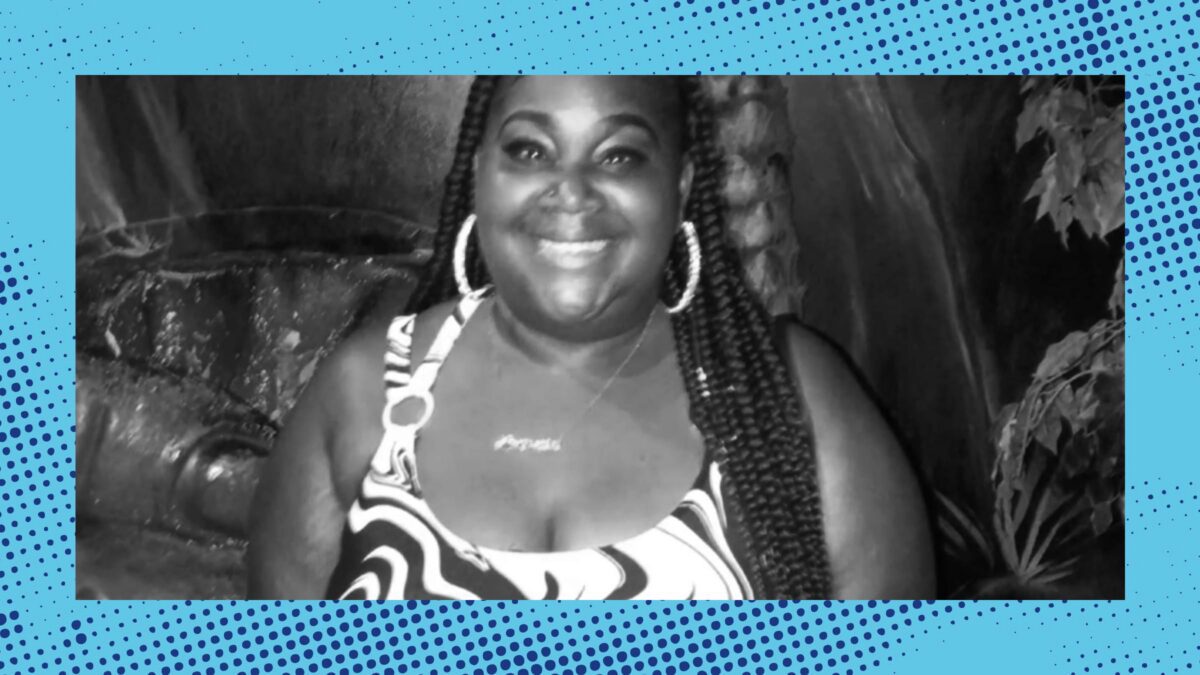
On September 19, 2024, Tierra Walker had several seizures in a row. For years, she had managed a condition that occasionally resulted in seizures, but it had been 11 months since her last episode. Her teenaged son called an ambulance to their home on the east side of San Antonio. In the emergency room, Walker, a 37-year-old Black woman, found out she was five weeks pregnant.
At that time, Walker already knew from experience how unsafe pregnancy could be: Back in 2021, she became pregnant with twins and developed gestational diabetes and preeclampsia, a dangerous pregnancy-related condition characterized by high blood pressure and impaired kidney function. That pregnancy ended in stillbirths at 25 weeks and derailed her physical and mental health.
As Walker’s 2024 pregnancy continued, she and her family began to fear for her health once again. Her blood pressure kept skyrocketing, regularly reaching or exceeding the threshold for a hypertensive crisis. She developed life-threatening blood clots. She experienced persistent pain, nausea, and vomiting, which triggered more seizures; one fitful night of sleep was interrupted by vomiting and subsequent seizures more than 10 times.
After one seizure, in mid-October, Walker told her aunt LaTanya that she had a vision of dead family members preparing to welcome her to the afterlife. “You better tell them you’re not ready to go,” said LaTanya. Walker replied that she didn’t know “how much more” she could take.
The next day, Walker asked hospital staff for an abortion. But Texas prohibits virtually all abortions. So the staff shrugged her off, telling her, “Nothing is wrong with the baby.” For weeks, Walker and her family continued to ask medical providers about ending the pregnancy. For weeks, medical providers continued to tell her, “Your baby is fine.”
Walker, however, was not. On October 30, a doctor noted in her file that there was a “significant probability” of “sudden, clinically significant, or life threatening deterioration.” On November 1, another doctor noted that she was at “high risk of clinical deterioration and/or death.” On December 27, two more doctors diagnosed her with preeclampsia, noted that there was “no cure,” and that ending the pregnancy “may be the best treatment.” But they discharged her from the hospital anyway, saying she was “stable enough.” She died on December 30, when her son found her unresponsive in bed. It was his 15th birthday.
CBS Austin (YouTube)
An autopsy concluded that Walker died of “hypertensive cardiovascular disease with superimposed preeclampsia.” An unstated but underlying cause of death was the conservative legal movement’s creation of an environment in which doctors are reluctant to provide even life-saving abortion care, lest they be prosecuted for doing so. The inevitable consequence of blocking people from ending their pregnancies is that pregnancy ends people’s lives.
In a new lawsuit filed in a Texas state court, Walker’s aunt LaTanya aims to hold public officials responsible for their role in her niece’s death. The named defendants include Texas Attorney General Ken Paxton, who is also a 2026 Senate candidate; Texas Medical Board Executive Director Stephen Carlton; and multiple institutional and individual healthcare providers. According to the filing, all of them contributed to Walker’s death, and “there must be at least one door through which the courthouse is open.”
LaTanya Walker’s is the first lawsuit arising out of a death caused by an abortion ban. The petition, filed on behalf of Walker’s estate and her surviving family members, alleges that the state intentionally instituted and enforced a “merciless blanket prohibition on abortion” that “intimidates doctors into inaction, even in medical emergencies.” In doing so, the lawsuit argues, Texas deprived Walker of her right to life and to obtain life-saving medical care, as protected by both the state and federal constitutions.
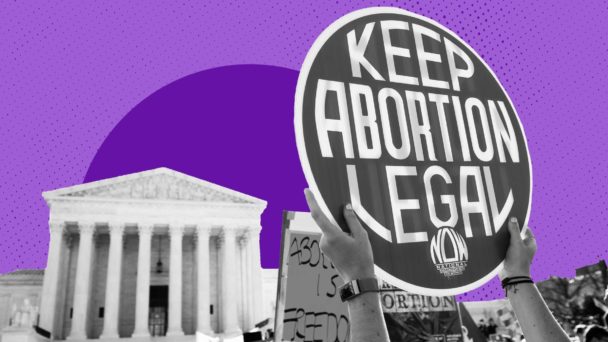
Like many states, Texas enshrines in its constitution explicit protections for inalienable rights like life and liberty, which reproductive justice advocates are currently using to challenge abortion restrictions in multiple states. But Texas also has some of the strictest abortion laws in the country. In September 2021, the Supreme Court issued an unsigned shadow docket order permitting Texas to enforce a law criminalizing abortion after the detection of embryonic “cardiac activity.” Then, in June 2022, the Supreme Court overruled Roe v. Wade in Dobbs v. Jackson Women’s Health Organization, triggering another Texas abortion ban. The post-Dobbs law criminalized abortion from the moment of fertilization and subjected doctors to the possibility of 99 years in prison, loss of their medical licenses, and monetary penalties of at least $100,000.
In theory, Texas’s abortion bans contain exceptions for medical emergencies. In practice, hospitals discourage doctors from providing abortion care even when patients have serious complications, because they don’t know how close to death a patient must be, and they are afraid of violating the ban and incurring legal consequences.
Paxton has repeatedly given Texas doctors good reason to be cautious. After the Court decided Dobbs, the Biden administration issued guidance in July 2022 clarifying that federal law requires emergency rooms to provide patients with stabilizing treatment, which sometimes includes abortion. In response, Paxton sued, claiming that the federal law could not “transform every emergency room in the country into a walk-in abortion clinic.” In December 2023, when a Texas doctor sought and obtained judicial authorization to perform an emergency abortion, Paxton sent a warning letter to the hospitals where the doctor provided services, indicating that an order from an “activist” judge “will not insulate you, or anyone else, from civil and criminal liability.”
Also in 2023, a group of Texas physicians and patients sued the state and requested declaratory relief to establish what the medical emergency exception actually meant. They won an order temporarily blocking enforcement of the bans against physicians who provide abortion care so long as they determine in good faith that it is unsafe for a patient to continue a pregnancy. But Paxton appealed. And in May 2024, the Texas Supreme Court unanimously overturned the order.
Actions like Paxton’s create a chilling effect, and as a result, exceptions are rarely granted. According to Texas Health and Human Services records, doctors in the state performed only 76 abortions for Texas residents in 2024. Over 7,000 Texas residents left the state and got an abortion somewhere else. For seriously ill patients like Walker, though, getting up and traveling out of the state isn’t an option.
News reports about women dying in Texas because they couldn’t get the abortion care they needed pushed Texas to enact legislation last summer to provide “additional clarity” about medical emergency exceptions. But it doesn’t seem to be working. Around six months after the law’s passage, researchers surveyed 219 obstetricians and gynecologists in Texas to assess their awareness of the law. Nearly 60 percent of respondents indicated that they were still “somewhat” or “very concerned” about the legal consequences of even talking about abortion with patients. And 72 percent expressed similar concern about the legal consequences of providing care that could be interpreted as a banned abortion.
Tierra Walker was many things in life—including a wife, a mother, and an educator—and she could have been many more, had she received the life-saving care that she asked for. Instead she became another victim of the Black maternal mortality crisis. Pregnancy should not have nullified her right to life. But the conservative legal movement has repeatedly called that right into question by enforcing abortion laws that predictably cause deaths.