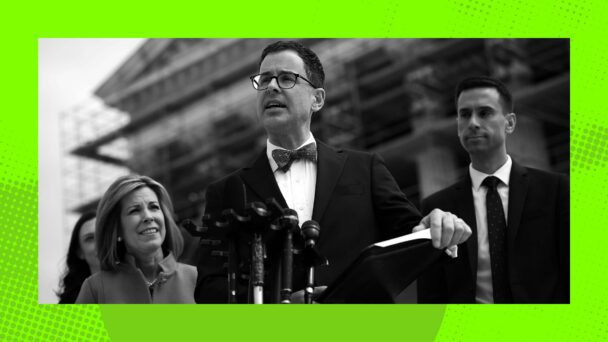
On June 10, the House Committee on Education & Workplace held a hearing on “parental rights” in schools. Republican members spent most of the day accusing public schools of hiding information from parents and promoting “radical gender ideology.” Illinois Representative Mary Miller claimed that Chicago Public Schools’ “gender diversity tool kit encourages teachers to socially transition children,” while the committee’s chair, Michigan Representative Tim Walberg, suggested that when teachers tell students the “difference between sex assigned at birth and gender identity,” they should “consider suing for child abuse and neglect.”
Comments like these reflect a growing confidence among conservatives that their arguments are finding a receptive audience. That confidence arises partly from a string of recent Supreme Court cases that have signaled the justices’ openness to limiting LGBTQ inclusion in the name of “parental rights.”
For example, in Mahmoud v. Taylor, a case the Court decided last year, parents challenged Montgomery County Public Schools’ refusal to allow opt-outs from inclusive storybooks, arguing that exposure to the existence of LGBTQ+ characters violated their religious and parental rights. In Mirabelli v. Bonta, conservative parents made similar arguments to force schools to out transgender kids to their parents by framing children’s autonomy as a violation of the parents’ constitutional rights.
Mahmoud and Mirabelli are examples of a new legal front in the right’s anti-LGBTQ project. Earlier challenges often proceeded through religious liberty claims, which at least required courts to grapple with the tension between parents’ religious beliefs and children’s interests, identities, and autonomy.
Increasingly, however, conservative litigants have reframed these disputes as parental rights claims, shifting the focus from protecting religious exercise and toward establishing parental authority as a constitutional entitlement. This parental rights extremism treats any attempt by the state to protect children’s rights as presumptively illegitimate, and treats children as mere extensions of their parents until they turn eighteen.
What’s worse is that these parents don’t only want to control their own children, but everyone else’s as well. By recasting exposure to ideas that parents disagree with as a constitutional injury, parental rights advocates are demanding the power to veto school curricula, library collections, and antidiscrimination policies. As in the religious liberty cases before them, parental rights litigation functions more as a weapon to push conservative ideas about family and gender roles than protection from government overreach.
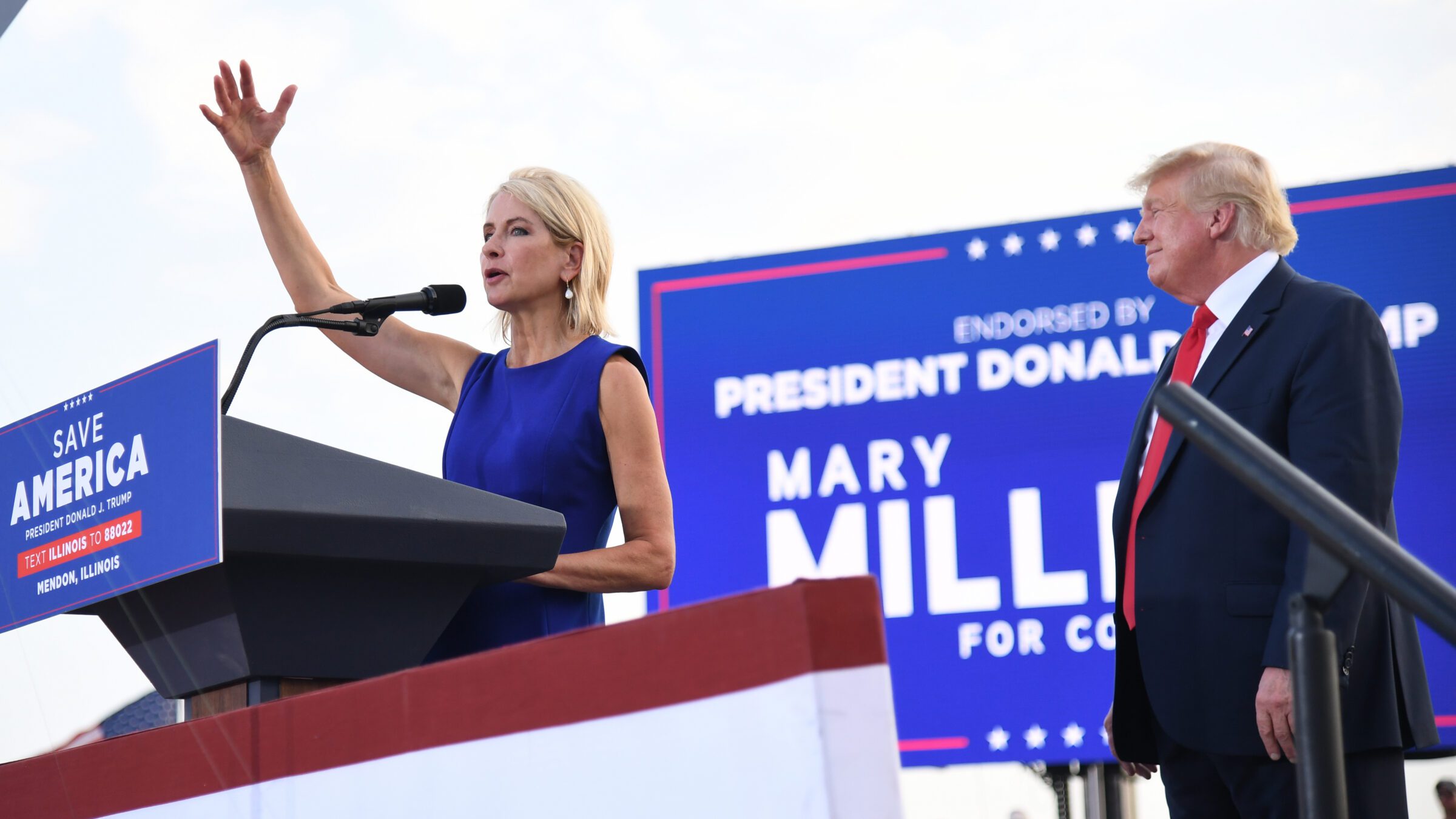
(Photo by Michael B. Thomas/Getty Images)
In pursuit of these ends, the rhetoric from conservative politicians and judges is quite similar. For example, throughout the hearing earlier this month, Republican members portrayed schools as institutions imposing a twisted moral worldview on children. Walberg claimed that schools need leaders with “moral clarity about right and wrong” and should stop “playing politics,” while Miller complained that “teachers and parents who hold traditional views on marriage, family, and sexuality are expected to fall in line with the district’s preferred ideology.”
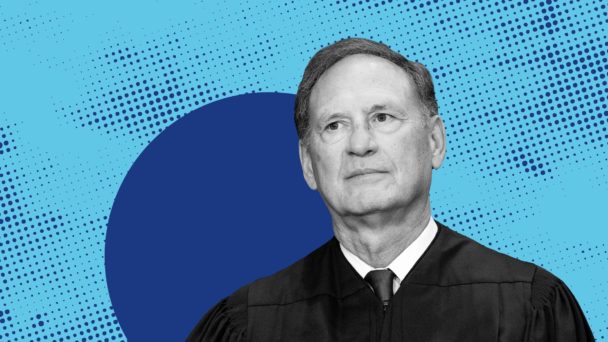
Justice Samuel Alito employed remarkably similar language during the Mahmoud oral argument. One of the challenged books, he said, conveyed “a clear moral message” that “a lot of religious people disagree with.” Like the Republican members at the hearing, Alito was concerned about mere exposure to LGBTQ+ content. The constitutional problem was that children might encounter a moral perspective that conflicted with their parents’ beliefs.
The same dynamic appeared in discussions of parental authority. Republican committee members repeatedly accused schools of excluding parents from major decisions involving students’ gender identity, pronoun usage, privacy, and sex education, while advancing “radical gender ideology” without family consent. In Mahmoud, Alito framed the issue similarly, describing parents who believed they had “a solemn religious obligation” to instill particular moral principles while schools taught “moral principles that are in conflict” with religious principles. Later, Alito suggested that expecting parents to resolve those disagreements by “speak[ing] to your children after they come home from school” is asking too much.
In both the religious liberty and parental rights contexts, the alleged constitutional violation comes down to asking conservatives to coexist in a society with institutions that recognize pluralistic values. And in both contexts, they don’t just want the freedom to hold their own beliefs, but to impose them on others as well.
Traditionally, the Supreme Court treated religious accommodations as exceptions to generally applicable, facially neutral laws, which were constitutional under the Free Exercise Clause. But under Chief Justice John Roberts, the Court has steadily moved away from that understanding. In Masterpiece Cakeshop v. Colorado Civil Rights Commission, a case from 2018, a Colorado baker refused to create a custom wedding cake for a gay couple, in violation of the state’s public accommodations law prohibiting discrimination on the basis of sexual orientation. The Court portrayed enforcement of the law not as a routine application of public accommodations rules, but as a targeted threat to religious freedom itself.
That framing became doctrine in Fulton v. City of Philadelphia in 2020. In that case, the Court held that the city had violated the Free Exercise Clause when it refused to contract with a Catholic foster care agency that would not certify same-sex couples as foster parents. The Court reasoned that because the city’s contracting system allowed officials to grant discretionary exemptions from its nondiscrimination requirements, those requirements were not truly generally applicable. Because the Court did not consider the law as uniformly applied, the city had to satisfy the much more demanding standard of strict scrutiny and failed.
The shift was even more pronounced in Kennedy v. Bremerton School District, from 2022. There, the Court held that a public high school violated the First Amendment when it disciplined a football coach for praying at midfield after games. The majority rejected the school district’s concern that students might perceive the prayers as school-sponsored religious activity and instead characterized the case as an imposition on a person engaged in personal religious expression. Once again, a policy designed to protect others from potential coercion or exclusion was transformed into an act of governmental coercion against the religious believer.
Taken together, these cases demonstrate the transformation in how the Court conceptualizes religious liberty. Rather than protecting individuals’ right to follow their own personal beliefs, the conservatives’ formulation of the Free Exercise Clause creates a right to discriminate by ignoring the very real social harm that antidiscrimination laws seek to prevent.
That trajectory offers a preview of what parental rights litigation may become. If Mahmoud and Mirabelli represent the early phase, the longer-term project is a comprehensive constitutional restructuring of the relationship between families and public education. In a more developed form, constitutionalized parental rights extremism would not merely guarantee opt-outs from discrete lessons or materials, but could be leveraged to reshape school environments to conform to the conservative agenda. Schools could face pressure to not only remove LGBTQ-inclusive curricula, but also affirmatively advance conservative ideas in schools.
Although the House hearing was mostly just political theater, it is an important window into the right’s political strategy to gain increasing control over Americans’ daily lives and beliefs, which is gaining traction on the Supreme Court. And if the Court’s recent religious liberty decisions are any guide, the emerging definition of “freedom” will continue to expand in a single direction: from protection against state coercion toward a constitutional license to bend the shared rules that govern public life to the right’s will.