This article was published in partnership with Slate.
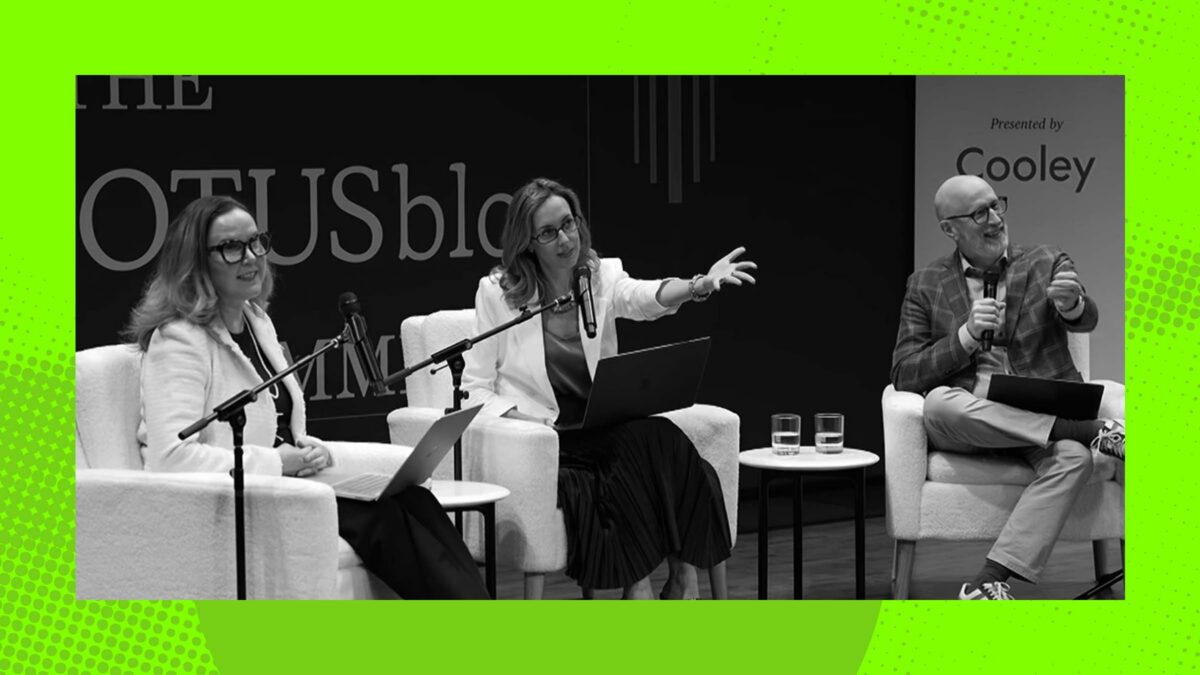
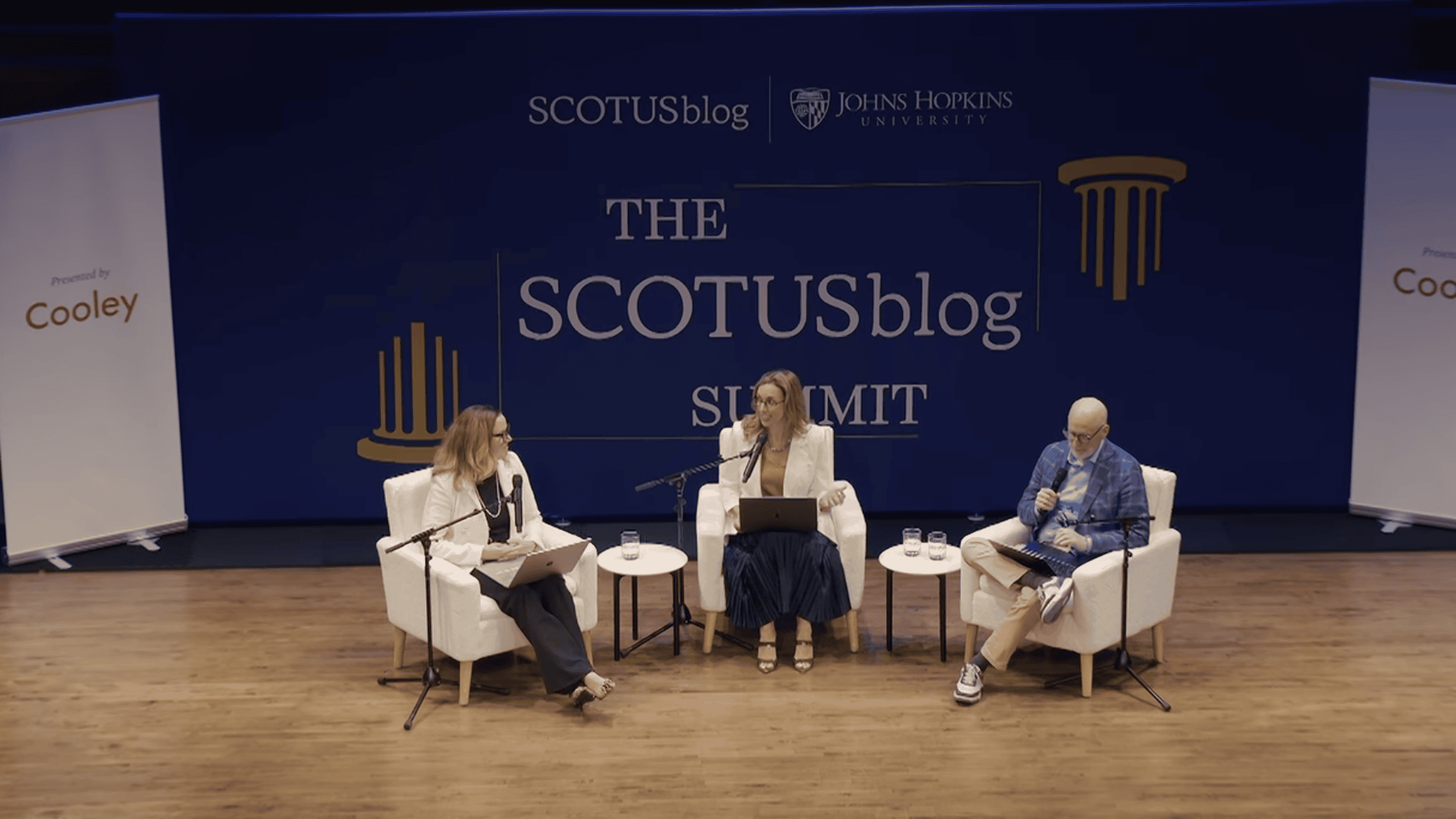
Earlier this month, SCOTUSblog hosted its annual Supreme Court “summit” in Washington, D.C. For nearly a quarter-century, SCOTUSblog has been the go-to outlet for information about the court and its docket, which makes this event a hot ticket among law firm types with ambitious billable hour targets. On its website, SCOTUSblog marketed the afternoon as a gathering of “leading voices in the legal community” discussing “what’s next for the Court.”
Highlights included a “fireside chat” with former Biden Solicitor General Elizabeth Prelogar, now a partner at one of several BigLaw firms that sponsored the event; a live taping of Advisory Opinions, a podcast hosted by the conservative pundits Sarah Isgur and David French; and a panel of the top lawyers at Boeing, TD Bank, and ExxonMobil, who were asked to weigh in on issues like whether the court, under Chief Justice John Roberts, has been “pro-” or “anti-business.” (A real head-scratcher, that one.)
In news that I am sure will astonish you, Big Business sees this Supreme Court as an honest broker when it comes to Big Business. Boeing’s Brett Gerry rejected both the “pro” and “anti” labels, instead describing the court as “nine justices who have well-developed, well-thought-through approaches to deciding cases.” ExxonMobil’s Jeffrey Taylor also demurred, saying that the justices are “calling it as best they can.” In a possibly related story, the court will hear oral argument in Suncor Energy v. Board of County Commissioners of Boulder County, in which ExxonMobil seeks protections from liability for exacerbating the harms of climate change, on the first day of the court’s new term—Monday, October 5.
The transformation of SCOTUSblog from an indispensable Supreme Court resource to a platform for Fortune 500 companies to praise the justices’ balls-and-strikes bona fides has grim implications for the future of legal journalism, a field that is already in dire straits. But all of this—the summit’s hamfistedly corporate-forward framing, its big-name guests, its elevation of commentators whose ideology largely aligns with the current court, and so on—bears little resemblance to the content that SCOTUSblog typically published in its early days. As it turns out, though, when the Supreme Court’s quasi-official news site is run by a high-profile lawyer who is also a high-stakes poker player facing years in federal prison, things can unravel really, really fast.

SCOTUSblog was founded in 2002 by Tom Goldstein and Amy Howe, a husband-and-wife team looking for creative ways to market their boutique law firm. Goldstein did not have the résumé of most of his peers in the Supreme Court bar: a mediocre student in college, he was admitted to the part-time program at American University after a relative who taught there interceded with the law school admissions office on his behalf. Instead, Goldstein built his practice by hustling, sometimes cold-calling potential clients and offering to work for free, provided that he could argue the case if the justices agreed to hear it.
In elite appellate circles, this strategy was (to say the least) unconventional. It was also wildly successful: At age 35, Goldstein had appeared before the justices 16 times, and GQ later named him one of the 50 most powerful people in Washington. In a 2006 profile in The New Republic, Noam Scheiber wrote that there was “no debate at all” about who had most “shaped the Court’s norms and culture” since the 2005 death of Chief Justice William Rehnquist: not Anthony Kennedy, not John Roberts, but Tommy Goldstein.
Early on, SCOTUSblog focused on providing in-depth, Goldstein & Howe-branded coverage of cases, from cert petition to oral argument to opinion release. But as Goldstein’s career took off, so did SCOTUSblog, which offered readers something that traditional outlets did not have: an insider’s perspective on a notoriously secretive institution that publishes its opinions and otherwise almost never reveals anything about itself. The site hired longtime Supreme Court reporter Lyle Denniston and won prestigious journalism awards; on decision days, it hosted liveblogs that sometimes drew hundreds of thousands of people, all breathlessly waiting to hear the results of the term’s blockbusters before anyone else had the story.
SCOTUSblog also developed a certain nerd cachet within the legal profession, especially in D.C. I learned this firsthand in 2009, when I graduated from college and interviewed for a job as Goldstein’s personal assistant. I didn’t get it, but when he mentioned plans to launch a daily “round-up”—essentially, aggregation of court-adjacent headlines—I eagerly volunteered to contribute. It was once-a-week grunt work, but as a law student interviewing for BigLaw jobs a few years later, I got more questions about SCOTUSblog than just about anything else.
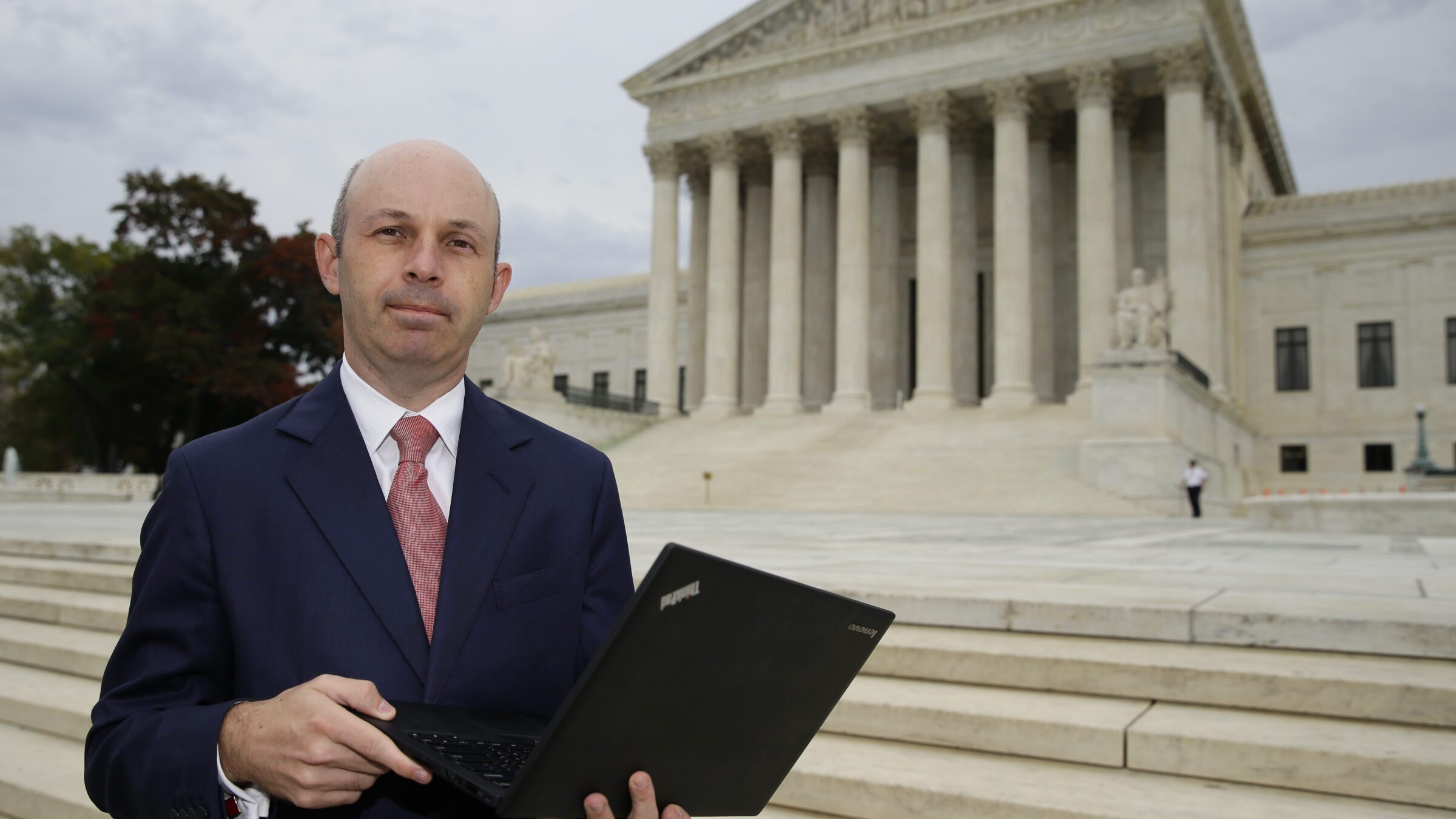
Goldstein in 2013 (AP Photo/Alex Brandon)
The reasons SCOTUSblog succeeded are not complicated. It was staffed by practitioners who understood the minutiae of Supreme Court litigation. It was faster than the traditional press corps, whose members were still writing newspaper columns that might not publish until the following day. And it was orders of magnitude better than the court’s infamously awful website, which did not deign to start making filings available online until 2017. SCOTUSblog was not just the trendy place to read and learn about the court; it was a better resource than the court itself.
You do not need to be a legal ethics expert to spot the potential conflicts of interest here; imagine if, for instance, the primary source for information about a bill pending in Congress were operated by a lobbying firm available to support or oppose it. And at times, the site’s editorial choices reflected its highest-profile founder’s interest in remaining in the justices’ good graces. In May 2022, for example, after millions of people learned from a leaked draft of the opinion in Dobbs v. Jackson Women’s Health Organization that they would soon lose their right to reproductive autonomy, SCOTUSblog mourned the real tragedy: the leak, which its official Twitter account called “the gravest, most unforgivable sin.”
For the most part, though, this stuff was on the margins—details to which only the legal profession’s truest sickos paid attention. SCOTUSblog’s day-to-day coverage—first from Denniston, and then from Howe after Denniston retired—was among the best in the business. By 2016, SCOTUSblog was influential enough that after the death of Justice Antonin Scalia, President Barack Obama wrote a guest post vowing to nominate his replacement.
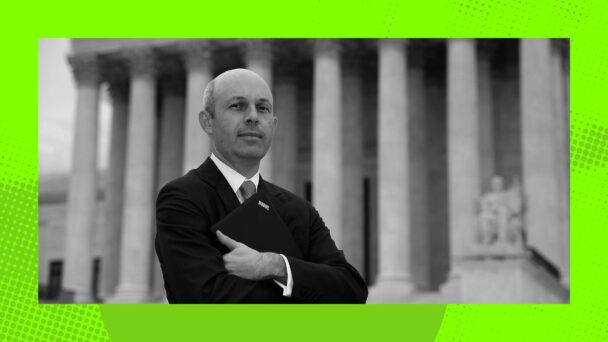
Things changed a bit in 2023, when Goldstein retired from legal practice and announced that SCOTUSblog would begin scaling back its coverage. They changed a lot two years later, when federal prosecutors charged Goldstein, an avid poker player, with evading income taxes on his winnings and using law firm funds to pay off gambling debts, among other things. Goldstein was convicted and is now serving a six-year prison sentence. He has appealed; Prelogar, who appeared at the SCOTUSblog summit, is one of the lawyers representing him.
With Goldstein’s future up in the air, SCOTUSblog did not wait long to make a move: In April 2025, the site announced that it had been sold to The Dispatch, an outlet aimed at conservatives who are not necessarily enthusiastic about President Donald Trump, but who remain very concerned about the dangers posed by the woke agenda. CEO Steve Hayes celebrated the acquisition in a blog post, writing that its association with SCOTUSblog would help make The Dispatch “the definitive source for authoritative reporting and analysis of the Supreme Court and the rule of law.” At the same time, he assured readers that The Dispatch would “maintain SCOTUSblog as users have come to enjoy it.”
The tinkering began shortly thereafter. SCOTUSblog’s small army of new contributors includes Federalist Society co-founder Steven Calabresi, for example, and Brian Fitzpatrick, a former Scalia clerk whose column promises to “recreat[e] lunch with Justice Scalia one blog post at a time.” The site houses coverage of shadow docket cases on the “Interim Docket Blog,” which conspicuously adopts the terminology for which Justice Brett Kavanaugh, responding to mounting criticism of the conservative majority’s abuses of the shadow docket, has publicly pleaded. Perhaps the neatest illustration of how SCOTUSblog 2.0 views its audience is the price tag of its premium subscription option, SCOTUSblog Plus, which debuted at $199 per year or a cool $3,000 for a lifetime membership.
As a repository for court documents, SCOTUSblog is as valuable as ever. So is Howe’s reporting; especially when I have to catch up on a case I haven’t followed closely, I read her work first. On the whole, though, the rest of the site is heavier than ever on personality-driven content from leading voices on the right. The editor, for example, is Isgur, who worked as a Trump Justice Department spokesperson during family separation and now unofficially performs a similar role for the court, writing baffling blog posts defending it against people who discuss its jurisprudence in ways the conservative justices do not like. The conservative law professor Josh Blackman recently concluded an eight-part series on what he, personally, would change about the court, which at last answers the question of just how inessential Josh Blackman’s commentary can get.
(Screencap via YouTube)
In short, what was occasional subtext under Goldstein has become text under The Dispatch, whose imports tend to treat the justices less as political actors whose work SCOTUSblog covers, and more like celebrities worthy of the softball interview treatment. The result is a place where conservative pundits can quietly leverage a brand synonymous in legal circles with subject-matter expertise in order to help legitimize the most reactionary court in living memory. Isgur alluded to this dynamic back when the sale was announced: “SCOTUSblog is Kleenex,” she told The New York Times. “It is the brand and the product.”
Ideally, personnel changes at a niche website launched as part of a law firm marketing plan would not affect how the public perceives the nation’s highest court. But SCOTUSblog’s preeminence is a product of the court’s own choices: At a time when an opaque body controlled by a six-justice conservative supermajority is exercising so much real-world power, the demand for credible analysis of the court’s work makes a brand like SCOTUSblog especially valuable to agenda-driven opportunists. The site had its problems when it was attached to a member of the Supreme Court bar. The introduction of a conservative podcaster whose Supreme Court book Brett Kavanaugh will happily promote simply creates a different set of them.
The first era of SCOTUSblog was good for just about everyone involved: It made Goldstein famous, filled a void in the media landscape, and spared everyone the frustration of dealing with the clunky search tool on the court’s website. But this new version is different: more deferential to the institution, more reverential toward the justices, and more invested in ensuring that those with power keep it. For a Supreme Court as unpopular as this one, it helps to have loyal friends in prominent places assuring people that it is good, smart, trustworthy, and ultimately nothing to worry about.