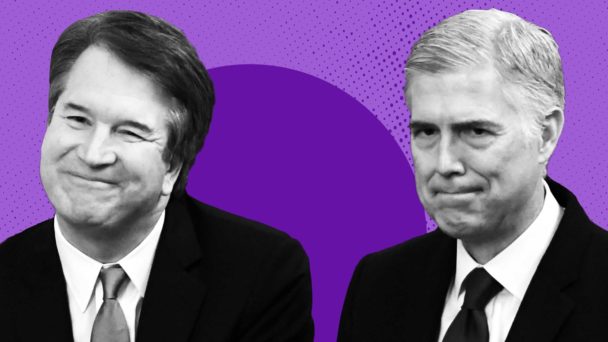
Whenever the Supreme Court’s six-justice conservative supermajority issues a high-stakes decision, the majority opinion’s author always strains to make one point clear: that all they are doing is faithfully interpreting the Constitution, and that they are not (and would never) purposefully warp its meaning to further their policy agenda.
Justice Samuel Alito’s opinion in Wolford v. Lopez is no different. In Wolford, which the Court decided on Thursday, the six conservatives voted to strike down a Hawaii law that requires people to obtain consent from owners of private property—shops, restaurants, and so on—before bringing guns on the premises. This restriction, Alito wrote, is inconsistent with the “historical” understanding of the right the Framers designed the Second Amendment to protect. Scrupulous fidelity to the norms of that era, he continued, is essential in order to avoid what is, in his mind, the single worst thing a modern court can do: engage in an “interest-balancing inquiry” that “empowers” judges to rewrite the Constitution as they see fit.
The premise here—that hyper-focusing on the “history and tradition” of American firearms regulation is the correct way to Do Law, Not Politics—has always been a lie. But it is an especially obvious lie today, when, just four years after creating a new test for deciding Second Amendment cases, the conservatives have (again) reimagined it to strike down (another) gun safety law enacted by the people’s elected representatives to keep their constituents safe.
What Wolford makes clear, wrote Justice Ketanji Brown Jackson in a dissent joined by the other two liberals, is that “the Court’s objective is protecting guns, not consistently preserving any rule of law.” The history-and-tradition approach, she concluded, is a “free-for-all” system that allows judges to “thwart the will of legislatures by privileging access to firearms above all else.”

The Hawaii legislature passed the law at issue in Wolford in response to the Court’s 2022 decision in New York State Rifle & Pistol Association v. Bruen, which held that modern gun safety laws are presumptively unconstitutional unless a legislature can persuade the Court that a law is sufficiently analogous to restrictions that were in place at the time of the Second Amendment’s enactment. Hawaii tried to comply with this new standard by passing a law rooted in a very old, very basic legal principle: that people must obtain consent from owners before entering private property. (In this context, consent can either be explicit or take the form of, say, a sign the owner hangs in the window making clear that armed people are welcome.)
In the real world, consent to enter private property is often implied—when you visit a restaurant, you don’t have to ask anyone for permission to go inside, because the presumption is that you are welcome to order dinner and pay for it. By imposing a default no-guns rule, Hawaii’s law modifies the form of the consent that people must obtain, while leaving intact property owners’ freedom to waive the default rule if they are so inclined.
This, Alito said, cannot survive constitutional scrutiny. In its briefing, Hawaii cited (among other historical laws) a handful of colonial-era state statutes that limited the right to carry guns on private property, to show that the right was not absolute. But Alito decided that those laws were not “relevantly similar” to Hawaii’s, because they had a narrower purpose: to prohibit “unauthorized hunting of deer or small game on someone else’s private property.”
As Jackson pointed out in dissent, if this logic—that historical restrictions on gun possession are irrelevant if they relate to shooting deer—is enough to strike down modern gun safety laws, the Court has made it impossible for legislatures to enact gun safety laws ever again. Under Wolford, she wrote, a judge “can always choose to invalidate a modern regulation, so long as the judge points to some distinction between the modern regulation and the historical examples,” no matter “how small or irrelevant” that difference may be.

Most of Alito’s opinion consists of the sort of Wikipedia University-level analysis typical of the Supreme Court’s post-Bruen jurisprudence. But several sections evince his straightforward enthusiasm for a result that will allow more guns in more places. For example, he emphasized that Hawaii’s “default rule” would often be “outcome-determinative” of Second Amendment rights, assuming that a business owner “either pays no attention or does not care” about the scope of armed customers’ ability to patronize his or her business. Alito also worried that proprietors who do not object to guns might still be “reluctant” to post the required signage “for fear of alienating other customers,” which would force would-be armed customers to “make the effort” to ask for consent.
This all strikes me as pretty intuitive. I am not sure how many business owners, even those who enjoy an afternoon at the shooting range, would spend their time and money sourcing a GUNS OKAY HERE sign. I can also understand why, say, restaurant owners might not want to advertise the potential presence of armed diners, and why armed would-be customers might not want to have to ask every maître d’ if it’s cool for them to bring a handgun.
The problem, though, is that nothing about the Second Amendment—the written one, not the version that exists in Sam Alito’s head—compels the justices to care about the feelings of hypothetical gun enthusiasts. All he is doing is engaging in the same “interest-balancing” exercise he claims to abhor, and making a policy choice that default rules that make it easier to carry guns are good and correct, and default rules that make it more challenging to carry guns are inherently suspect. If the justices who signed on here were literally being paid to lobby on behalf of the National Rifle Association, I am not sure they would have done anything differently.
In her dissent, Jackson reiterated her view that Bruen was wrong the moment the Court decided it. But, she said, “if [Bruen] is going to be our precedent, the majority should at least endeavor to apply it faithfully.” In Wolford, the conservative justices show just how little interest they have in doing so. The cool thing about having the votes to invent a pro-gun “test” out of thin air is that you are also free to reinvent the test anytime it yields results you do not like.
Correction: An earlier version of this post reversed the parties in New York State Rife & Pistol Association v. Bruen.