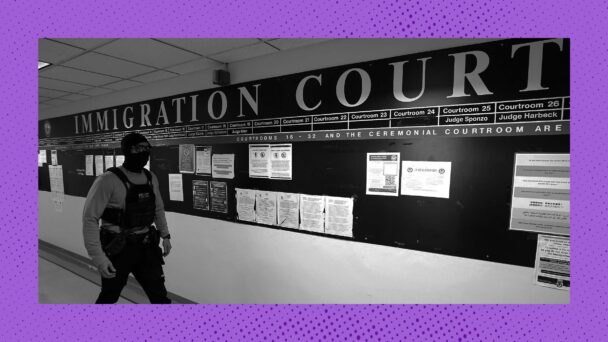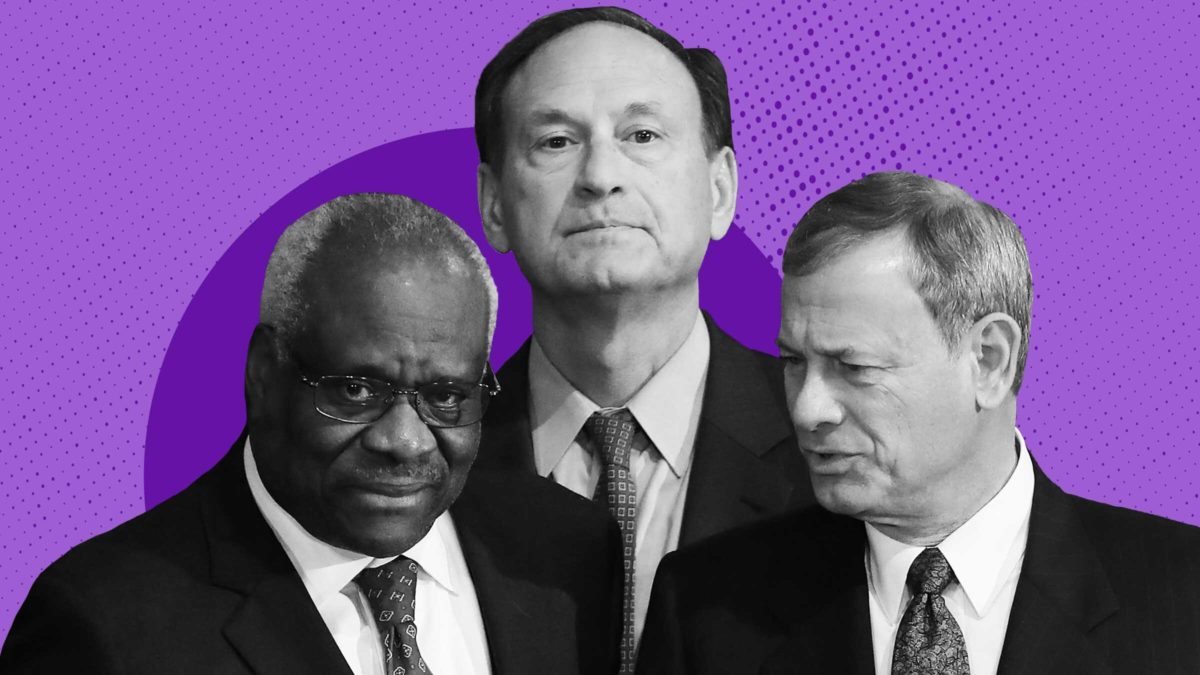
On June 25, the Supreme Court gave the Trump administration permission to immediately deport hundreds of thousands of Haitian recipients of Temporary Protected Status (TPS), a humanitarian program Congress created to prevent people from being deported into dangerous conditions. Haitian TPS holders had provided the Court with a slew of evidence showing that the administration’s termination of their protected status was rooted in illegal anti-Black and anti-Haitian animus. But in Mullin v. Doe, the Republican majority said the plaintiffs were “unlikely” to prove that racism had anything to do with the government’s decision.
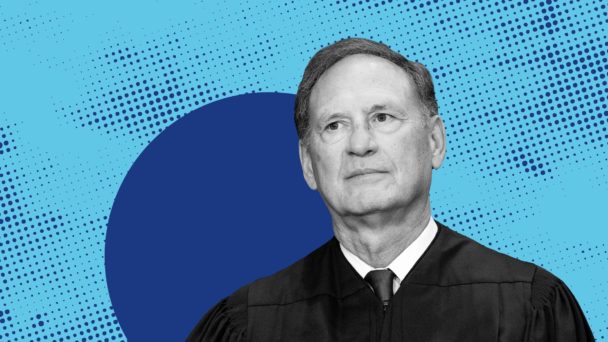
The Fifth and Fourteenth Amendments prohibit the government from discriminating on the basis of race. And under the Court’s precedents, the Haitian plaintiffs in Mullin only needed to show a likelihood that racism was at least one motivating factor in the administration’s decision to terminate Haiti’s TPS designation. Justice Sam Alito nevertheless wrote for the Court that Trump’s countless statements denigrating the “blood” and “genes” of Haitian people were not “overtly racial,” and merely “expressed policy views that could rest on race-neutral justifications.” Basically, racism couldn’t possibly have influenced the administration’s decision if Alito didn’t personally witness Trump calling a Haitian the N-word.
The Court’s decision to let the hypothetical prospect of non-racist reasons overcome real racism is a betrayal of both law and common sense.
Now, lower courts aren’t sure if they must condone racism, too.
In four cases over the past seven weeks, the Trump administration has invoked Mullin as grounds for federal district courts to reject TPS holders’ argument that racism illegally infected the administration’s terminations of protected status for their countries. In two of the cases, the district judges declined to do so. But in the other two cases, the district judges begrudgingly did as Trump asked: Even though they agreed that terminations were probably racist, they explained that racism is basically legal now, thanks to the Supreme Court.
Last month, Southern District of New York Judge Dale Ho wrung his hands over Mullin in his order in Doe v. Noem, a case about the TPS designation for Yemen. Back in May—before the Mullin decision—Ho granted a motion by Yemeni TPS holders to block the administration’s termination of their protected status. That ruling was based on a statutory violation, so he didn’t need to reach the Yemeni plaintiffs’ constitutional claim, but he still suggested in a footnote that the plaintiffs’ unconstitutional discrimination argument was “persuasive.” After Mullin, the Trump administration argued that Ho’s ruling could no longer stand.
Yemeni TPS holders conceded that Mullin overrode Ho’s statutory holding, but contended that they still had a strong constitutional claim. This time, Ho ruled for the administration.
In a July 20 order, Ho wrote that he “might very well” agree that the termination of TPS for Yemen was illegally “based on some form of discriminatory animus,” if not for the Supreme Court recently brushing off brazen racism against Haitians. The Haitian TPS holders had an abundance of evidence showing “racial undertones and overtones alike,” and the Supreme Court still concluded that was “insufficient,” said Ho. He concluded that Yemeni TPS holders offered “no cogent reason” why this case should produce a different result.
District of Massachusetts Judge Allison Burroughs reached a similar conclusion in African Communities Together v. Mullin, a case about the TPS designation for Somalia. Like the plaintiffs in the Yemeni case, the Somali TPS holders argued that their racial discrimination claim was still viable after Mullin. But in an August 14 order, District of Massachusetts Judge Allison Burroughs disagreed. Burroughs explained that the Trump administration showed “undisguised racial animus” against Haitians, yet a majority of the Supreme Court “somehow concluded” that Haitian TPS holders were “unlikely” to prove that race was a motivating factor in the TPS termination.
Burroughs recognized that “Somalia and its people are being targeted.” And she found that Somali TPS holders laid out “a strong case” showing that Trump administration officials made racist statements about them. But unless Somali TPS holders had something even more “illustrative of racial antipathy” than the Haitian plaintiffs in Mullin, she reasoned their claim must fail too.
The opinions by Judges Ho and Burroughs in the Yemen and Somalia cases essentially amount to very sad shrugs. In Mullin, the Republican majority gave the government permission to be racist, so Ho and Burroughs considered themselves bound to do the same. But when faced with an immoral and lawless decision, lower court judges still have options.
On August 7, for example, Northern District of Illinois judge Matthew Kennelly denied a motion by the government to dismiss a racial discrimination challenge to the administration’s termination of TPS for Burma. The administration argued that Burma TPS holders could not make such a claim after Mullin because the Supreme Court considered and rejected a “materially similar” argument.
Kennelly pointed out, however, that the Burma case was at a different stage than the Haiti case, so the legal standard was different: Basically, Mullin held that Haitian TPS holders’ claim was not likely to succeed, which is different from saying that they failed to plausibly state a claim to begin with. Furthermore, Kennelly said, the Burma case had not yet moved into the discovery phase of litigation, during which the government has to hand over certain information that’s relevant to the case. “It seems plausible that the plaintiffs could uncover evidence that might have changed the outcome in Mullin,” said Kennelly.
Yesterday, a federal judge followed Kennelly’s lead, and similarly denied a motion by the government to dismiss a racial discrimination challenge to the administration’s termination of TPS for Ethiopia. In the August 18 order, District of Massachusetts judge Brian Murphy highlighted the procedural differences between Mullin and the case before him. And quoting from the Burma case at length, he found that Ethiopian TPS holders were also entitled to pursue their racial discrimination claim.
Kennelly and Murphy’s orders are both examples of distinguishing a case in a way that lawyers do all the time. Lawyers, including judges, frequently have occasion to say “this case you think is similar is actually different, so this precedent you think applies actually does not.” It’s not hard to think up ways Ho and Burroughs could have done so in the Yemen and Somalia TPS cases.
They could’ve said, for example, that the facts of the cases before them were sufficiently distinct, actually, from those in Mullin. They could’ve stressed that Mullin did not, actually, expressly overrule or modify the governing legal standard in Equal Protection cases. Technically, plaintiffs still only need to show a likelihood that racism was at least one motivating factor. Not the sole factor, or even the dominant factor—just one factor. And the plaintiffs here did, actually, make that showing. Put differently, the judges could’ve done what the law and their consciences were screaming for them to do, and let the Supreme Court deal with it later.
It is understandably difficult for lower court judges to be forced to navigate the increasingly indefensible precedent set forth by this Supreme Court. And there may be some cases in which the Court was too explicit, and the facts and procedural posture too directly analogous, for lower courts to plausibly differentiate the cases before them. But that is not always so. There are multiple ways judges can deal with bad precedent, other than hewing closely to it while shaking their heads. And with this Supreme Court, lives increasingly depend on judges honing that skill.