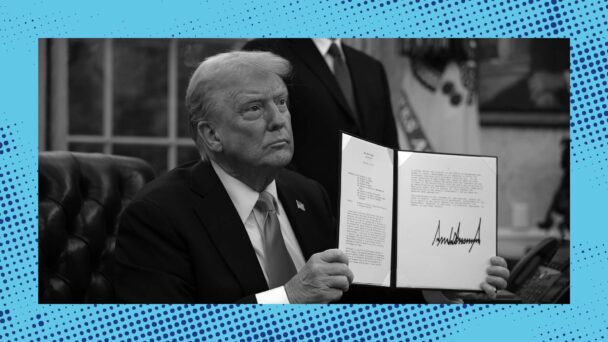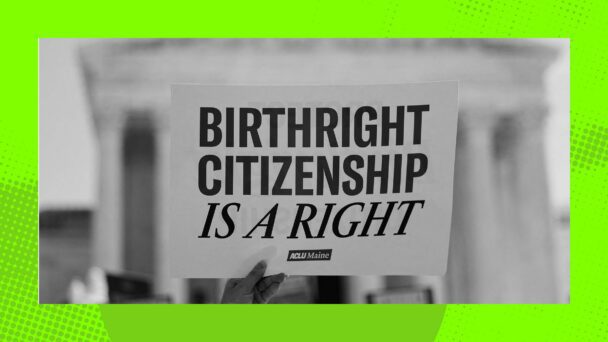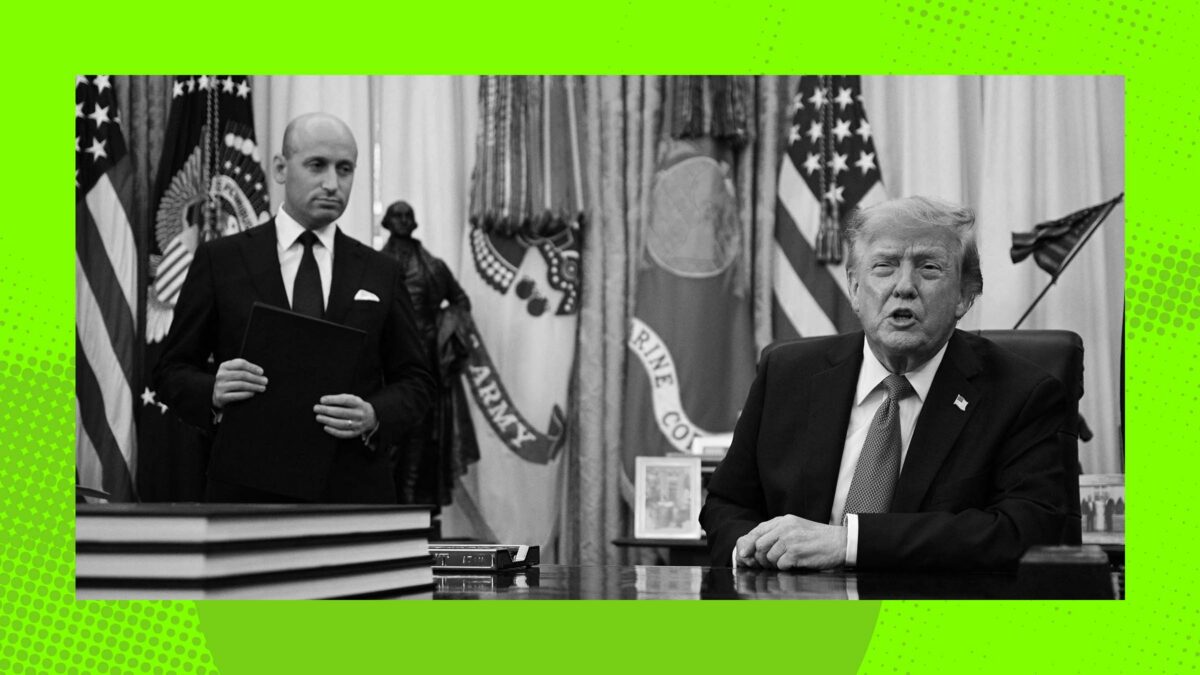
Last Thursday, President Donald Trump issued two executive orders that purport, yet again, to unilaterally override the constitutional guarantee of birthright citizenship.
The first order directs government agencies to withhold citizenship documents from “certain categories of children” born in the United States to noncitizen parents. Among the babies marked for statelessness on the order’s “non-exhaustive” list are those with at least one parent who engaged in a “commercial transaction” to ensure that the mother was present in the U.S. to give birth.
If you’re wondering what “commercial transaction” means, you’re not alone: The order doesn’t define the term. The proscription could be limited to the calculated citizenship-buying schemes of Republican nightmares. Or it could extend to innocuous purchases of plane tickets and bus fares, or even reach payments for reproductive healthcare services like gestational surrogacy.
The second order declares it “the policy of the United States” to prevent people from “engaging in birth tourism,” which, as used in the executive order, refers to noncitizens entering the country on nonimmigrant visas “for the purpose of giving birth on American soil.” The order further authorizes the State Department and Department of Homeland Security to take action to implement this policy, which could include removing presumed “birth tourists” from the country or denying them entry to begin with.
Over 3.5 million babies are born in the United States every year, and less than 0.3 percent of those children are born to visa holders who are temporarily visiting the country. “Birth tourism” is nevertheless a persistent bogeyman—or rather, bogeywoman—for opponents of immigration who seek to gussy up racism and sexism as legitimate policy concerns.
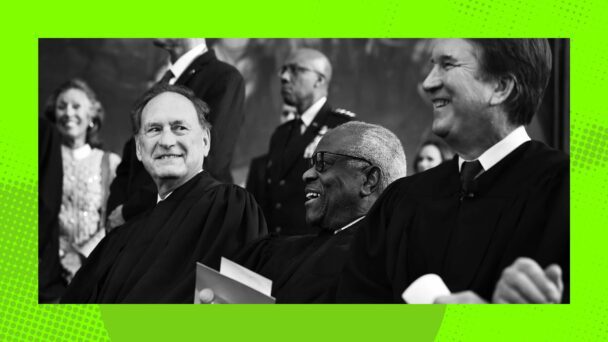
Justices Clarence Thomas and Samuel Alito howled about “birth tourism” six weeks ago in their dissents in Trump v. Barbara, the Supreme Court’s June 30 decision striking down Trump’s previous attempt to rescind birthright citizenship by executive fiat. Thomas, joined by Justice Neil Gorsuch, claimed that “large numbers of children” are born in the U.S. every year to “foreign birth tourists” and condemned the Court for recognizing them as citizens. Alito called conferring citizenship on the children of such immigrants “grotesque,” and warned that “birth tourism” has dangerous “national-security implications.”
Within hours of the Court’s ruling, Assistant Attorney General Colin M. McDonald sent a memo to all Justice Department employees instructing them to work with DHS to “prioritize the investigation and prosecution of birth tourism schemes.” The new executive orders are the product of this shift: After coming up just one vote short in his first attempt to rewrite the Fourteenth Amendment, Trump is trying to find out how much the justices will let him get away with.
Crucially, cracking down on “birth tourism” necessarily means cracking down even more on people who can give birth. In this way, Trump’s latest orders are extensions of the policing of pregnancy that has increasingly plagued women and girls in the aftermath of Dobbs v. Jackson Women’s Health Organization, the Supreme Court’s 2022 decision rescinding the constitutional right to abortion. In the first two years following Dobbs, prosecutors initiated over 400 cases charging people with crimes related to pregnancy, pregnancy loss, or birth.
In the context of birthright citizenship, Justice Ketanji Brown Jackson hinted at this dynamic back in April, when the Court heard oral argument in Trump v. Barbara: When the administration’s lawyer argued that a child’s citizenship turns on a parent’s intent to remain in the United States, she quipped, “So are we bringing pregnant women in for depositions?” These new orders suggest the administration’s answer is yes, and then some, as they empower government agencies to profile and question, surveil and harass, and possibly detain and deport people they assume are capable of giving birth.