On Tuesday, Maine Senator Susan Collins performed one of her favorite bits: acting like she cares about abortion access.
Collins announced that she would oppose President Donald Trump’s nomination of Todd Blanche to serve as attorney general. Her statement came the day after Politico reported that Blanche pledged on a private call to restrict abortion pills nationwide, and she cited those comments as part of the basis for her “no” vote. Crucially, Collins’s statement also came after two noncommittal Republican senators, John Cornyn and Thom Tillis, said they would vote for him. This means that, unless both Senators Bill Cassidy and Lisa Murkowski vote against Blanche—technically possible, extremely unlikely—his promotion is guaranteed.
Collins’s vote against Blanche in 2026 is akin to her 2020 vote against Amy Coney Barrett: It’s an inconsequential show of independence on a nominee who will be confirmed anyway, and it’s meant to help her save face for all her other bad votes in the months and years before she faces the voters.
Barrett’s confirmation to the Supreme Court came just days before Collins was up for re-election. At the time, Collins said that she objected on process grounds because her Republican colleagues didn’t follow the standard they set when there was a vacancy during the 2016 presidential election. In what appears to be a pattern for Collins, she only said this after Barrett had secured Murkowski’s vote and could sail to confirmation.
Collins’s opposition to Barrett came two years after one of the worst votes of Collins’s career: her 2018 vote to confirm Brett Kavanaugh to the Supreme Court despite a flurry of flashing red warning signs that he would doom Roe v. Wade. While she claimed her Barrett vote was about fairness, it was also implicitly a face-saving maneuver: Because she had sustained massive backlash for confirming Kavanaugh, signing off on another candidate so openly hostile to abortion rights could have proved fatal for her 2020 election chances.
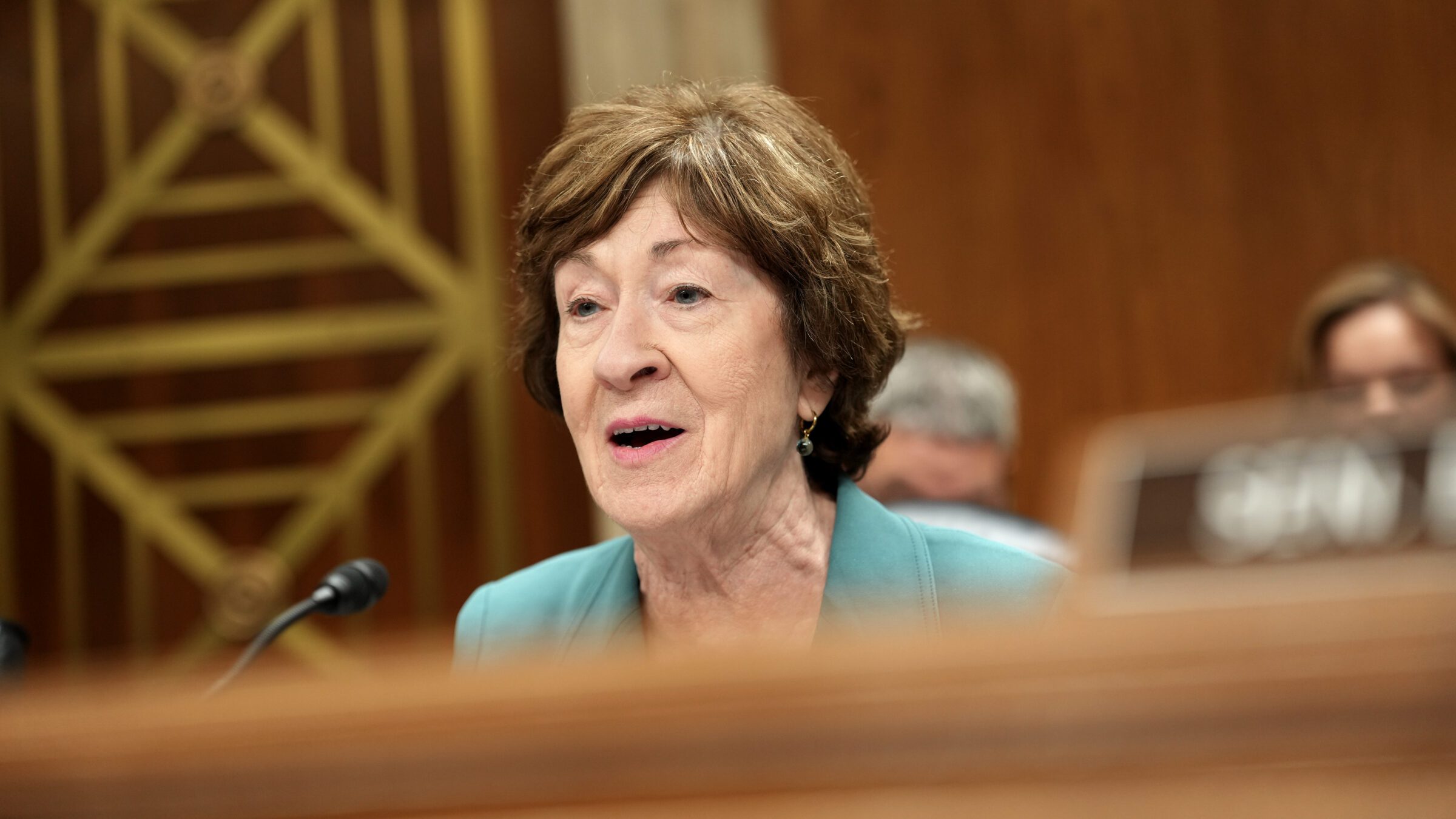
(Photo by Eric Lee/Getty Images)
Collins is perhaps being extra cautious about Blanche because this is the first time she’s facing voters since the Court overturned Roe in 2022—a decision made possible by Kavanaugh. She apparently still bristles at criticism of her Kavanaugh vote, something reporters rightfully keep asking her about: A recent New York Times story details how the 2018 vote “haunts” the senator, and cites allies who say Collins “still harbors frustrations about the continued backlash” to her choice, which teed up the end of Roe.
The Times piece correctly frames the vote as a defining issue in Collins’s campaign to seek a sixth term in office. In it, Team Collins spends a lot of time trying to explain her process and the protests and threats that ensued. It explains that she hired a team of five lawyers to pore over Kavanaugh’s record in an attempt to clear the litmus test she announced after Justice Anthony Kennedy retired: She said she wouldn’t support any judge who “demonstrated hostility” to Roe. She attended 10 hours—an entire day’s worth—of briefings on his opinions, speeches, and other public writings and met with Kavanaugh for two hours.
These details are supposed to bolster the narrative that Collins did a good job vetting Kavanaugh when, in fact, she did a terrible job. This allegedly painstaking consideration seemingly favored the judge’s personal assurances over his public writings. For example, it ignored Kavanaugh’s email in 2003, when he was a lawyer in the Bush administration, in which he objected to a line in a draft op-ed that said “it is widely accepted by legal scholars across the board that Roe v. Wade and its progeny are the settled law of the land.” Kavanaugh responded that he wasn’t sure all legal scholars refer to it that way “at the Supreme Court level since [the] Court can always overrule its precedent, and three current Justices on the Court would do so.” The Times published those emails in September 2018, but Collins must have missed that story.

Collins also apparently missed Kavanaugh’s handling of a 2017 lawsuit about an immigrant 17-year-old girl’s quest to get an abortion in Texas. A district court said the teen, who was about 12 weeks pregnant, could leave federal custody to get an abortion, the cost of which would be covered by private donations. The Trump administration appealed, and Kavanaugh, then a judge on the U.S. Court of Appeals for the D.C. Circuit, said in an order that the abortion should be delayed until the government could place the teen, referred to in court filings as Jane Doe, in the care of a sponsor.
The problem with Kavanaugh’s ruling is that, at the time, Texas had a 20-week abortion ban, and required patients to have two in-person visits with a medical provider. So for Jane Doe, the clock was ticking: It looked like he was trying to ban abortion for Jane, and every girl like her, even with Roe still on the books.
The full D.C. Circuit eventually overturned Kavanaugh’s order. But Kavanaugh dissented, claiming that the panel had created “a new right for unlawful immigrant minors in U.S. Government detention to obtain immediate abortion on demand.” It was only after this case that the White House put Kavanaugh on its Supreme Court shortlist. The government never approved a sponsor for Jane before she aged out of its custody at 18, suggesting that, if Kavanaugh got his way, she would have been forced to give birth.
For Collins, though, none of this was as important as Kavanaugh’s private assurances to her that he viewed Roe as “settled law” and “settled as a precedent of the court.” When she eventually voted for him, Collins even accused people of being alarmist during a speech on the Senate floor: “Suffice it to say, prominent advocacy groups have been wrong” about the fate of abortion rights before, she said.
This aged poorly. When the Court overturned Roe less than four years later, the Times published a story for which Collins shared her private meeting notes and told the reporter that Kavanaugh “misled” her. But she was not misled: She chose to ignore reams of evidence that this guy would do what he was nominated to do, either because she has the intellect of a goldfish, or because her party needed her to vote yes, no matter the cost.
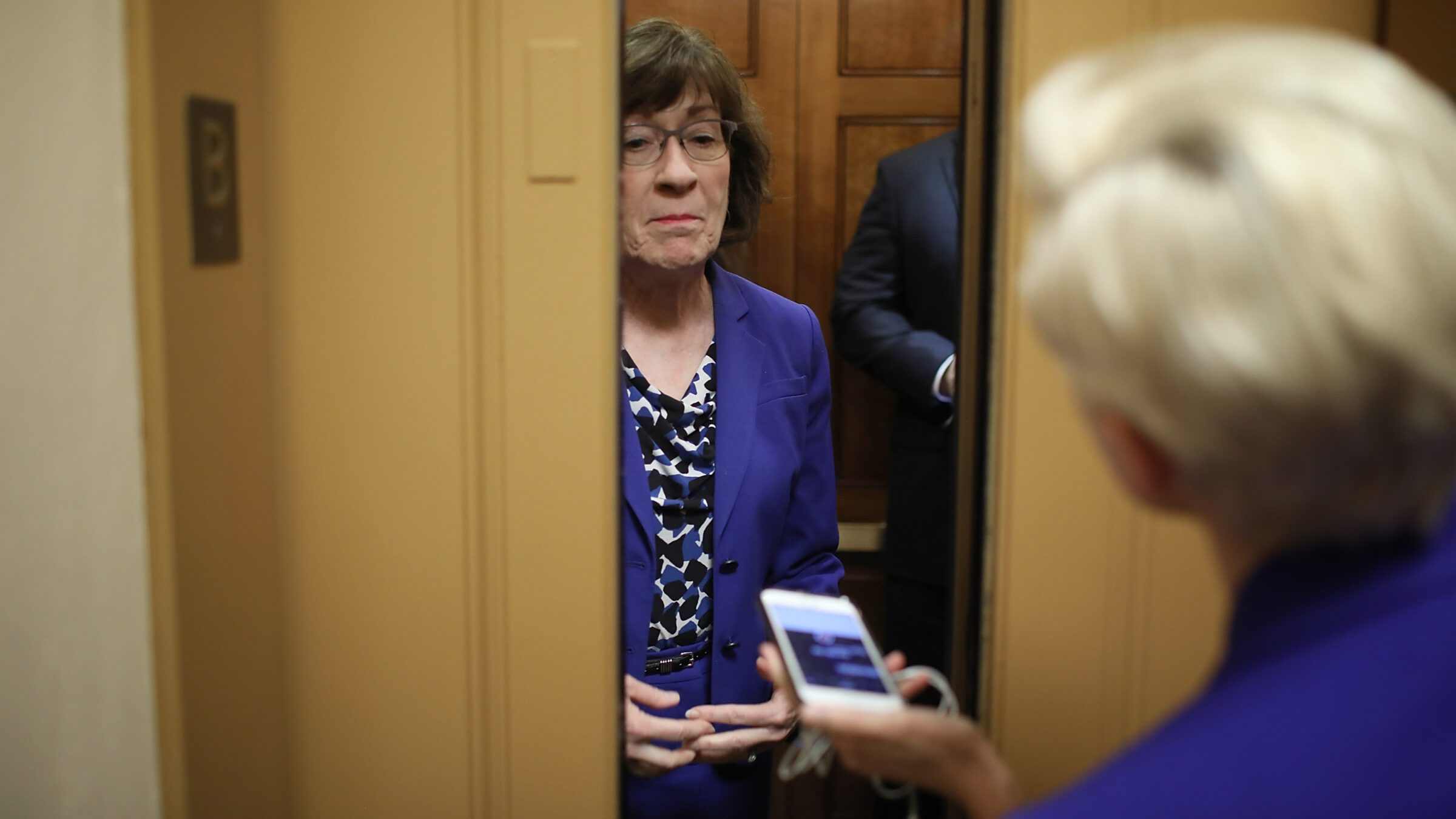
(Photo by Win McNamee/Getty Images)
Collins has long tried to paint herself as pro-choice, but her voting record shows she doesn’t actually care. So far during Trump’s second term, she has confirmed nearly two dozen anti-abortion judges to lifetime seats, plus God knows how many in his first term. Any one of these judges could hear the next vehicle that takes the country backward on abortion, miscarriage care, birth control, and more.
Speaking to the Times, Collins spokesperson Blake Kernen took a swipe at her Democratic opponent, state lawmaker Troy Jackson, for his past opposition to abortion by saying that Collins “has always been pro-choice.” What Kernen ignores is that, as president of the Maine Senate, Jackson earned a 100 percent rating from the Maine chapter of Planned Parenthood and recently helped expand access in the state by co-sponsoring a 2023 law that protects abortions later in pregnancy. Collins knows about the law because she relied on it when questioned about Kavanaugh: In June of this year, she told reporters that although she disagreed with his Dobbs vote, it “has not had an impact on the state of Maine in that Maine actually expanded its law.” She can thank Jackson for that dodge.
Collins has no good answers on Kavanaugh, because the vote is indefensible. She has spent years trying to walk the line as an allegedly “pro-choice” Republican, and she’s trying that shtick again by opposing Blanche. But the reality is that, at the moment when abortion rights were in the greatest danger, Collins abandoned them to the conservative legal movement, and left women and pregnant people to deal with the fallout.