The Supreme Court will begin its term in October by hearing oral argument in Suncor Energy Inc. v. County Commissioners of Boulder County, a case about whether communities can use state courts to demand accountability for climate-related harms—or whether the Court’s six-justice conservative supermajority will make it (even more) difficult to hold companies responsible for the harms their conduct exacerbated.
In 2018, Boulder County, Colorado, sued a group of oil and gas companies in state court, alleging that the companies have contributed to climate change by concealing the dangers of their products. The consequences, Boulder says, are not theoretical. When it filed the lawsuit, Boulder County “conservatively” estimated that adapting to climate change could cost taxpayers as much as $157 million by 2050, including upwards of $20 million to reduce wildfire risks and $68 million for improvements to county bridges, among other costs. The 2021 Marshall Fire alone destroyed more than 1,000 homes and businesses, causing around $2 billion in damage, and required a roughly $60 million debris-removal program.
Suncor Energy isn’t about the substance of the lawsuit, though. Instead, the oil companies are arguing that Boulder’s lawsuit is preempted by the Clean Air Act. Preemption is a legal rule that allows federal law to override state law when the two conflict. And in this case, the oil companies argue that because the Clean Air Act gave the federal government authority to regulate air pollution, including greenhouse gas emissions, it preempts Boulder’s lawsuit.
In 2025, the Colorado Supreme Court rejected this argument, ruling that Boulder’s claims for damages under state tort law are not an attempt to regulate greenhouse gas emissions. The companies appealed to the U.S. Supreme Court, which will decide the case sometime before next July.
In Suncor Energy, the oil companies essentially argue that because the effects of climate change cross state borders, state-law claims arising from climate harms must give way to federal authority. As they put it in their brief, damages in even one case “could potentially reach into the billions of dollars,” with thousands of other local governments able to bring similar actions.
Boulder rejects this framing, and argues that the fact that climate harms sometimes cross borders does not strip states of their traditional authority to address harms within their own borders. In other words, they are not asking a court to regulate emissions elsewhere; they are asking a court to hold the companies accountable under state law for the harms they allegedly caused in Colorado. Boulder frames the case as a means to seek “damages (not abatement)” for “deceptive marketing and sales (rather than emissions)”; the oil and gas companies’ policy arguments, Boulder argues, do not give courts “a license to bar all such suits on their own authority.”
No Supreme Court case takes place in a vacuum. The Court will decide Suncor Energy during a presidential administration that has dismissed climate change as a “hoax,” and before a Court that has repeatedly invoked different legal doctrines to limit the federal government’s ability to address climate change. This context makes the powers of state governments—and state courts—all the more consequential. The Court’s decision in Suncor Energy could leave communities ravaged by climate change unable to make oil and gas companies pay for the damages their actions have caused.
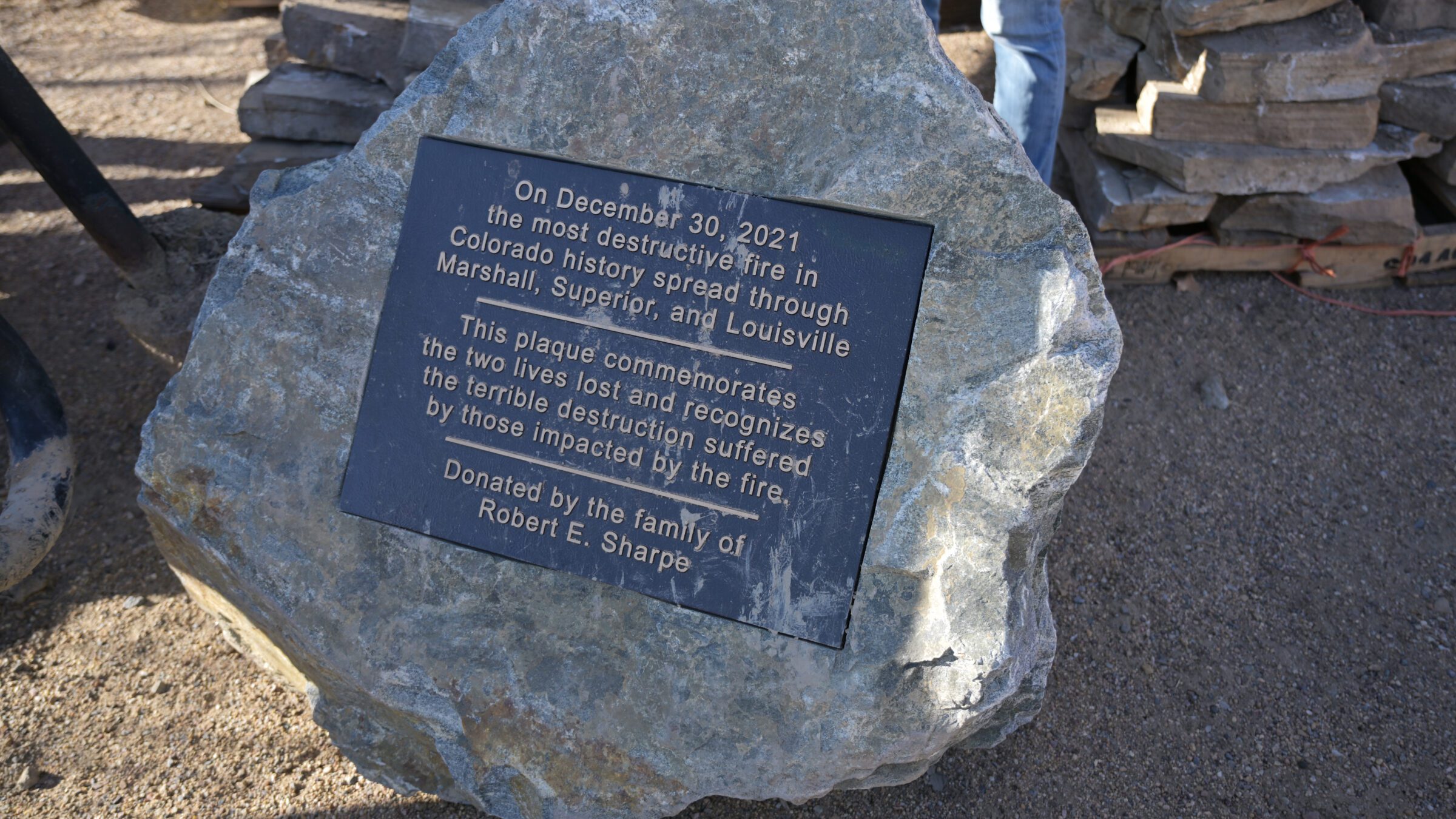
(Photo by Hyoung Chang/The Denver Post)
It is probably not a surprise that a Court controlled by conservatives has not been receptive to efforts to address climate change, whether through the legal system or the political process. For example, in West Virginia v. EPA in 2022, the Supreme Court ruled that the Environmental Protection Agency could not use the Clean Air Act to require “generation shifting”—a regulatory attempt to push electricity production away from coal plants and toward cleaner sources like renewables. Although the decision in West Virginia did not eliminate the EPA’s authority to regulate greenhouse gases, it did deprive the Biden administration (and future Democratic administrations) of a powerful tool for driving economy-wide emissions reductions.
The election of President Donald Trump has accelerated the pace of the federal government’s retreat from meaningful environmental regulation. In February of this year, the Trump administration announced that it would repeal the EPA’s 2009 “endangerment finding,” which is the scientific determination that greenhouse gas emissions pose a danger to public health and welfare. For nearly two decades, that finding provided the foundation for federal regulations that limit carbon dioxide emissions and other pollution from oil and gas wells, and other sources that burn fossil fuels.
The administration’s actions—weakening environmental protections, cutting billions of dollars in funding for clean energy projects, and the endangerment finding repeal—will have devastating consequences. According to the Environmental Defense Fund, these changes alone could lead to an additional 150 to 190 million asthma attacks, 340,000 to 490,000 hospital and emergency room visits, and up to 340,000 premature deaths.

Lawsuits like Boulder’s are an attempt to address what both the Supreme Court and the Trump administration are ignoring. If the Court uses Suncor Energy to tell states and local governments that climate change is too national, too global, or too important for state courts to address, there will be fewer places where communities can turn to hold the oil and gas industry accountable. Such a ruling would produce an absurd result: After the Court has consistently narrowed the federal government’s ability to address climate change and the Trump administration has chosen not to use what authority remains, states and local governments could be told they cannot address the resulting harms because climate change is a “federal” problem.
In 1970, President Richard Nixon warned that “clean air is not free, and neither is clean water,” describing the nation’s environmental harms as a debt that had come due. More than half a century later, that debt has only grown. EPA modeling estimates that the United States could face more than $1.3 trillion in climate-related damages each year by 2050. Yet as those costs mount, the avenues for holding those responsible to account are narrowing.
This is why Suncor Energy matters beyond Colorado. If the Court rules in favor of the oil and gas companies, communities could be left with no recourse. The harms of climate change would continue to proliferate, of course. But the legal system would be unwilling or unable to hold anyone responsible.