In 1982, when Congress passed a series of amendments strengthening the Voting Rights Act of 1965, lawmakers wanted to make one thing very clear: that minority voters seeking to prove violations of the Voting Rights Act do not have to prove that lawmakers intentionally discriminated against them based on race. Instead, under a provision of the law known as Section 2, Congress said, it is enough for voters to show that a given policy—a redistricting plan, for example—has the effect of making it more difficult for them to actually participate in democracy.
At the time, Congress had good reason to be specific. Two years earlier, the Supreme Court in City of Mobile v. Bolden had held that a facially neutral electoral map did not violate the Voting Rights Act, even though it had the practical effect of reducing Black voting strength. In the 1982 amendments, Congress explicitly overruled Bolden; in its final report on the bill, the Senate Judiciary Committee affirmed that requiring challengers to prove discriminatory intent would impose an “inordinately difficult burden,” and would make it too easy for racist lawmakers to disguise their true motivations by leaving a “false trail” of non-discriminatory justifications.
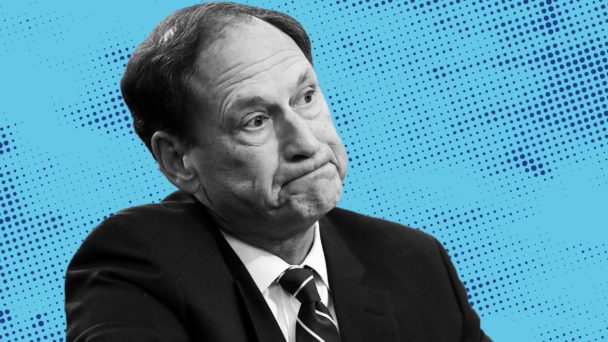
In Louisiana v. Callais, which the Supreme Court decided on Wednesday, the six conservative justices took it upon themselves to reimpose the “inordinately difficult burden” Congress lifted five decades ago. In his opinion for the majority, Justice Samuel Alito strains to present Callais as faithful to the law passed by Congress: His opinion, he says, merely “updates” the tests that courts use to evaluate Section 2 claims, and “realigns” that framework with the text of the Voting Rights Act.
In reality, what Alito and the majority have done is make it functionally impossible for voters to prove that a given map is an illegal racial gerrymander, no matter how discriminatory the map’s real-world impact. Their opinion in Callais preserves only a husk of Section 2 of the Voting Rights Act, leaving intact the ability of minority voters to cast ballots while simultaneously guaranteeing lawmakers’ power to ensure that those ballots are meaningless. Going forward, the same racist lawmakers whom Congress sought to bind in 1982 will be freer than ever to draw lines that gerrymander their Black and brown constituents out of electoral existence.
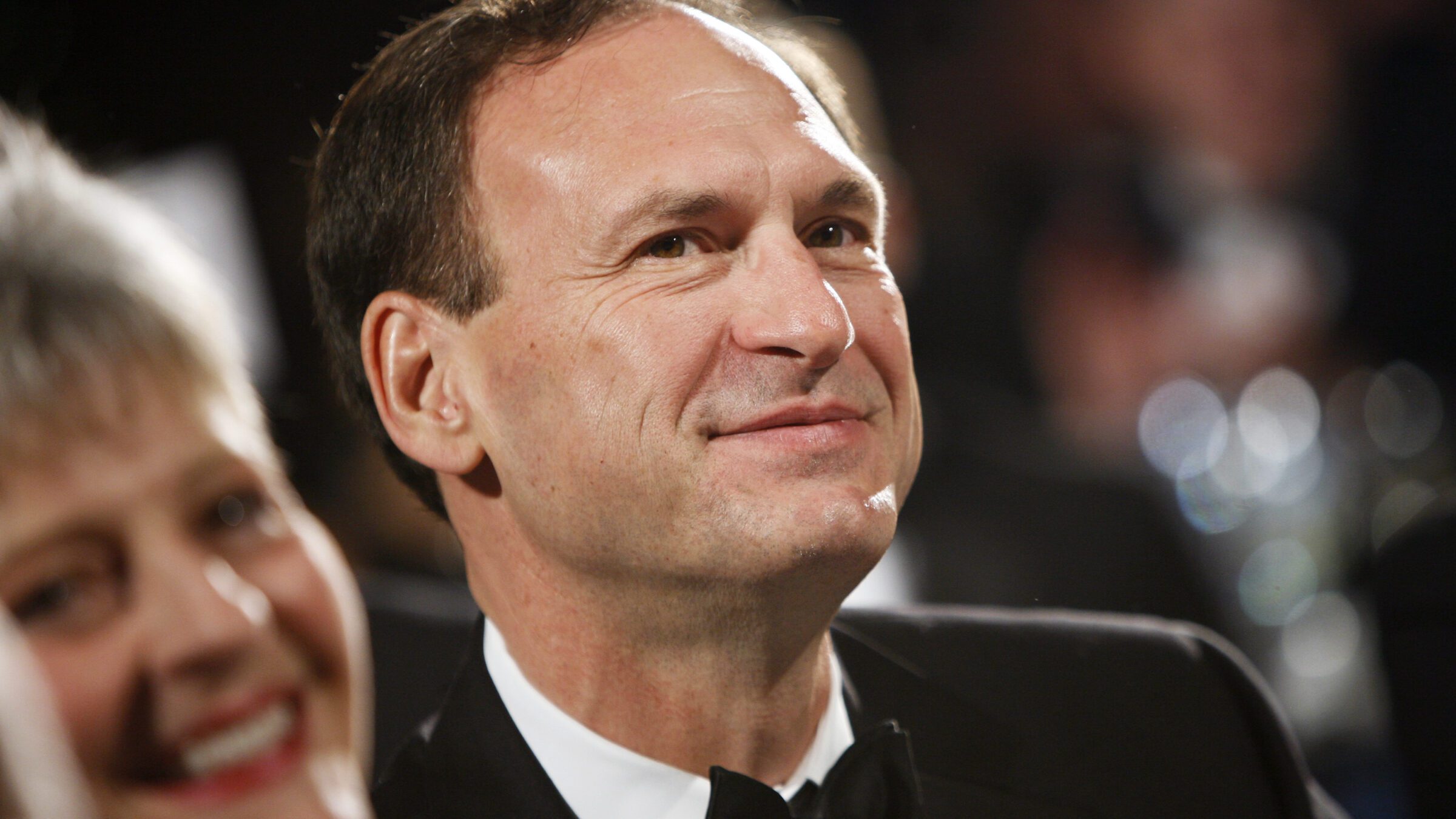
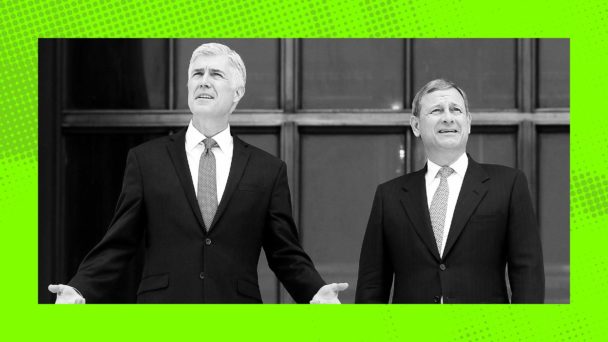
(Photo by Aude Guerrucci-Pool/Getty Images)
Much of Alito’s opinion functions as an instruction manual for lawmakers looking for surefire ways to evade the pesky requirements of the Voting Rights Act. For example, Alito says that now, in order to make a case under Section 2, plaintiffs challenging a map as racist must show that racism is the only possible explanation for that map. To do so, they will have to show that a state could have adopted a different map that meets all of the state’s other “legitimate” goals, including protecting incumbents, preserving partisan advantage, and so on. If they can’t do so, he concludes, they have necessarily failed to show that the map was “driven by racial considerations rather than permissible aims.”
As Justice Elena Kagan points out in a dissent joined by Justices Sonia Sotomayor and Ketanji Brown Jackson, this new obstacle of Alito’s creation—the “Callais requirements,” she calls them—will by itself bring legal challenges to maps to a “screeching halt.” In effect, any non-racist justification lawmakers offer for adopting a given map will probably be enough to defeat a claim under Section 2, as long as they manage to do it with a straight face. Recall, again, that when Congress reinstated the Voting Rights Act’s “effects test” in 1982, it did so to stop lawmakers from disguising their racist motivations using “false trails.” In Callais, Alito restores lawmakers’ ability to do exactly that.
As it so happens, another recent Supreme Court decision gives lawmakers a very handy excuse: In Rucho v. Common Cause in 2019, the Court decided that federal courts cannot stop lawmakers from engaging in as much partisan gerrymandering as they would like. That opinion is bad enough on its own, but now, the Court’s decision in Callais transforms Rucho into a powerful shield against Section 2 claims: As long as lawmakers are smart enough not to fire off giddy smoking-gun emails memorializing their intent to Bring Back Jim Crow, all they have to say to beat a Voting Rights Act case is that they designed their map to protect their party’s political power. The fact that maps that consist only of safe Republican seats make it impossible for Black voters to elect representatives of their choice is, legally speaking, irrelevant.
The majority takes great care to disclaim the notion that its decision overrides the will of Congress; rather, Alito writes, Callais ensures that, going forward, Section 2 is “properly construed” and “correctly understood.” But his clumsy use of the passive voice obfuscates the simple fact that the actors “construing” the statute are six unelected Republican justices, who together spend 37 pages using stilted phrases that are not “intent test” to reinstitute a de facto intent test. The Callais requirements come not from Congress, but from the imaginary version of the statute that Alito and company wish Congress had passed instead. Throughout, the majority is acting as an unelected, unaccountable miniature legislature whose members, as Kagan writes, made their “own assessment” of what things the Voting Rights Act ought to protect against, and “concluded that preventing racial vote dilution” is not among them.
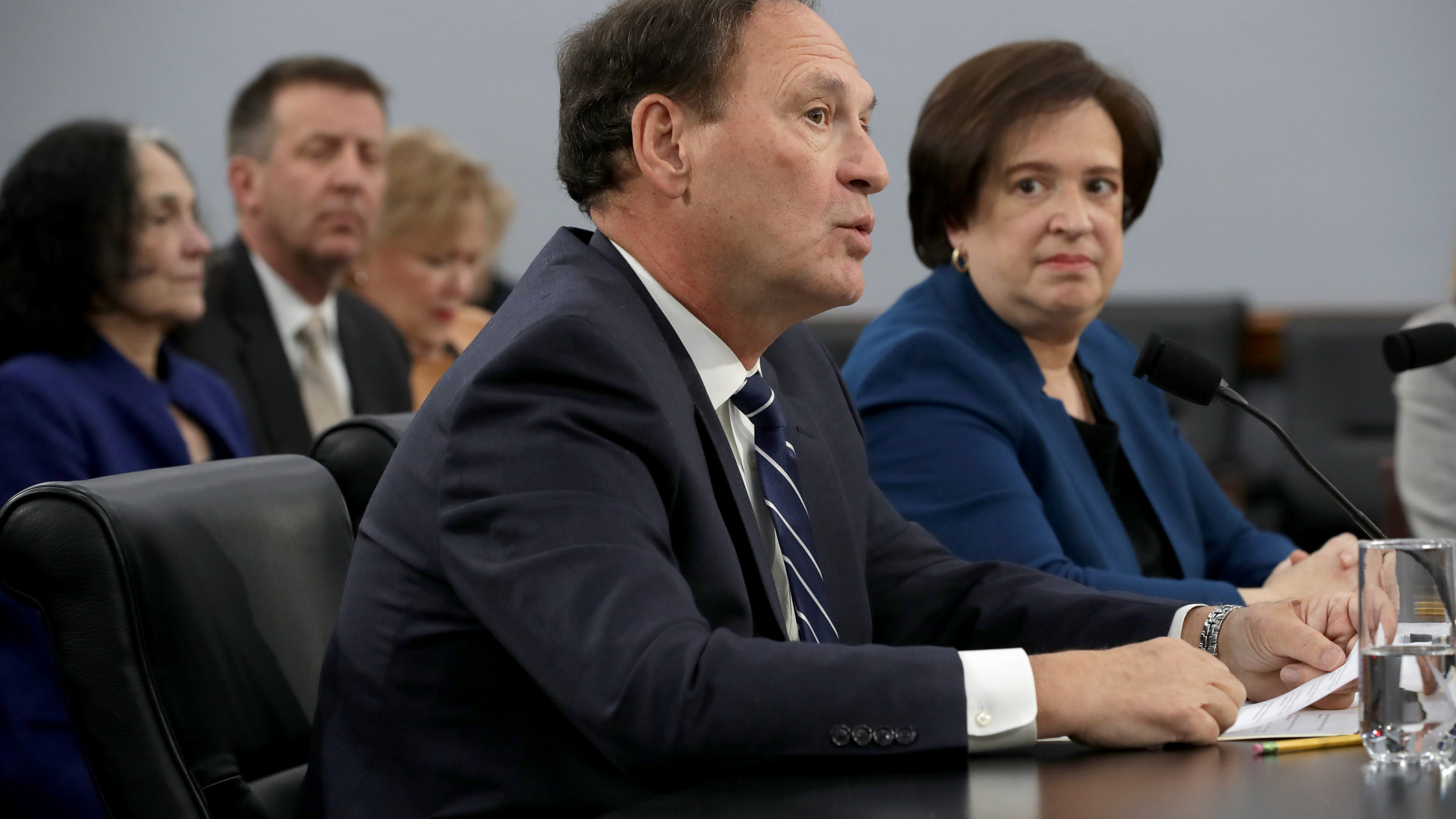
(Photo by Chip Somodevilla/Getty Images)
During her tenure on the Court, Kagan has probably been the liberal wing’s strongest, most consistent voice in cases about democracy, which means she has written a lot of angry, forlorn dissents about all the ways the conservatives are eviscerating it. Here, too, she makes sure to place Callais in the context of the Roberts Court’s decades-long effort to hollow out the Voting Rights Act, from Shelby County in 2013 to Brnovich in 2021 to today. The result in Callais, she says, completes the Court’s “demolition” of a law “born of the literal blood of Union soldiers and civil rights marchers,” and will “set back the foundational right Congress granted of racial equality in electoral opportunity.”
In the very short term—as a reminder, the 2026 midterm elections are less than six months away—Callais probably won’t feel like a seismic, democracy-upending (or democracy-ending) Supreme Court decision. Many states have already held their primaries, and even among those that haven’t, there probably isn’t time between now and November for lawmakers who begrudgingly signed off on maps with one or two majority-minority districts to go back and draw new maps with zero. The real changes will come before the 2028 election and then after the 2030 Census, when the next regular redistricting cycle at last gives revanchist Republicans the chance to start from scratch.
For Alito and the conservatives, though, killing the Voting Rights Act slowly and quietly is a savvy, intentional choice. Callais will accelerate this country’s transformation into a funhouse-mirror version of democracy that reflects the will of only those voters whom Sam Alito cares about. At the same time, because this process will not happen overnight, there are many people who won’t even notice when Callais turns their right to vote into an aspirational nullity. By the time they realize the Court has locked them out of the electoral process, there will be little they can do about it.