On Monday evening, the Republican majority on the Supreme Court issued yet another order tilting elections in favor of Republicans—and against Black voters. Allen v. Caster reinstates a congressional district map that Alabama Republicans adopted in 2023, and that a federal court blocked as an unconstitutional racial gerrymander.
Doing so plunges the 2026 midterms deeper into undemocratic chaos. Alabama’s primary elections are already underway. Alabamians who already voted, under a court-ordered map that has been in place for years, may have their votes thrown out so that Republicans can hold a do-over election, under a map that a federal court already determined is too racist to be legal.
The lower court did not reach its conclusion lightly: Last May, a three-judge Alabama district court panel held an 11-day trial featuring dozens of witnesses and hundreds of exhibits before it explained, in a unanimous 268-page opinion, that “try as we might, we cannot understand the 2023 Plan as anything other than an intentional effort to dilute Black Alabamians’ voting strength.” But on Monday, the Supreme Court vacated that result with a one-paragraph order instructing the lower court to reconsider its ruling in light of Louisiana v. Callais, the Supreme Court’s recent decision killing off the remnants of the Voting Rights Act.
As a legal matter, this order makes no sense. Callais was a death blow to the Voting Rights Act, powered by a perversion of the Fifteenth Amendment. But none of that should disturb the lower court’s holding in Caster that Alabama lawmakers violated the Fourteenth Amendment by intentionally discriminating against Black residents.
As a practical matter, the order makes even less sense. Local election administrators mailed out absentee ballots over a month ago, and Alabamians have been casting their votes for weeks. Thanks to the Court’s last-minute intervention, thousands of votes may be cast aside, leaving voters and election officials alike frustrated and confused.
In theory, the justices have legal tools to avoid such antidemocratic disarray. In the 2006 case Purcell v. Gonzalez, the Supreme Court lifted a lower court order that had temporarily blocked a voter ID law in Arizona, in light of “the imminence of the election and the inadequate time to resolve the factual disputes.” Basically, the election was less than three weeks away, and the lower court didn’t show its work, so the Court let the law stand.
According to the unsigned majority in Purcell, doing otherwise would risk making a mess of the election and depressing democratic participation. “Court orders affecting elections, especially conflicting orders, can themselves result in voter confusion and consequent incentive to remain away from the polls,” said the Court.
(Bill Clark/CQ-Roll Call, Inc via Getty Images)
The Supreme Court has reaffirmed the Purcell principle repeatedly over the past 20 years—especially when doing so could help Republicans win elections.
In April 2020, for example, the Court’s Republican majority blocked a lower court ruling that extended the deadline for Wisconsin voters to mail in their ballots during the 2020 presidential primaries, and noted that Purcell counsels courts to avoid altering election rules “on the eve of an election.” Republican National Committee v. Democratic National Committee was the first of many Supreme Court decisions invoking Purcell to override pandemic-based changes to election procedures, forcing people to vote in person and risk contracting a deadly disease if they wanted to be sure their votes would count.
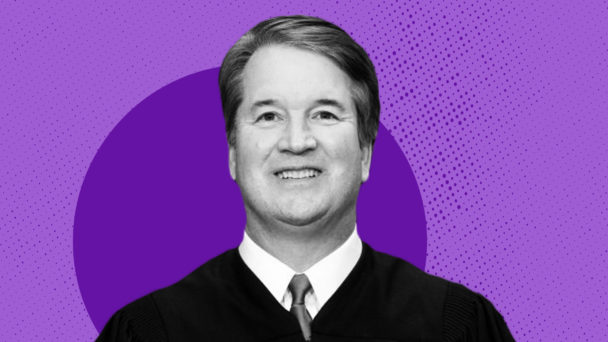
In February 2022, five Republican justices lifted a lower court order and allowed Alabama to use a map that a lower court had determined violated the Voting Rights Act by diluting the votes of the state’s Black population. And while the majority in that case, Merrill v. Milligan, didn’t bother to provide a reason, Justice Brett Kavanaugh authored a concurrence, joined by Justice Samuel Alito, which explained at length that Purcell compelled this result.
In it, Kavanaugh claimed that the Purcell principle “reflects a bedrock tenet of election law: When an election is close at hand, the rules of the road must be clear and settled.” He emphasized that “late judicial tinkering” can “lead to disruption and to unanticipated and unfair consequences for candidates, political parties, and voters, among others,” and argued that federal courts should not “swoop in” and re-do state laws “in the period close to an election.” In Merrill, primary elections were scheduled to begin in seven weeks; according to Kavanaugh, implementing a new map on that timeline would “require heroic efforts” by state and local officials that still might not be enough to avoid “chaos and confusion.”
The Supreme Court further built on Purcell last December, in an unsigned shadow docket order that allowed Texas to implement a district map that a lower court ruled was an unconstitutional racial gerrymander. Again, the Court claimed it was too late for courts to get involved, and that the lower court had “improperly inserted itself into an active primary campaign, causing much confusion and upsetting the delicate federal-state balance in elections.”
Dissenting for the three liberals, Justice Elena Kagan pointed out that Election Day was still eleven months out—a far cry from two and a half weeks at issue in Purcell. And furthermore, even if the election were imminent, Kagan said that the majority’s approach would give states a “free pass” to violate the Constitution so long as they run out the clock.
Time and time again, the Republican justices have claimed that it is too late for courts to change election procedures, even when the election is months away. Now, in Alabama, they are changing election procedures when an election is actively going on. They have claimed that the point of Purcell is avoiding confusion and promoting orderly elections. Now they are creating confusion and undermining orderly elections.
Legal scholars and advocates have observed for years that federal courts apply the Purcell principle in wildly inconsistent ways. But with Callais, the Supreme Court is making matters even worse. Emboldened by the result, several states are trying to reschedule elections so that they can aggressively re-gerrymander their electoral maps. As a result, voters have no idea whether their vote matters, and even when they try to defend their rights, the Republican justices’ convenient applications of Purcell suggests time is not on their side.
The 2026 midterm elections are in shambles, and the Republican majority on the Supreme Court bears direct responsibility. Law depends on consistent and predictable rules. The Court is blatantly changing the rules as it goes—and affording greater legal weight to Republican lawmakers’ desire to subvert democracy than Black voters’ right to participate in it.